


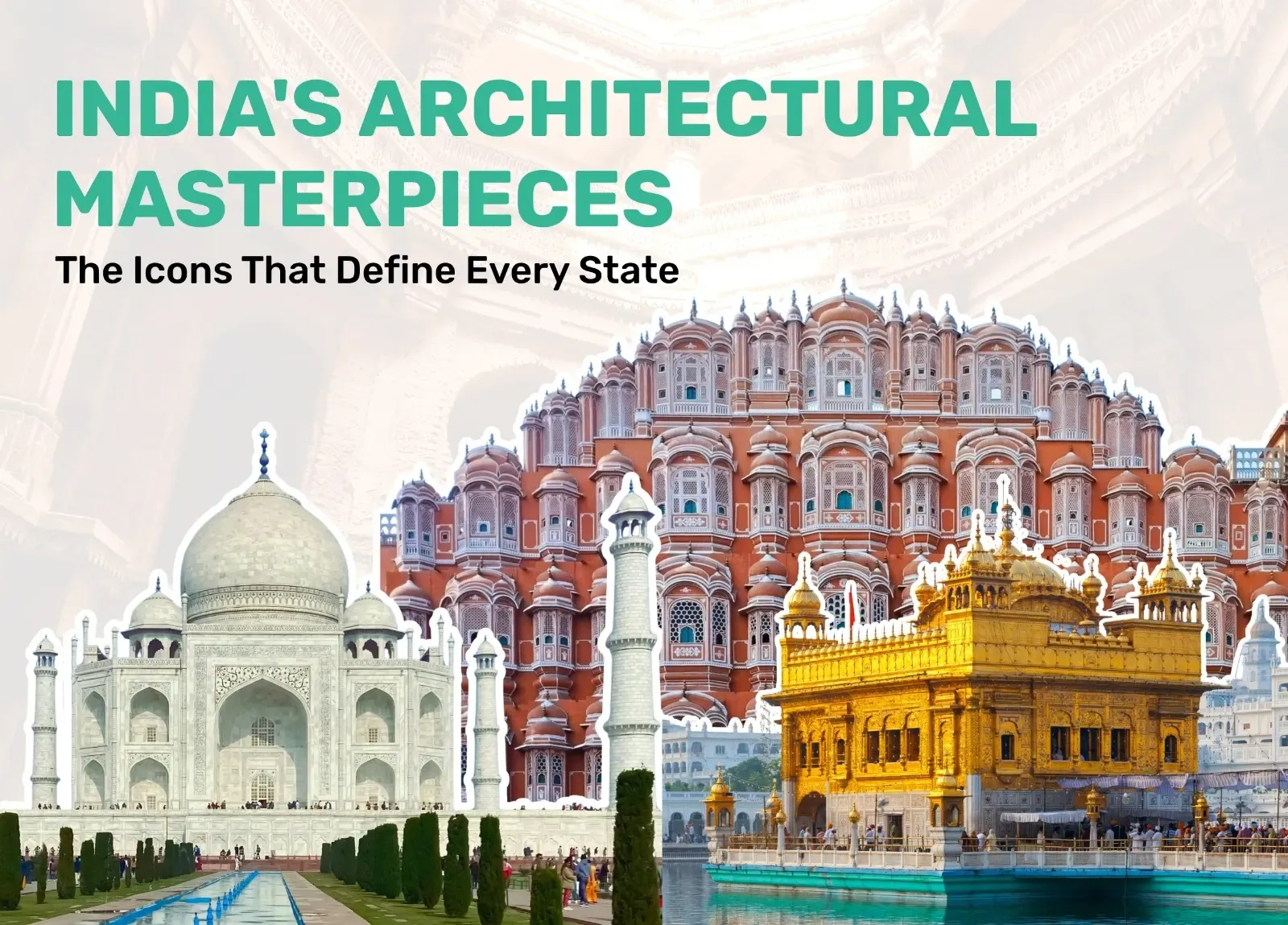
India’s architectural icons showcase the country’s rich cultural heritage, engineering excellence, and diverse design traditions. From majestic Mughal monuments in the north to ancient Dravidian temples in the south, every state reflects a unique architectural identity shaped by history, climate, local materials, and craftsmanship. These landmarks preserve centuries of artistic and structural innovation while representing India’s cultural diversity.
Beyond their historical significance, these architectural masterpieces continue to influence modern architecture and interior design. Traditional elements, sustainable construction methods, and regional aesthetics are often reinterpreted in contemporary spaces, making India’s architectural heritage a valuable source of inspiration for architects, designers, and design enthusiasts alike.
Explore India’s Architectural Heritage: What Makes Each State Unique
Uttar Pradesh – The Legacy of Mughal Architecture
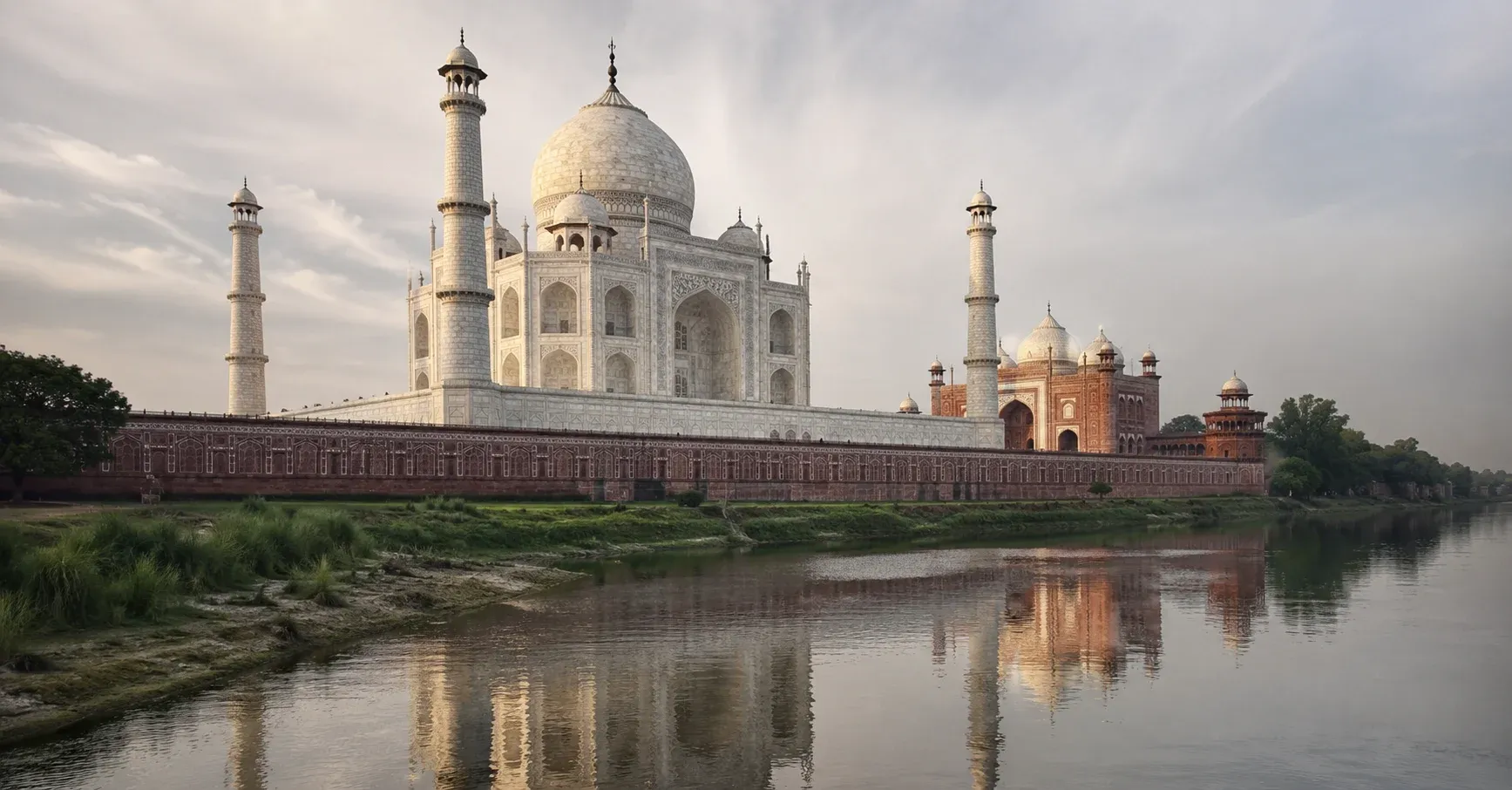
There’s a reason the Taj Mahal is the most photographed building in the world. It’s not just beautiful, it’s mathematically perfect. Built between 1631 and 1653 by Emperor Shah Jahan, the Taj sits on a raised marble plinth with four minarets positioned at precise angles so that if they ever fell, they’d fall away from the main tomb, not onto it. That’s not just architecture. That’s engineering at the service of devotion.
Forty kilometres away, Fatehpur Sikri tells a different story. This ghost city, abandoned barely 15 years after it was built, shows Mughal architecture at its most experimental. Persian arches, Gujarati carved brackets, and Rajasthani column capitals all sit together in the same courtyard. Akbar the Great clearly wanted a style that belonged to no single tradition. He got it.
Rajasthan – Forts, Palaces, and Rajput Grandeur
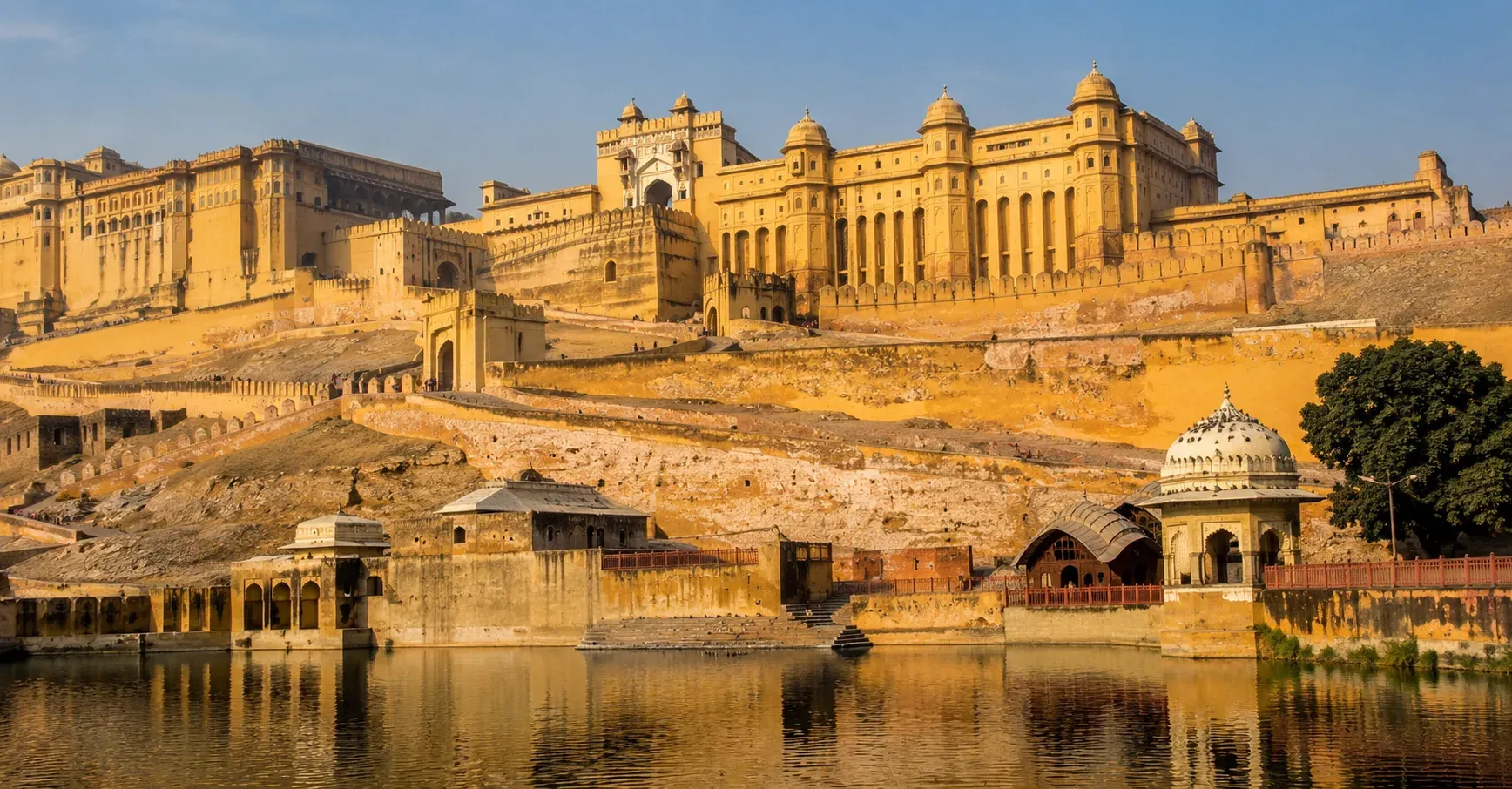
Rajasthan is the state that gave Indian architecture its most recognizable imagery: sand-colored forts rising from desert hills, palace windows with lace-like stone jalis, step-wells that descend like inverted pyramids into the earth.
The Hawa Mahal in Jaipur is a case study in passive cooling. Its 953 small windows, each framed with a projecting jharokha, create a natural draft that keeps the interior cool even in Rajasthan’s brutal summers. The venturi effect, centuries before anyone put that term in a physics textbook.
Amber Fort, Mehrangarh, and Chittorgarh: each of these structures has survived not because they were maintained but because they were built with an understanding of load, material, and climate that contemporary construction is still trying to catch up with.
Punjab – Sikh Architecture and the Silence of Gold
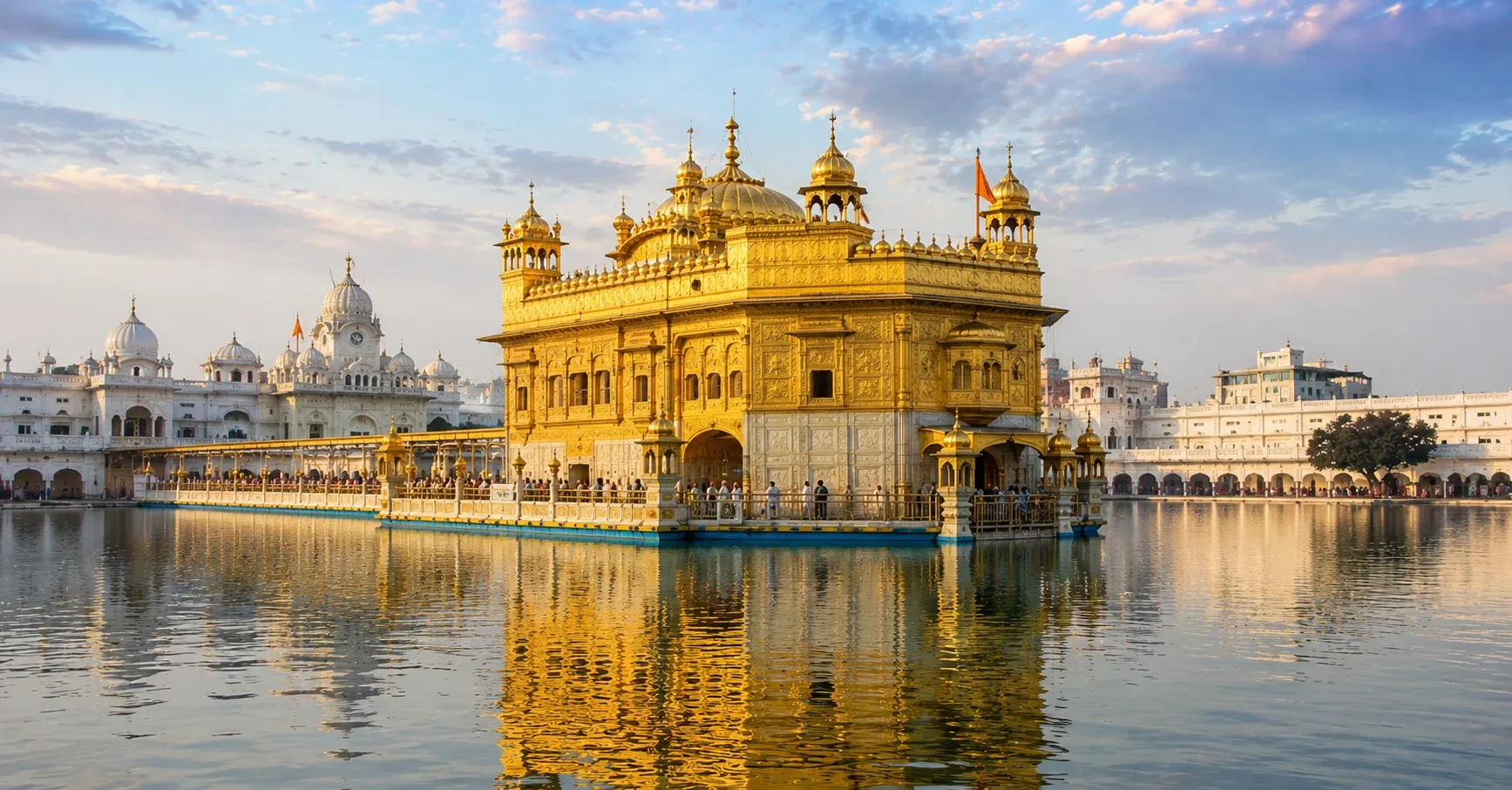
The Harmandir Sahib, the Golden Temple in Amritsar, does something that very few buildings in the world manage: it makes you stop. Not because of its size, but because of its stillness.
Built on a platform in the middle of the Amrit Sarovar, the temple is designed so that visitors must descend to enter, a deliberate architectural choice that communicates humility before the divine. The structure itself is a blend of Hindu and Islamic motifs, with the lower marble levels featuring intricate inlay work and the upper sections clad in gold-plated copper. There are four entrances, one on each side, symbolising that people of all faiths are welcome. That’s not just symbolism. That’s architecture making a philosophical statement.
Gujarat – India's First UNESCO World Heritage City
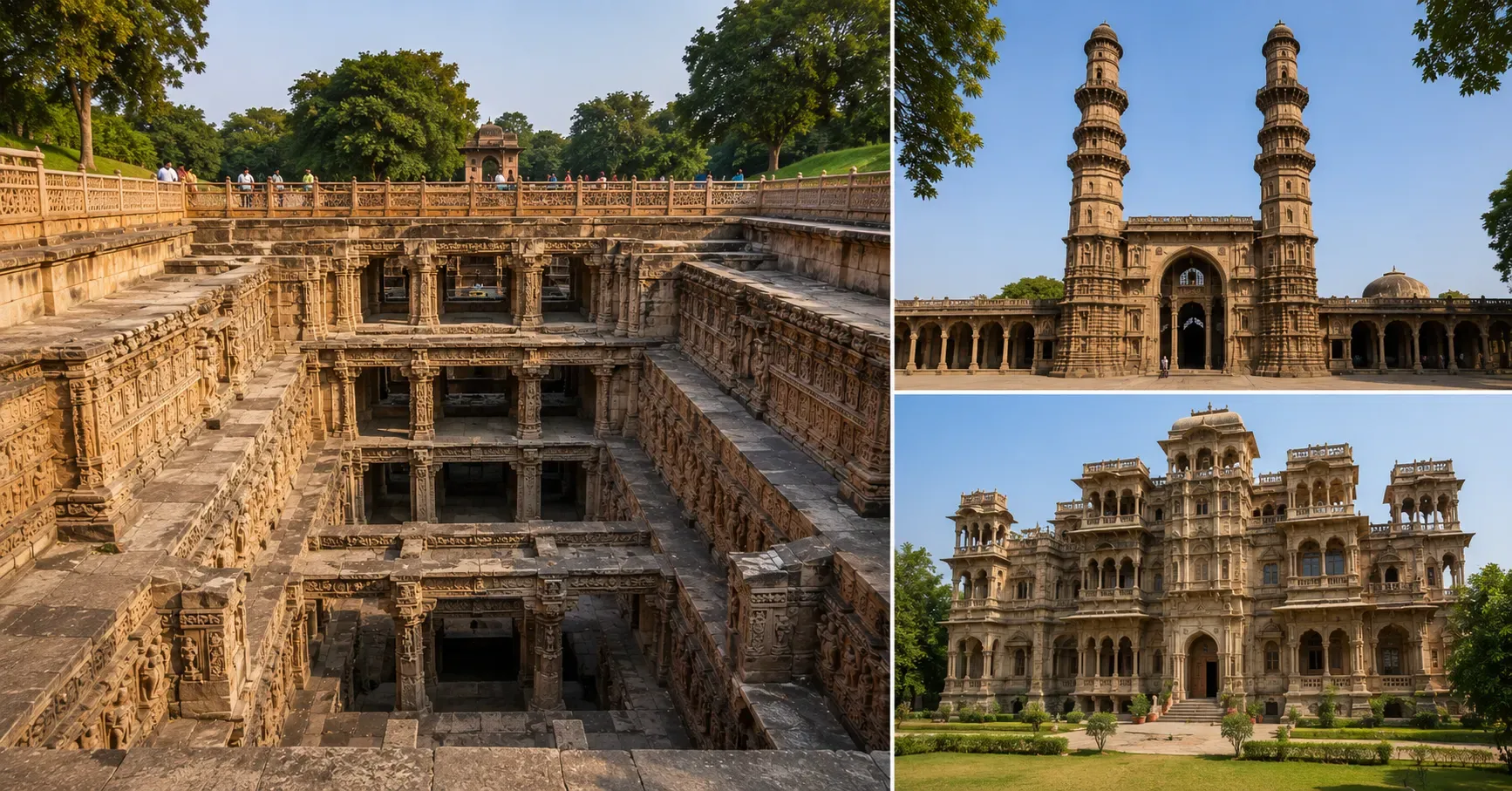
Ahmedabad doesn’t announce itself. It reveals itself slowly. Walk into the walled city, and you’re immediately in a different kind of urban fabric, narrow lanes, shared courtyard walls, and ancient pol neighborhoods where Hindu, Muslim, and Jain families have lived side-by-side for centuries.
The city has over 2,600 heritage structures. The carved wooden havelis are extraordinary three- and four-story timber joineries built without a single nail in many cases. The Adalaj Stepwell, built in 1499, descends five stories underground and is covered in sculptural detail that seems impossible given the era it was made in.
Maharashtra – From Buddhist Caves to Bombay Gothic
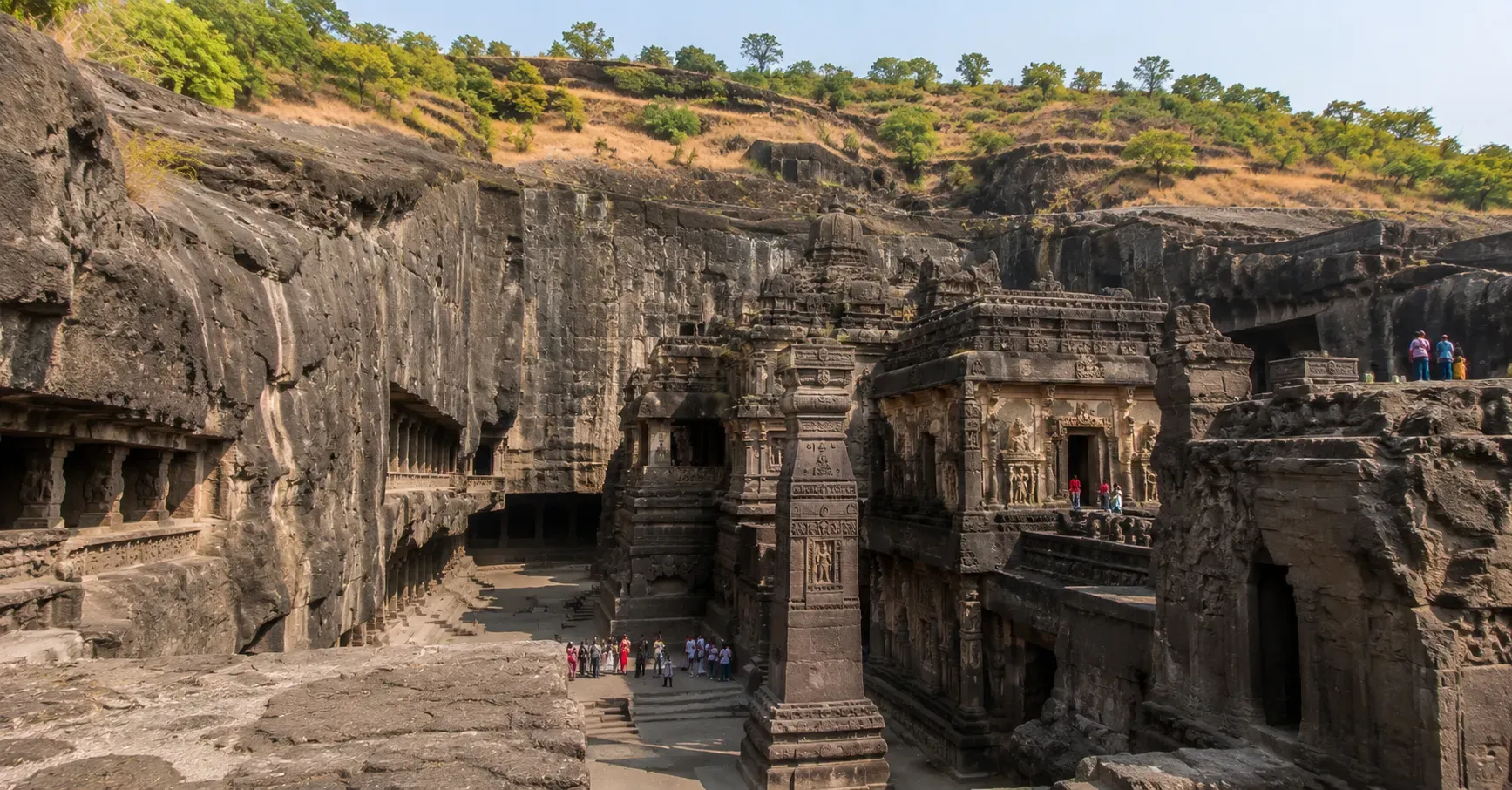
Maharashtra contains some of the oldest and most sophisticated architecture in India. The Ajanta Caves, 30 rock-cut Buddhist shrines carved between the 2nd century BC and the 6th century AD, are covered in frescoes that have survived fifteen centuries. The Ellora Caves go further, with 34 monasteries and temples representing three different religions carved out of the same basalt cliff face.
The Kailasa Temple at Ellora is particularly staggering: it was carved top-down, from a single rock, removing an estimated 200,000 tonnes of stone without any structural framework. There’s no other building technique quite like it anywhere in the world.
In Mumbai, the architecture shifts entirely. The Chhatrapati Shivaji Maharaj Terminus, formerly Victoria Terminus, is Victorian Gothic fused with Indian decorative elements: pointed arches, flying buttresses, and a central dome topped with a figure of Progress. It looks like it couldn’t exist. It does, and it still functions as one of the busiest railway stations on earth.
Goa – Four Hundred Years of Portuguese Stone
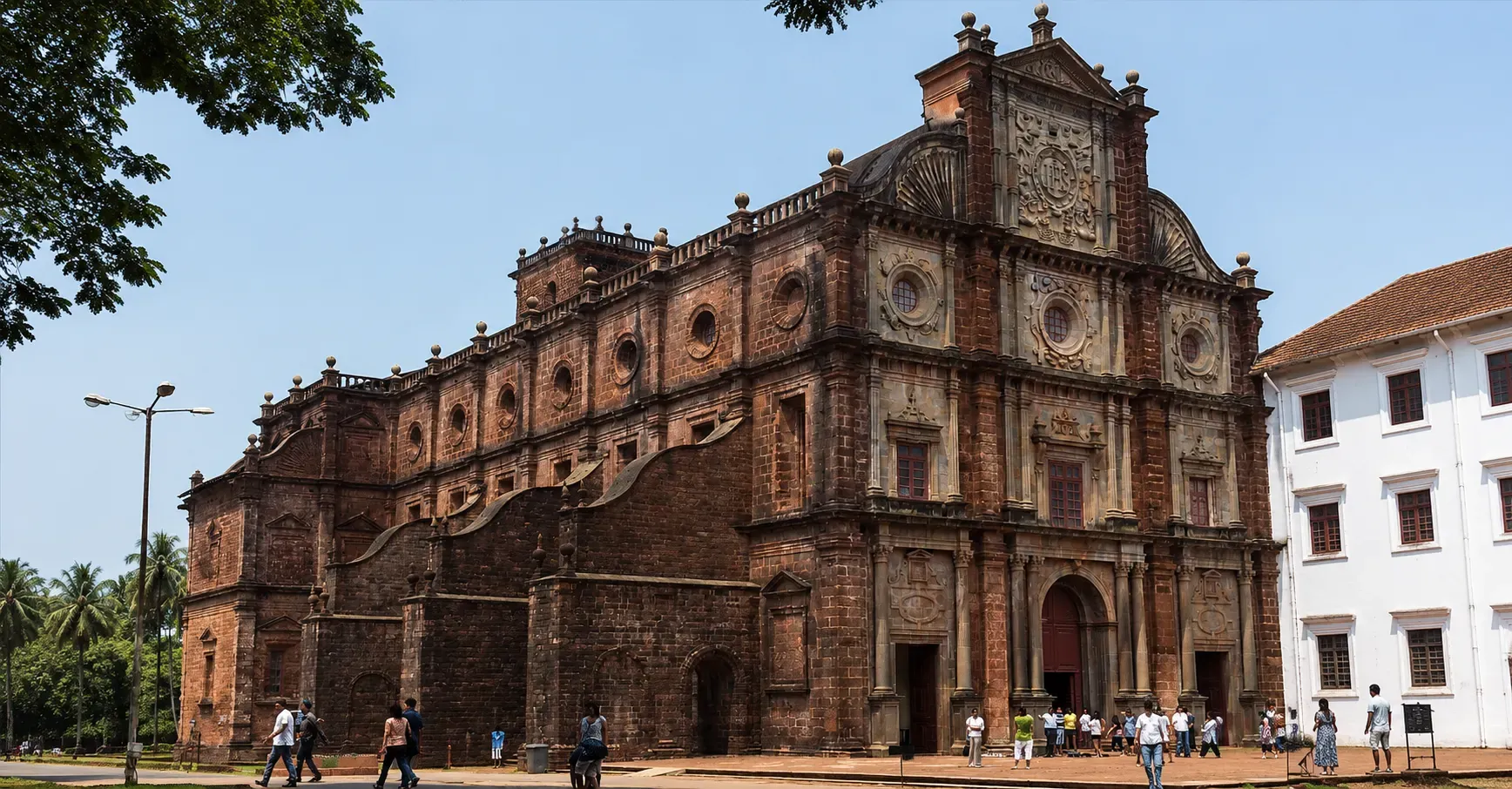
Portuguese colonizers arrived in Goa in 1510 and stayed for 450 years. That’s a long time to build. The Bom Jesus Basilica, completed in 1605, is Baroque architecture transported to a tropical coast with thick laterite walls, ornate altarpieces, and the silver-encased tomb of St. Francis Xavier inside. The Latin Quarter in Panaji has streets of tiled, pastel-colored houses with verandas and balconies that look distinctly Mediterranean until you notice the coconut palms and the monsoon stains on the walls.
Tamil Nadu – Dravidian Architecture at Its Most Intense
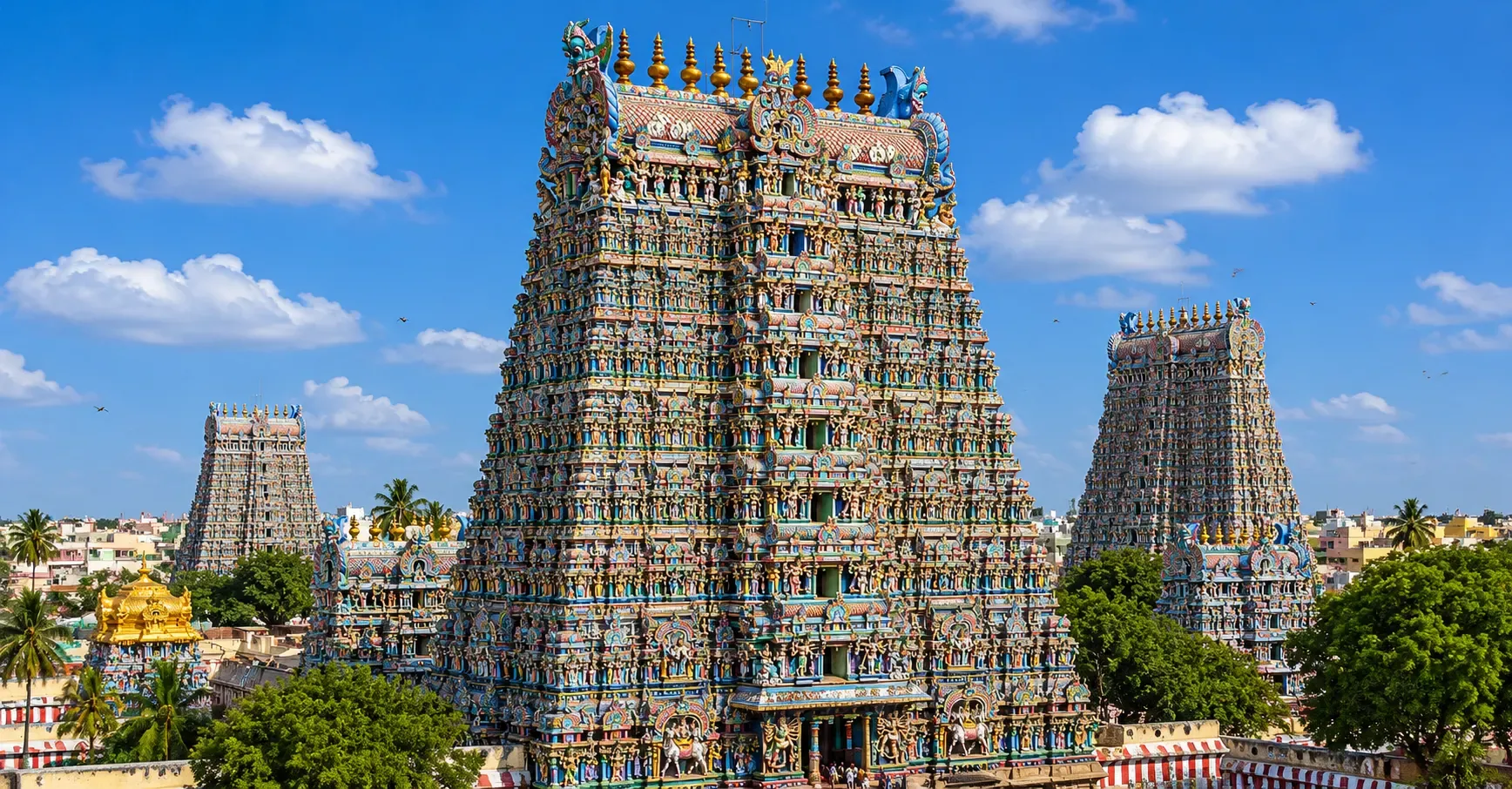
Nothing in Indian architecture quite prepares you for a major Tamil Nadu temple. The Meenakshi Amman Temple in Madurai has 14 gopurams, gateway towers, the tallest rising 52 meters. Each tower is covered in thousands of painted stucco figures: gods, demons, celestial beings, and animals. The colour is intentional and meaningful, not decorative excess.
The Brihadeeswarar Temple in Thanjavur, built by Raja Raja Chola I around 1010 AD, contains a vimana tower that’s 66 meters tall and is famous for casting no shadow at noon on the day of its consecration. The stone was sourced from quarries 60 kilometers away and moved using elephants and ramps. The engineering precision, achieved over a thousand years ago, is still studied in architecture schools today.
Karnataka – Palaces, Ruins, and the Art of the Possible
The Mysore Palace was rebuilt in its current form between 1897 and 1912 by the British architect Henry Irwin, following a fire that destroyed the original wooden structure. What emerged was something genuinely unprecedented: Indo-Saracenic architecture at full scale, blending Mughal domes, Rajput turrets, Gothic arches, and South Indian carved pillars into a structure that somehow holds together visually.
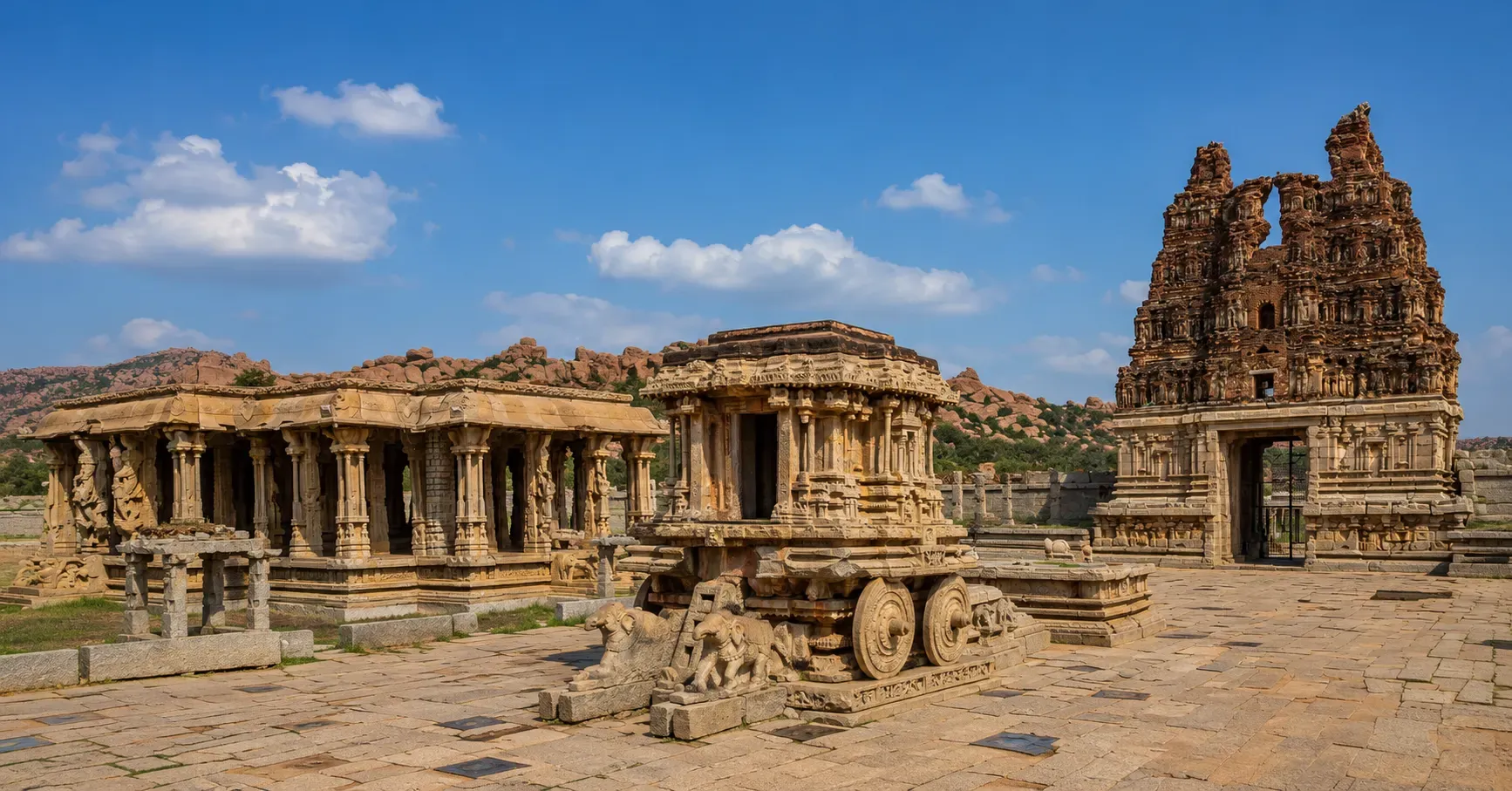
Hampi is the other side of Karnataka’s architectural story, the vast ruins of the Vijayanagara Empire, a city that was once one of the largest in the world. The Vittala Temple complex contains the famous stone chariot and a musical pillar hall where each column produces a different musical note when struck. Much of Hampi was destroyed in 1565. What remains is enough to give a sense of what was lost.
Kerala – Architecture That Listens to the Climate
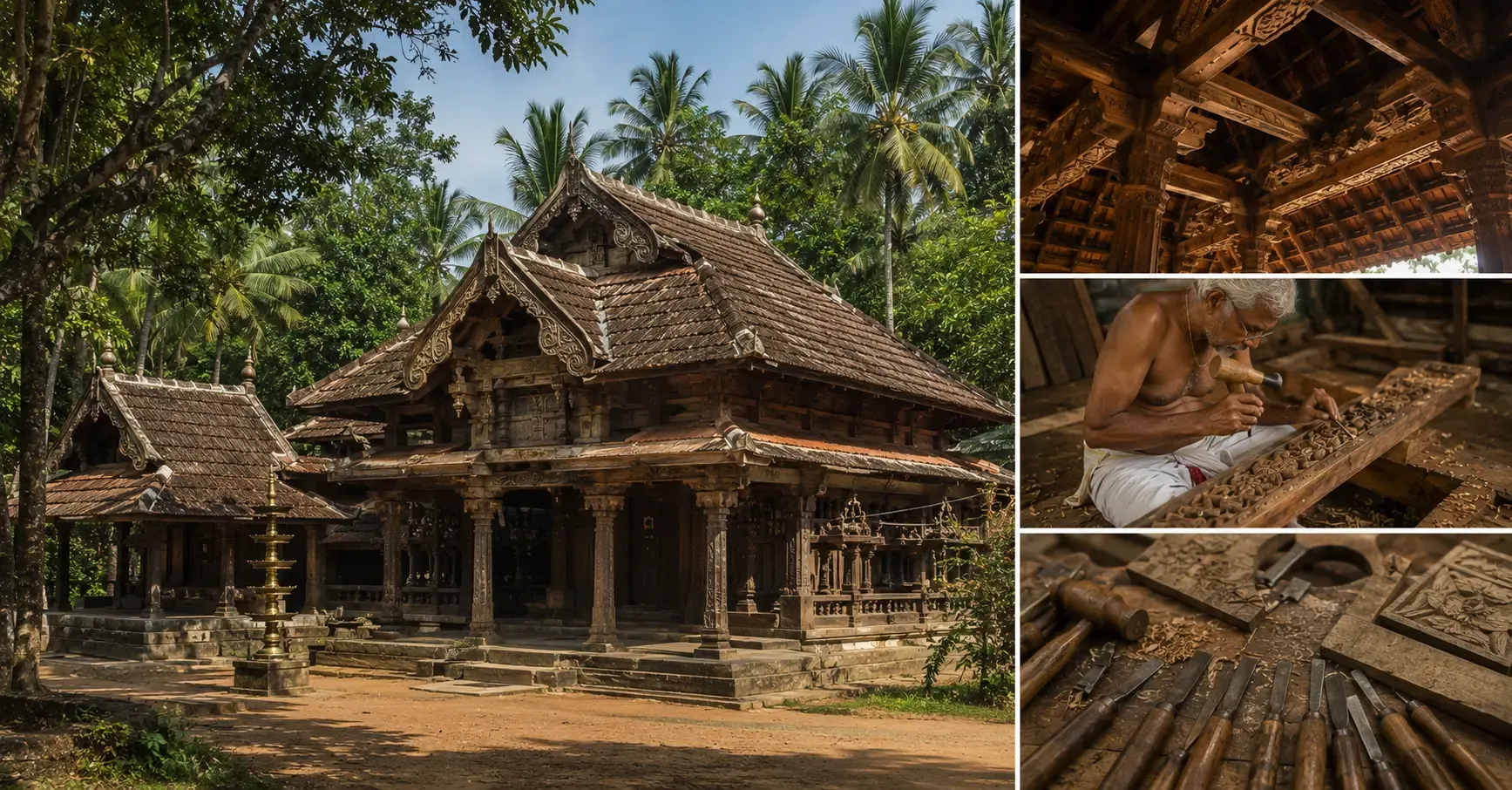
Kerala’s traditional architecture, guided by the ancient text Thachu Shastra, is among the most climate-intelligent building traditions in the world. The nalukettu, a four-wing house centered on an open courtyard, creates natural cross-ventilation, captures rainwater, and maintains stable indoor temperatures throughout the year without any mechanical intervention.
Sloping roofs with deep overhangs, timber construction, raised plinths to prevent flooding, and materials sourced entirely from local forests, these aren’t constraints. They’re solutions. As sustainable architecture becomes increasingly important globally, Kerala’s vernacular tradition is being looked at with new respect by designers and engineers worldwide.
Odisha – The Kalinga Style and the Chariot Temple
Odisha’s Kalinga school of architecture is one of the three primary Hindu temple traditions of India, alongside the Nagara style of the north and the Dravidian style of the south. Its defining feature is a distinctive curvilinear tower called the rekha deula, a shape that softens the skyline in a way that feels almost organic.
The Konark Sun Temple, built in the 13th century by King Narasimhadeva I, is the most ambitious expression of this tradition. The entire temple complex is designed as a colossal stone chariot, 24 elaborately carved wheels, seven stone horses, and a main sanctuary that once rose to 70 meters. Much of the original structure has been lost, but what remains is overwhelming in its detail and conceptual ambition.
West Bengal – Calcutta and the Weight of Colonial History
Kolkata carries its history on its face. As the former capital of British India, it accumulated over a century of colonial architecture: the Victoria Memorial’s blend of Mughal and Italian Renaissance influences, the Gothic Revival of St. Paul’s Cathedral, and the neoclassical facades of the High Court and Writers’ Building around BBD Bagh.
There’s a particular quality to Kolkata’s architecture, a kind of grandeur that has weathered without being erased. The buildings have stains and cracks and layers of paint. They look like they’ve been used. Which, of course, they have, for a hundred and fifty years of an extraordinary urban story.
Madhya Pradesh – Sanchi, Khajuraho, and the Buddhist Beginning
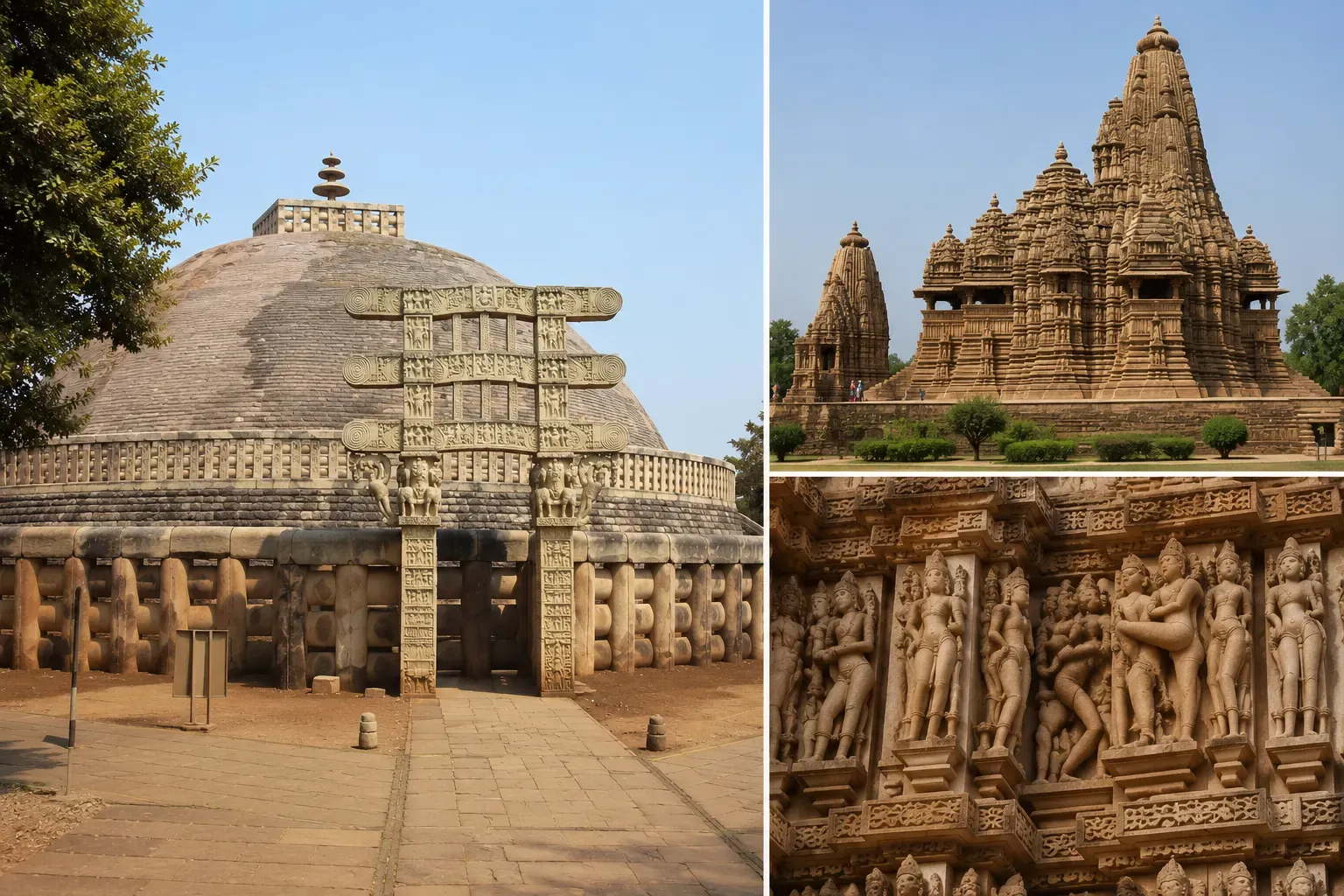
The Great Stupa at Sanchi is one of the oldest stone structures in India, commissioned by Emperor Ashoka in the 3rd century BC and expanded over the following centuries. A UNESCO World Heritage Site, it represents the foundation of Buddhist architectural tradition in the subcontinent: the hemispherical dome symbolizing the universe, the railing enclosing sacred space, the four gateways covered in relief carvings of the Buddha’s life stories.
The Khajuraho temples, built between 950 and 1050 AD, represent the Nagara tradition at its most elaborate. The shikhara towers and their intricate sculptural programs, which include the famous erotic carvings, aren’t decoration. They’re theological statements about the full spectrum of human experience as part of the path to liberation.
Chandigarh – The City That Le Corbusier Built
After Partition in 1947, Punjab’s former capital Lahore went to Pakistan. India needed a new capital for the state, and Jawaharlal Nehru commissioned the Swiss-French architect Le Corbusier to design it from scratch.
Chandigarh is the result: a grid-planned city with wide boulevards, distinct sectors, and a Capitol Complex that is now a UNESCO World Heritage Site. The Assembly Building, High Court, and Secretariat are bold Brutalist structures in exposed concrete, deliberately different from anything that had come before in India. Nehru called Chandigarh a ‘temple of new India.’ Whether or not you agree with that framing, the city remains one of the most significant experiments in modern urban planning ever attempted.
Final Thoughts
India’s Architectural Icons represent centuries of creativity, craftsmanship, and cultural diversity. From the Taj Mahal and Hawa Mahal to the Konark Sun Temple and Kerala’s traditional homes, each state contributes a unique architectural legacy. Exploring these iconic landmarks not only reveals India’s rich history but also offers lasting inspiration for modern architecture, interior design, and sustainable building practices.
FAQs
Ahmedabad is widely recognized for its rich architectural heritage, combining historic pol houses, stepwells, and modern masterpieces. It is also India's first UNESCO World Heritage City.
As of 2026, India has 44 UNESCO World Heritage Sites, including iconic monuments, cultural landmarks, and natural wonders that showcase the country's rich heritage.
The Taj Mahal in Agra is widely regarded as India's most famous architectural icon due to its remarkable Mughal design, global recognition, and UNESCO World Heritage status.
India's major architectural styles include Mughal, Dravidian, Nagara, Kalinga, Rajput, Indo-Saracenic, Colonial, and traditional vernacular architecture, each reflecting regional culture and history.
Modern designers often incorporate traditional elements such as courtyards, jali screens, natural ventilation, local materials, and handcrafted details to create sustainable, functional, and culturally inspired interiors.