

Your front door is the first line of home security and the first design statement visitors see. Yet most homeowners treat it as an afterthought.
In India, where urban residential projects are booming and design sensibility is rapidly evolving, door selection has become a serious decision. You want something that stops intruders, resists weather, and still looks like it belongs in a home featured in an architectural magazine.
10 Stylish & Secure Door Designs for Every Home
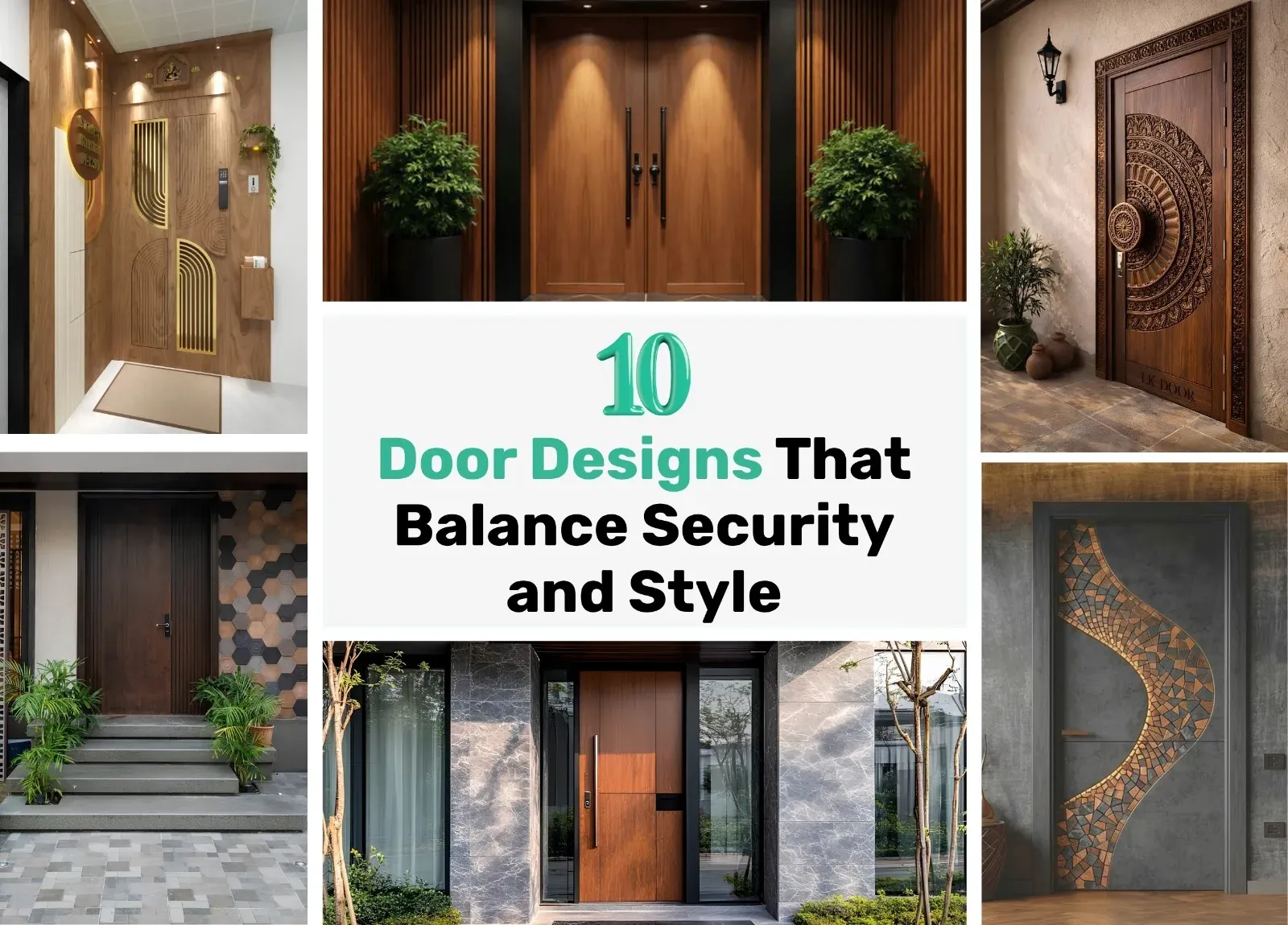
The good news? You don’t have to choose between safety and style. Here are 10 door designs that deliver both, with practical notes on materials, hardware, and where each works best.
1. Solid-Core Wooden Doors
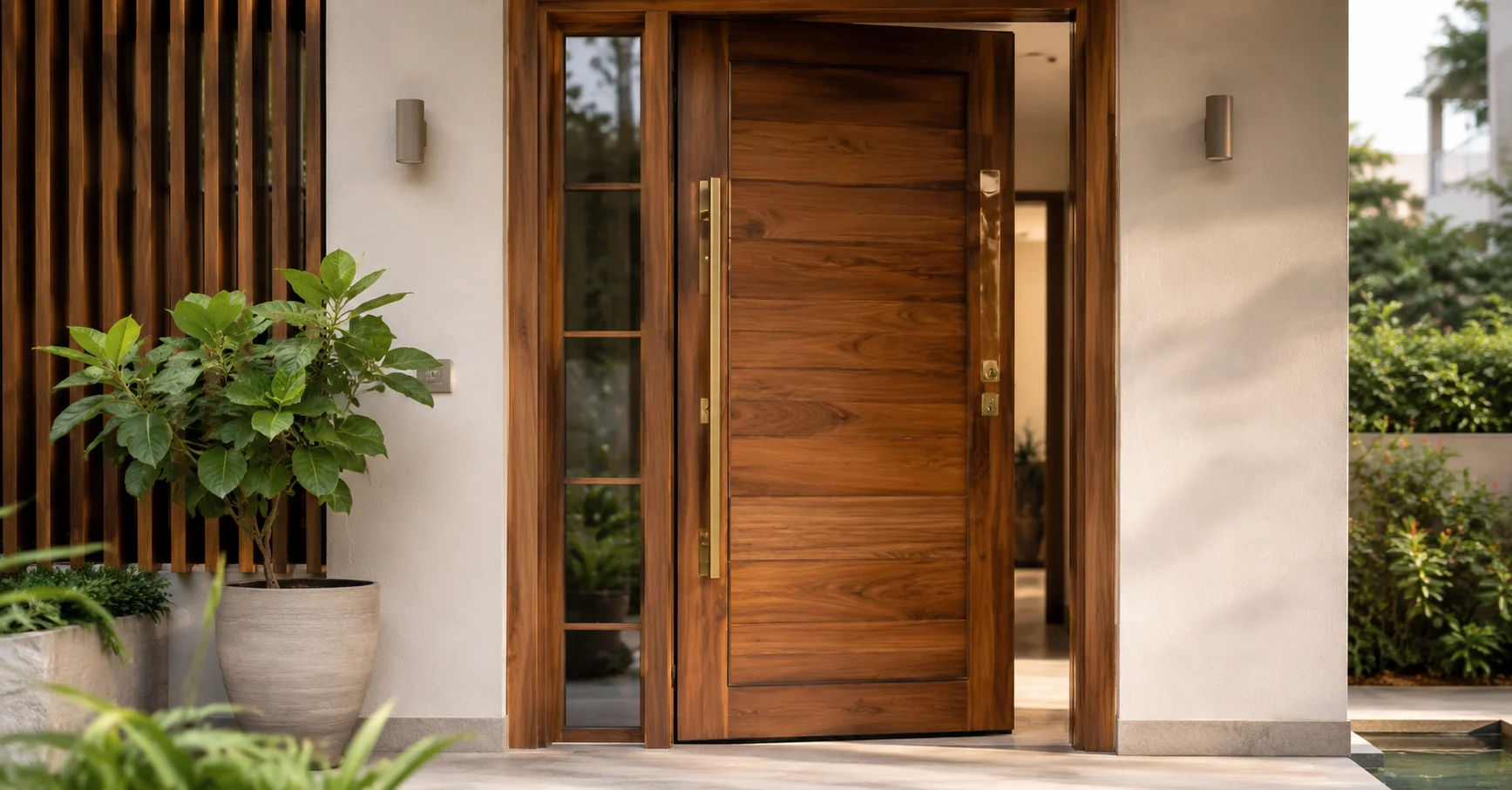
Best for: Main entrance, master bedroom
Solid-core wooden doors are constructed with a dense inner core, typically particleboard, MDF, or solid timber, wrapped in a wood veneer or hardwood shell. Unlike hollow-core variants, they resist forced entry, muffle sound, and feel substantial.
Why it works: The weight and density make them genuinely hard to kick in. Species like teak, oak, and sheesham are popular choices among the best interior designers in India for their grain beauty and durability.
2. Steel Security Doors with Decorative Panels
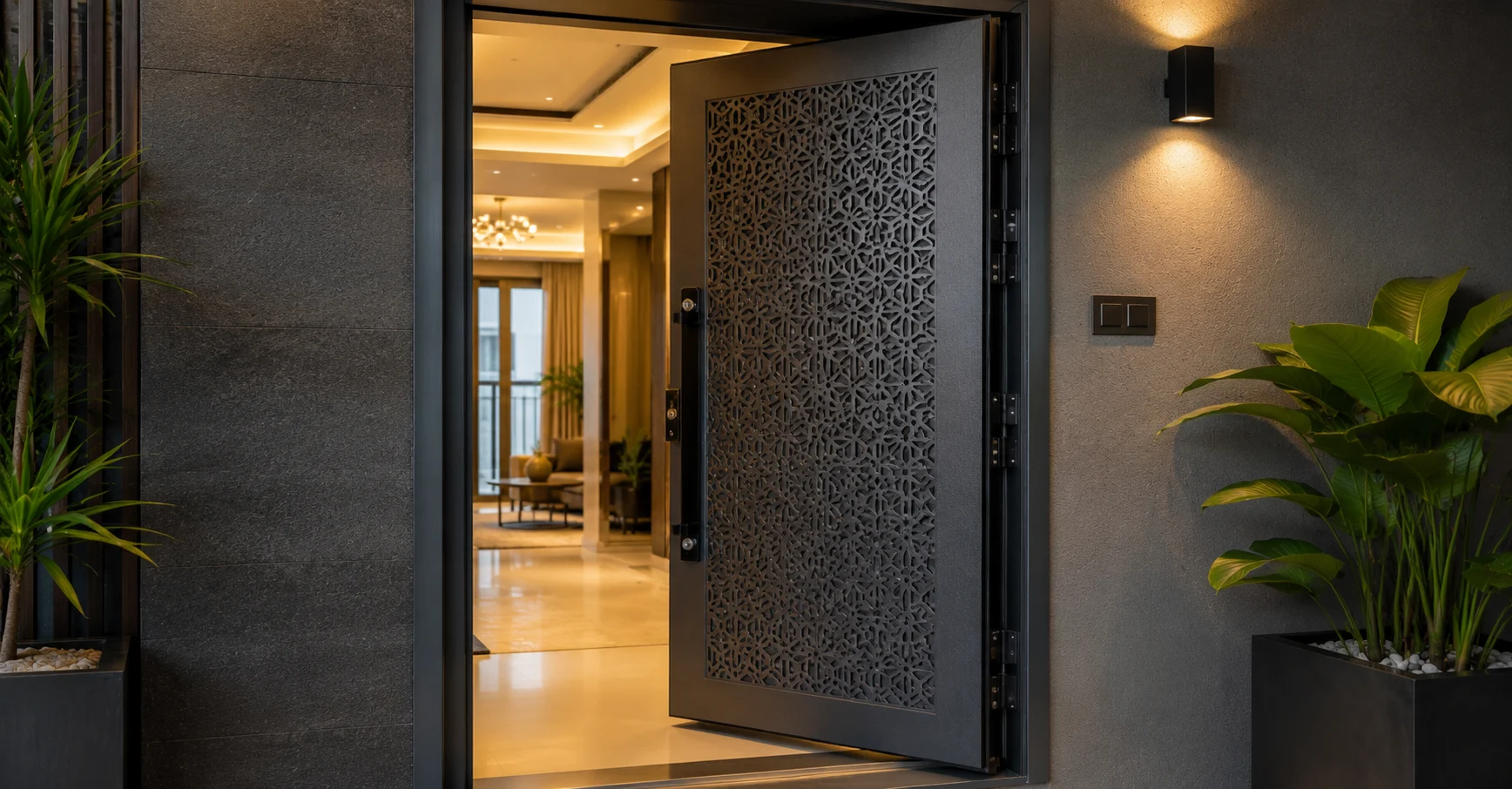
Best for: Main entrance, apartment doors
Steel doors are the gold standard for break-in resistance. Modern manufacturing now allows powder-coated finishes, laser-cut patterns, and wood-look laminates that make them virtually indistinguishable from traditional doors at first glance.
Security rating: Look for doors with a minimum 1.2mm steel gauge and anti-crowbar edges.
| Feature | Standard Steel Door | Decorative Steel Door |
| Finish | Plain powder coat | Laser-cut / wood laminate |
| Lock Points | 1–2 | 3–5 multi-point |
| Aesthetic | Industrial | Contemporary / Traditional |
| Cost Range | ₹15,000–₹30,000 | ₹35,000–₹90,000 |
3. Pivot Doors with Smart Lock Integration
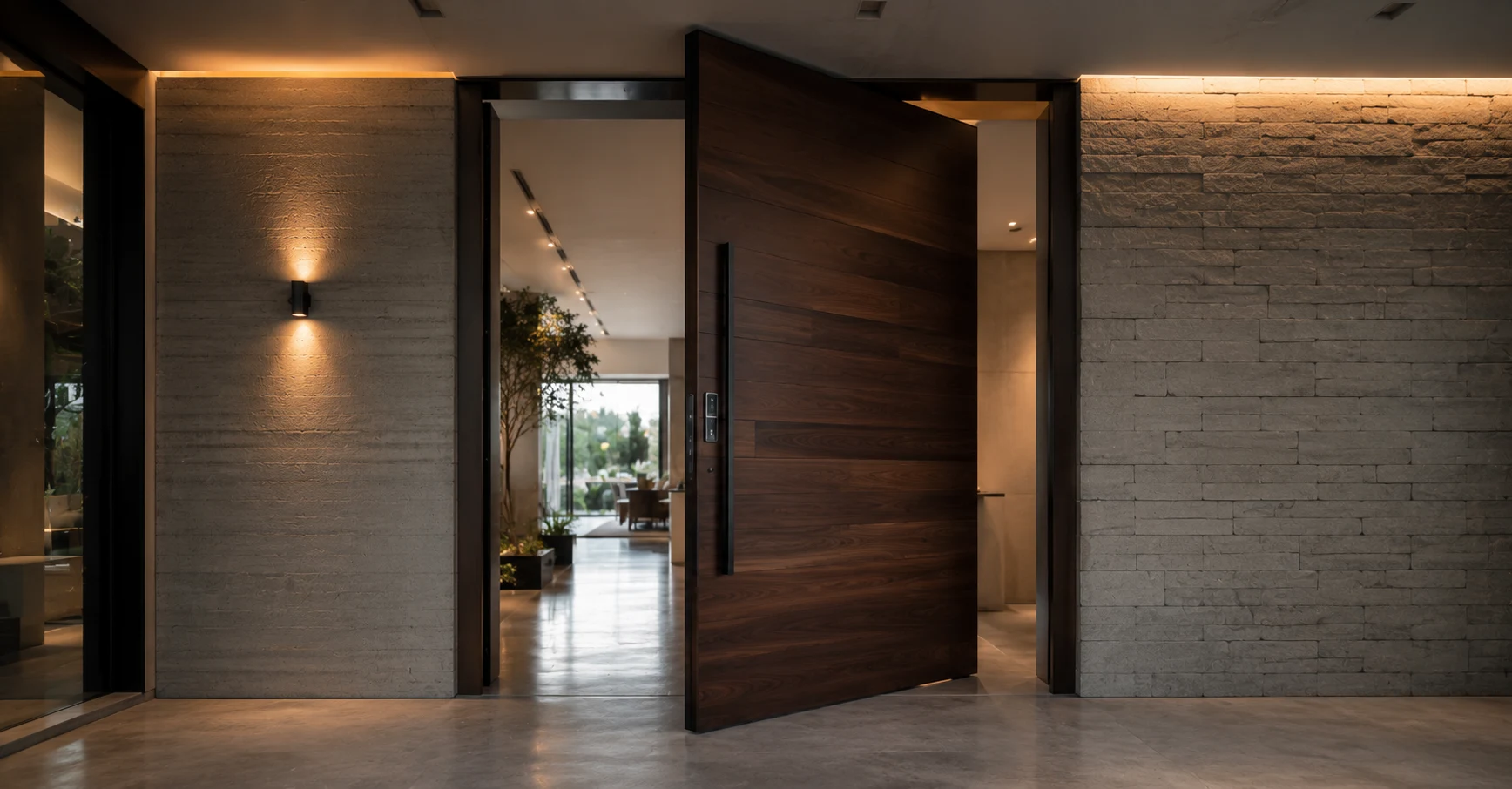
Best for: Modern villa entrances, luxury apartments
Pivot doors rotate on a central vertical axis rather than hinges, creating a dramatic, floor-to-ceiling visual statement. Combined with a biometric or app-controlled smart lock, they represent the intersection of architectural boldness and next-generation security.
Design note: The pivot mechanism itself is inherently heavy-duty, making forced entry via standard hinge-attack methods nearly impossible.
4. Glass-Panel Doors with Reinforced Frames
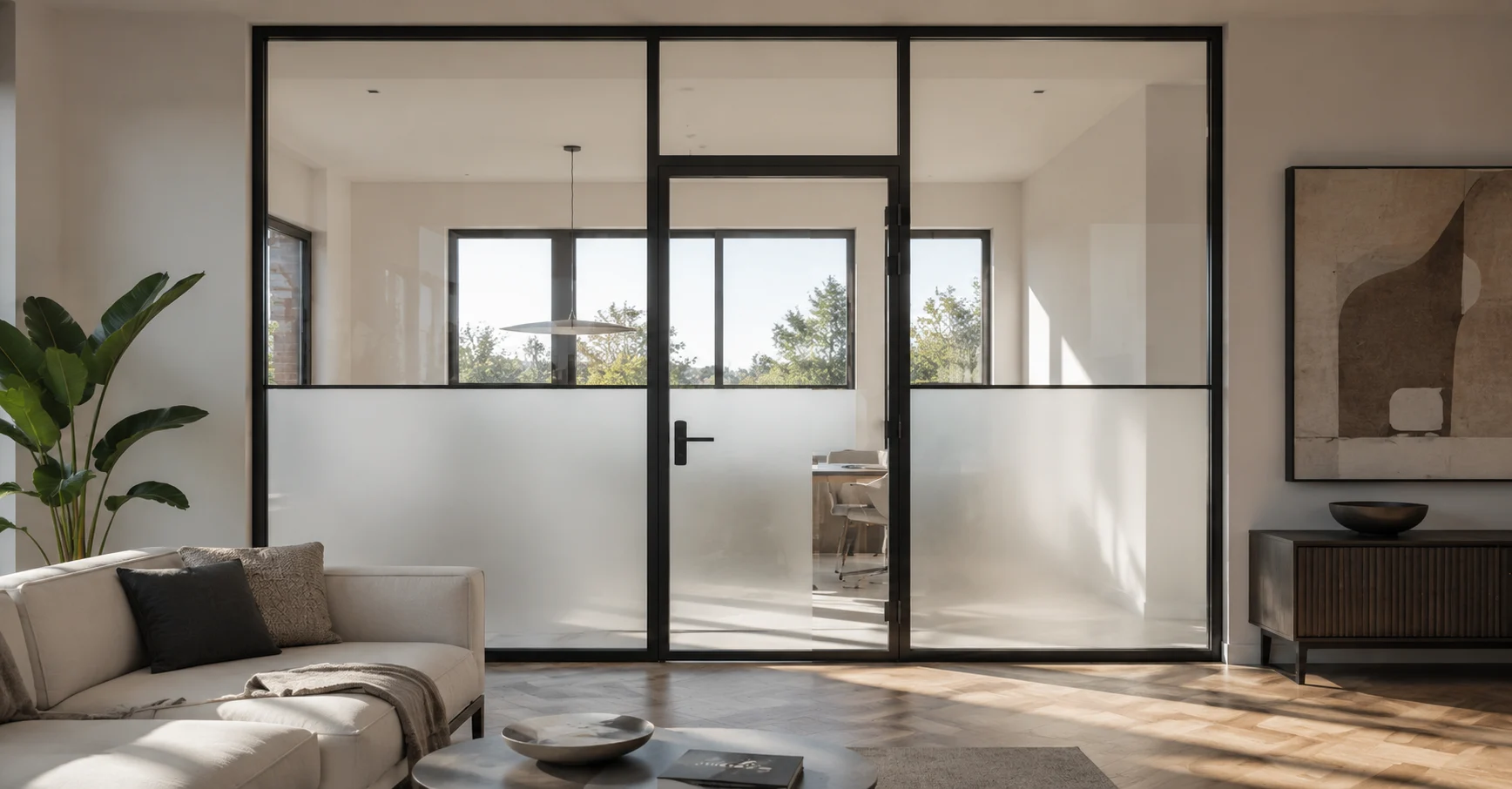
Best for: Living room partitions, balcony entries, office interiors
Glass doors bring light and openness, but the word “glass” shouldn’t imply fragility. Toughened or laminated safety glass doesn’t shatter into dangerous shards and resists impact far better than standard glass.
Security checklist for glass doors:
- Use a minimum 12mm toughened glass
- Choose aluminum or steel frames over plastic
- Add a frosted or film coating for privacy
- Install multi-point locks on the frame, not just the glass
5. Dutch Doors (Split Doors)
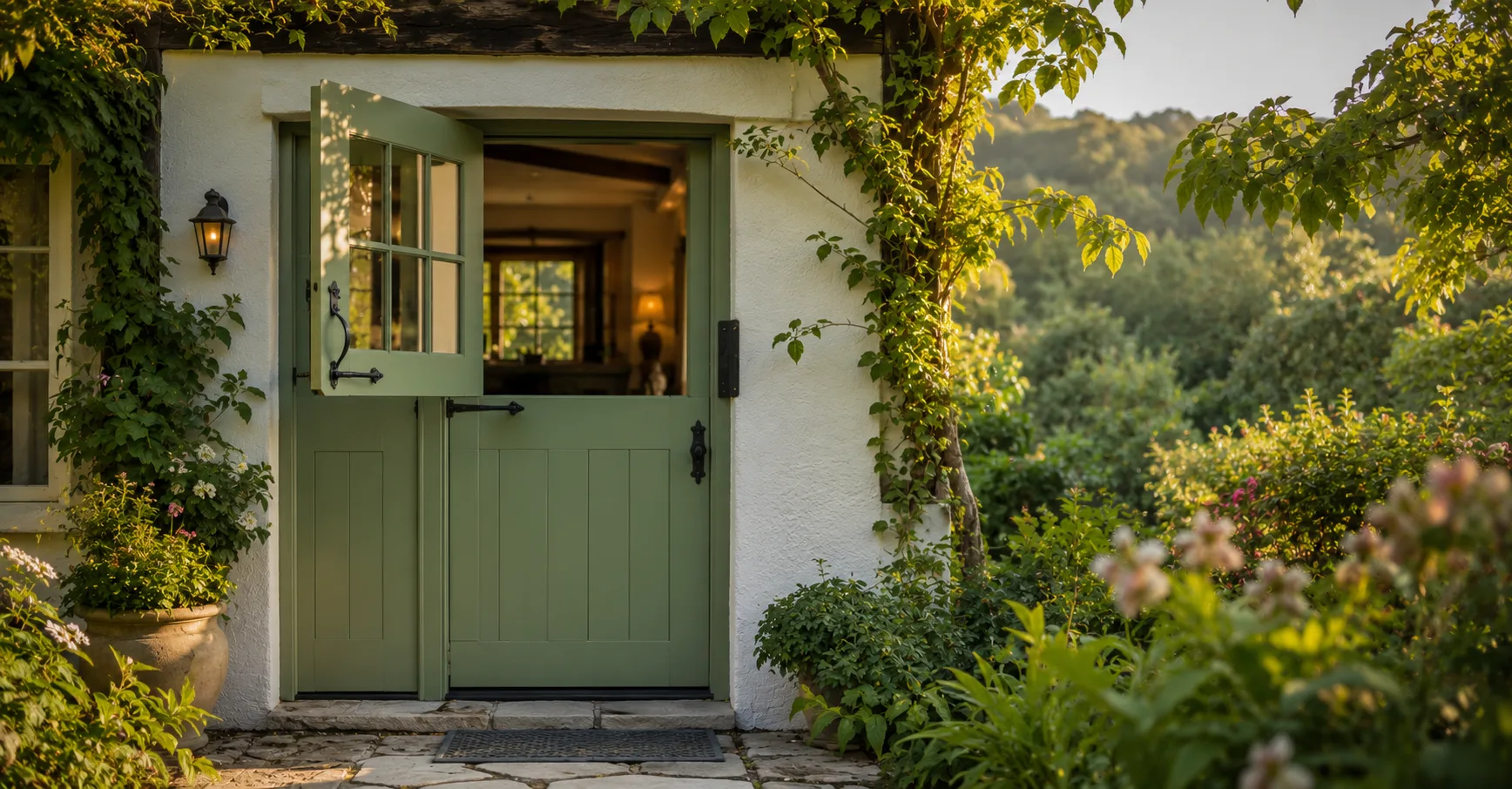
Best for: Kitchen entries, homes with children or pets, bungalows
A Dutch door splits horizontally, the top half opens for ventilation and communication while the bottom stays locked. It’s a classic European design that has found renewed popularity in Indian bungalows and farmhouses.
Security advantage: The two independently lockable halves mean you can maintain airflow without fully opening the door.
6. Armoured Flush Doors
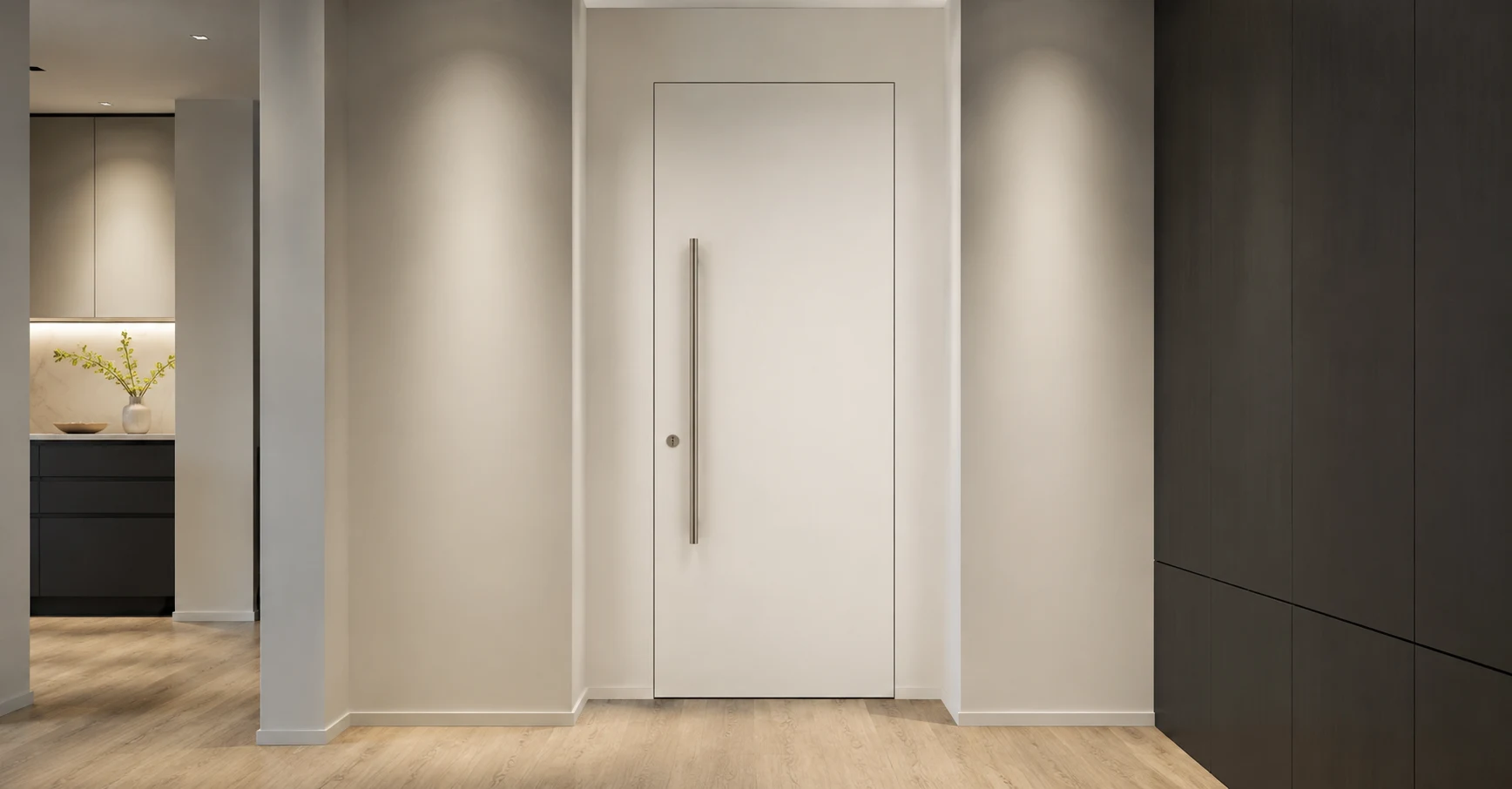
Best for: Apartments, commercial offices, bank-grade security needs
Flush doors appear completely flat and seamless, giving a minimalist, contemporary finish. Armoured variants have steel reinforcement inside the flush panel, making them resistant to drilling and sawing attacks.
These are widely recommended by Top Interior Designers Of India for projects where clients want clean lines without compromising on safety.
7. Wrought Iron Doors with Artistic Grille Work
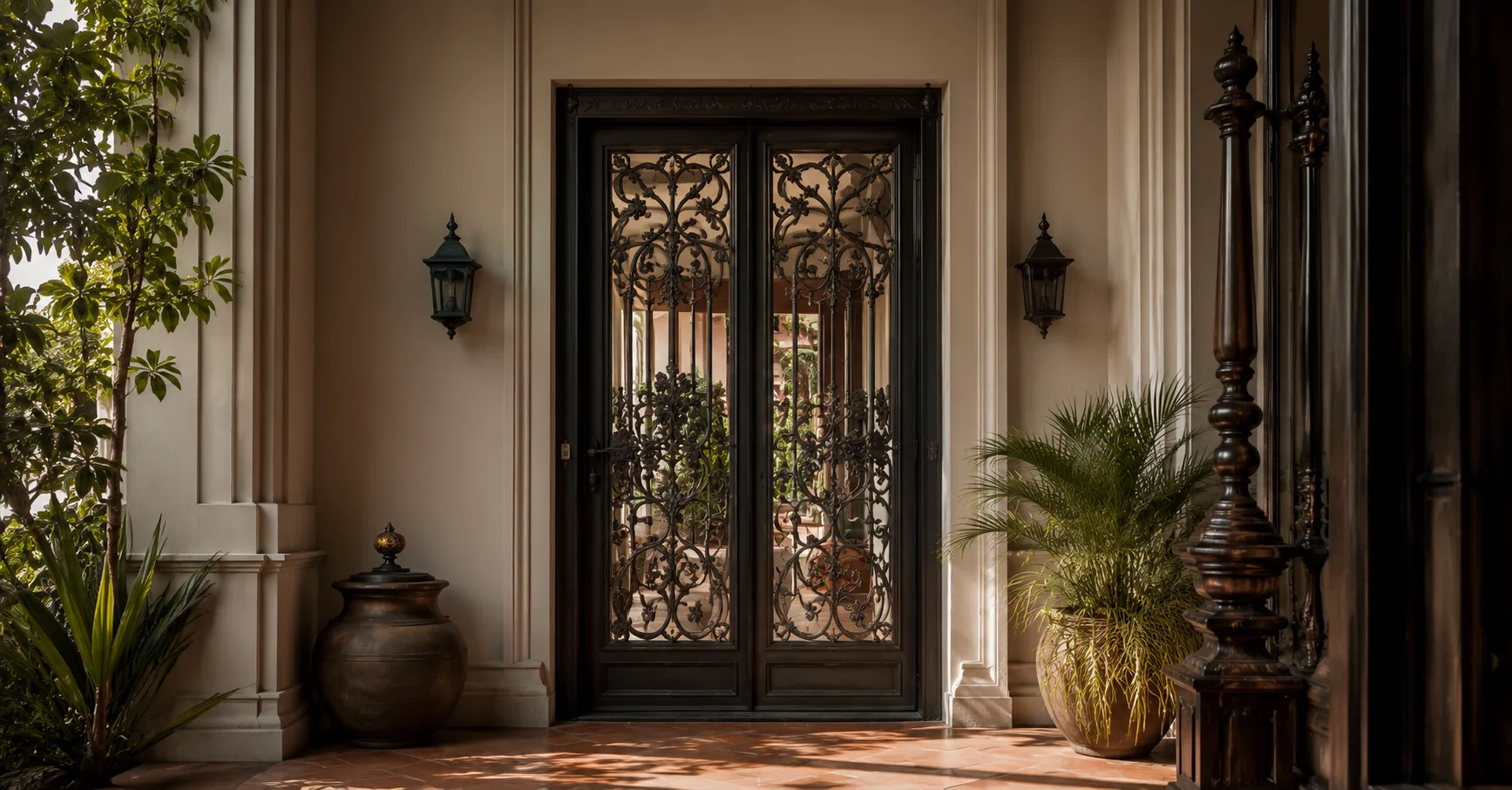
Best for: Heritage homes, bungalows, courtyard gates
Wrought iron doors are inherently strong. Modern craftsmen now create intricate geometric, floral, or abstract patterns in the grille work, turning a barrier into a visual centerpiece.
Key benefit: The open grille design doesn’t block airflow or natural light, which matters enormously in Indian climates.
8. Fibreglass Composite Doors
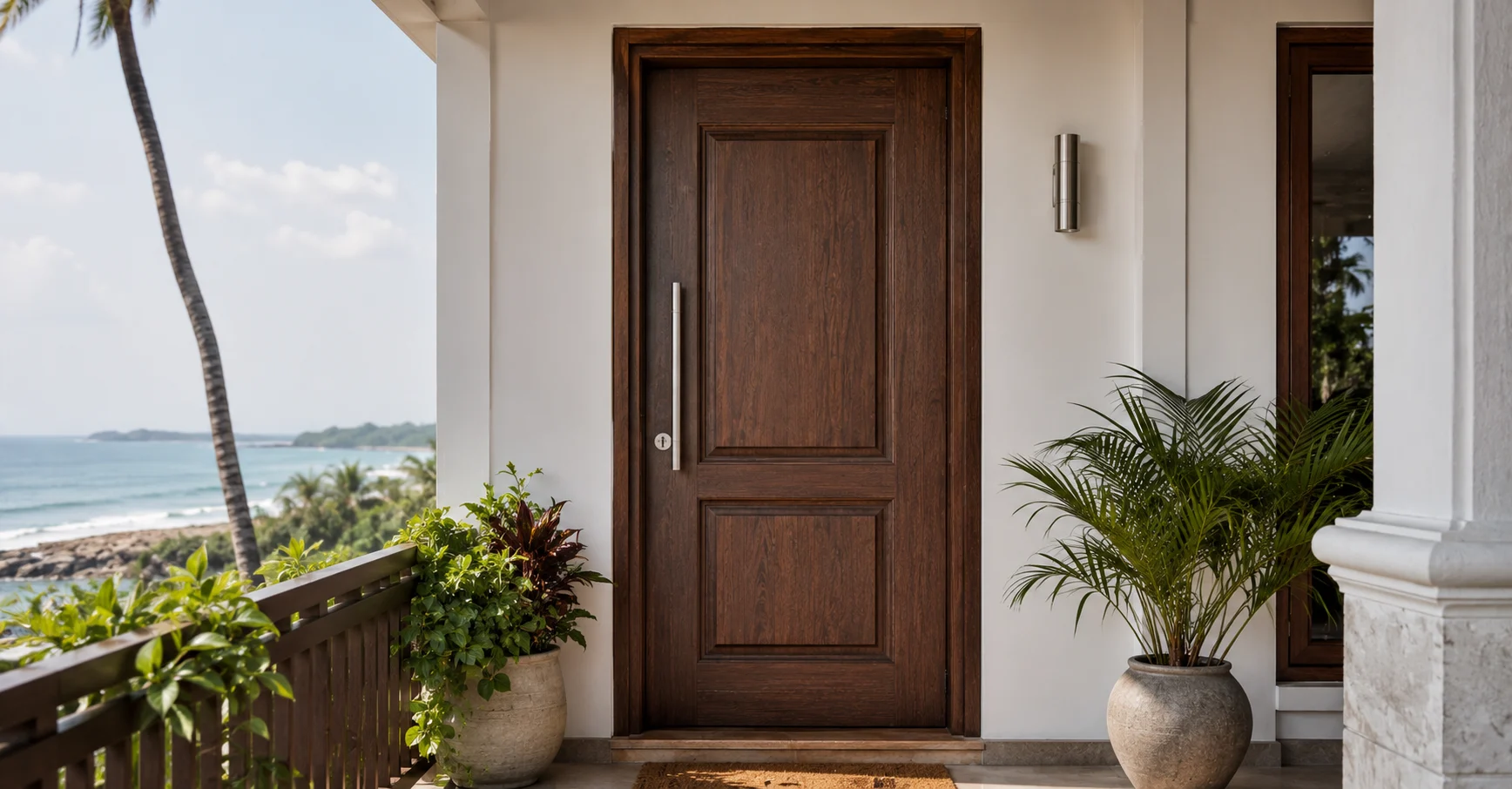
Best for: Coastal homes, high-humidity regions, low-maintenance seekers
Fibreglass composite doors mimic the look of wood grain but won’t warp, rot, or swell in humidity, a genuine problem for wooden doors in coastal Indian cities like Mumbai, Kochi, or Chennai.
They offer better insulation than steel and are increasingly available in rich, realistic wood finishes.
Sustainability note: Many fiberglass composites use recycled materials, making them a responsible choice for eco-conscious homeowners.
9. Sliding Pocket Doors with Hidden Tracks
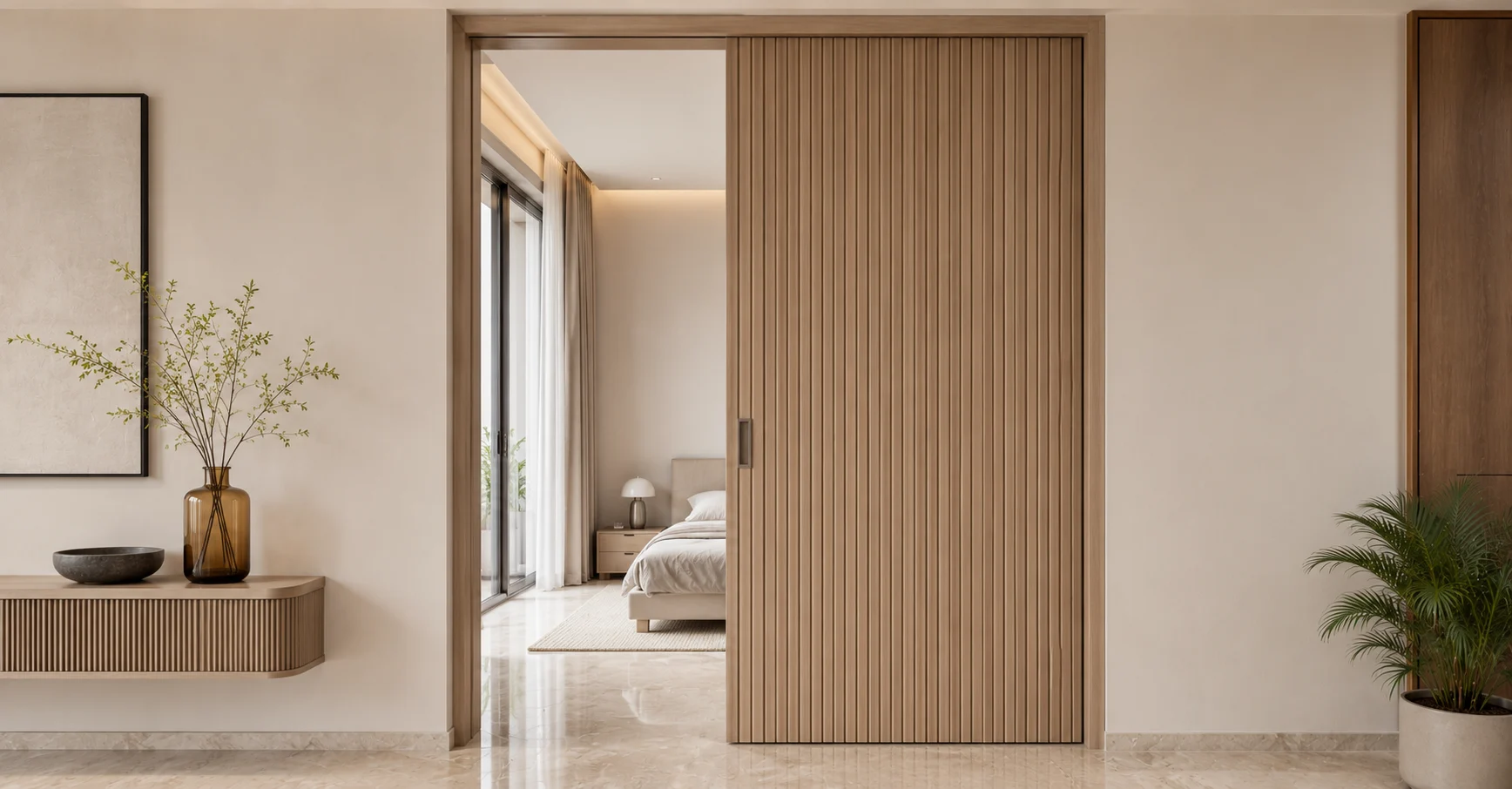
Best for: Space-constrained urban apartments, room dividers
Sliding doors that disappear into the wall cavity are a space-saving revelation for compact urban homes. When fitted with anti-derail tracks and floor bolts, they’re surprisingly secure.
Design tip: Frosted glass or slatted wood panels in a sliding frame create visual rhythm while maintaining privacy.
10. Double Doors with Arched Transom Windows
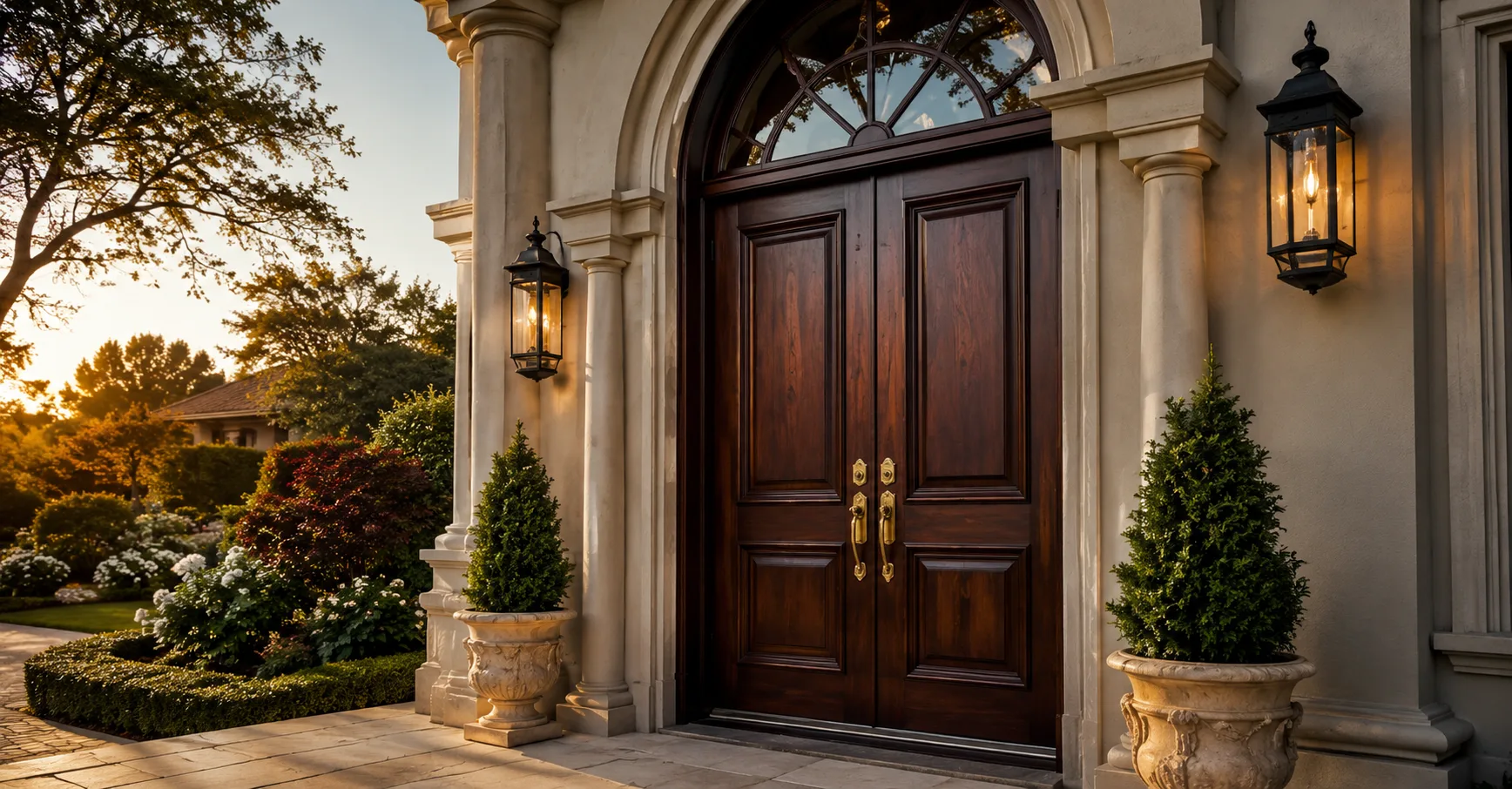
Best for: Grand entrances, independent houses, luxury developments
Double doors flanked by or topped with arched transom windows are the architectural equivalent of a handshake, confident and welcoming. The transom brings natural light into the foyer without compromising the door’s solid-core strength.
This design has become a signature element in projects by some of the best interior designers in India, particularly for villas and premium housing.
How to Choose the Right Secure Door for Your Home
Follow this quick decision framework:
- Identify the location: Main entrance, internal room, balcony, or commercial space?
- Assess the threat level: Urban apartment vs. standalone villa vs. ground floor vs. penthouse.
- Set your material priority: Wood (warmth), steel (strength), glass (light), composite (durability).
- Choose your lock system: Key-based, multi-point, smart lock, or biometric.
- Align with your interior style: Contemporary, traditional, minimalist, or heritage.
- Consult a professional: A qualified design firm or one of the top interior designers in India will coordinate door design with the overall architectural language of your space.
Key Takeaways
- A secure door doesn’t have to look industrial, material, frame, and lock technology all work together.
- Steel-core and solid-wood doors offer the highest break-in resistance without sacrificing beauty.
- Smart lock integration is now standard in premium Indian home design.
- The right door depends on your space: entrance, bedroom, balcony, or office.
- Working with experienced professionals, among the top interior designers in India, ensures both compliance and aesthetic harmony.
Final Word
The right door does two jobs simultaneously: it protects your home and tells the world something about your taste. Whether you’re drawn to the warmth of solid teak, the drama of a pivot entrance, or the clean lines of an armoured flush door, there is a design that delivers both.
The professionals who specify these doors, architects, interior designers, and space planners, deserve recognition for the expertise they bring to every project. Top Interior India is a dedicated PR and visibility platform for the top interior designers in India and leading architecture firms, helping them showcase their work, build authority, and reach the clients who matter most.
FAQs
Steel-core doors with multi-point locking. For aesthetics + strength, solid teak with a steel core and anti-crowbar edges is the top choice.
Yes, with a minimum 12mm toughened glass in a steel or aluminum frame and multi-point locks. Frame quality matters more than the glass itself.
A door that rotates on a vertical axis instead of side hinges. Inherently strong and near-impossible to force open from the hinge side.
Add a multi-point deadbolt, steel strike plates on the frame, and a smart lock overlay. Fast, affordable, effective.
Pivot doors, armoured flush doors with matte laminates, steel-framed glass panels, clean lines, and zero compromise on safety.