

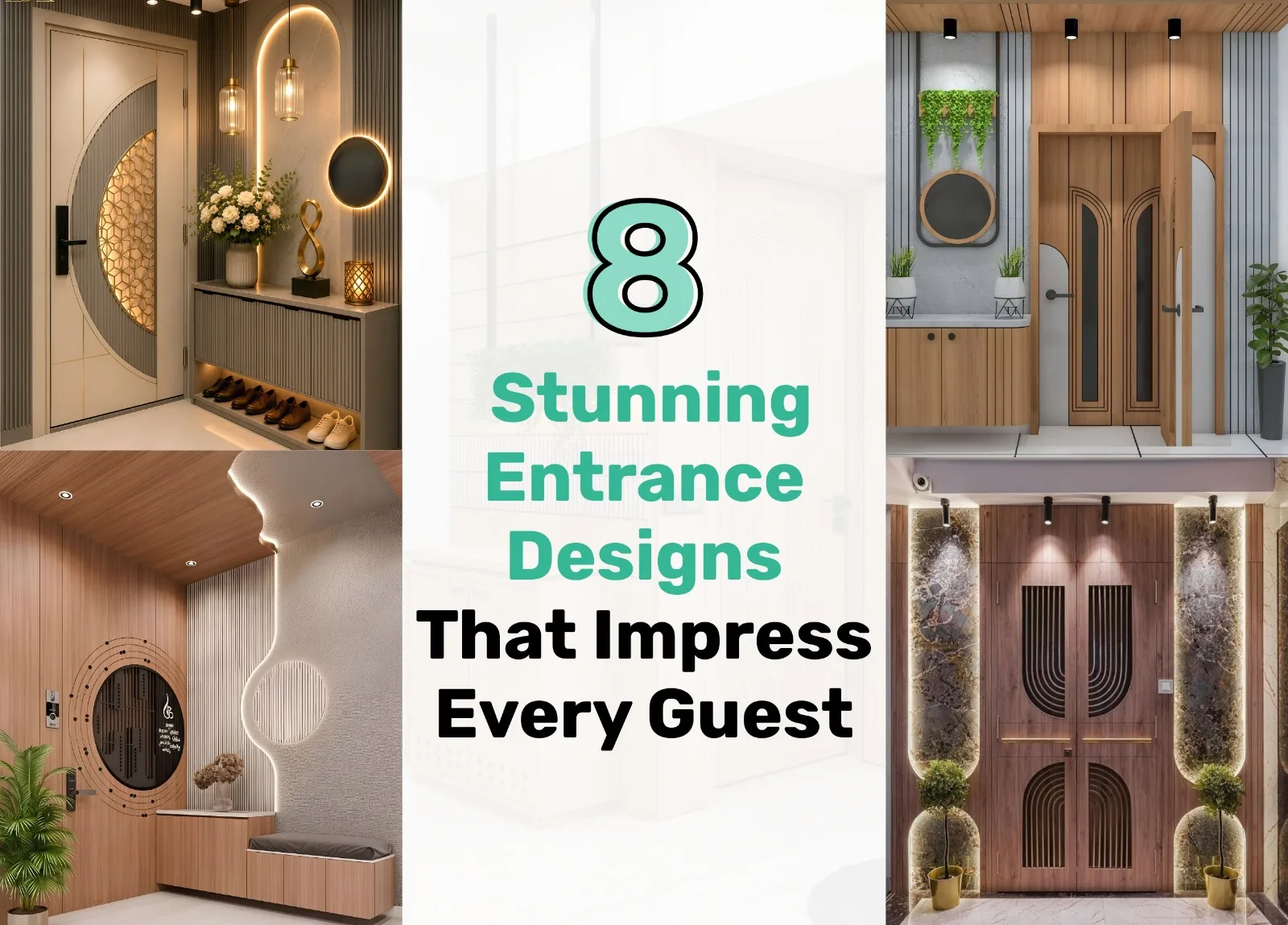
The entrance is the first thing anyone notices about a home. Long before guests admire your living room or kitchen, they form an impression based on the front door, lighting, landscaping, and overall presentation. A thoughtfully designed home entrance doesn’t just improve curb appeal, it reflects your personality, enhances functionality, and even increases your property’s perceived value.
8 Timeless Entrance Designs for a Grand First Impression
Whether you’re building a new home or planning a renovation, the right home entrance design should balance aesthetics, durability, climate suitability, and architectural harmony. In this guide, we’ll explore eight designer-recommended home entrance designs, explain where each style works best, share approximate costs, and offer practical tips to help you choose the perfect entrance for your home.
1. Grand Double-Door Entrance
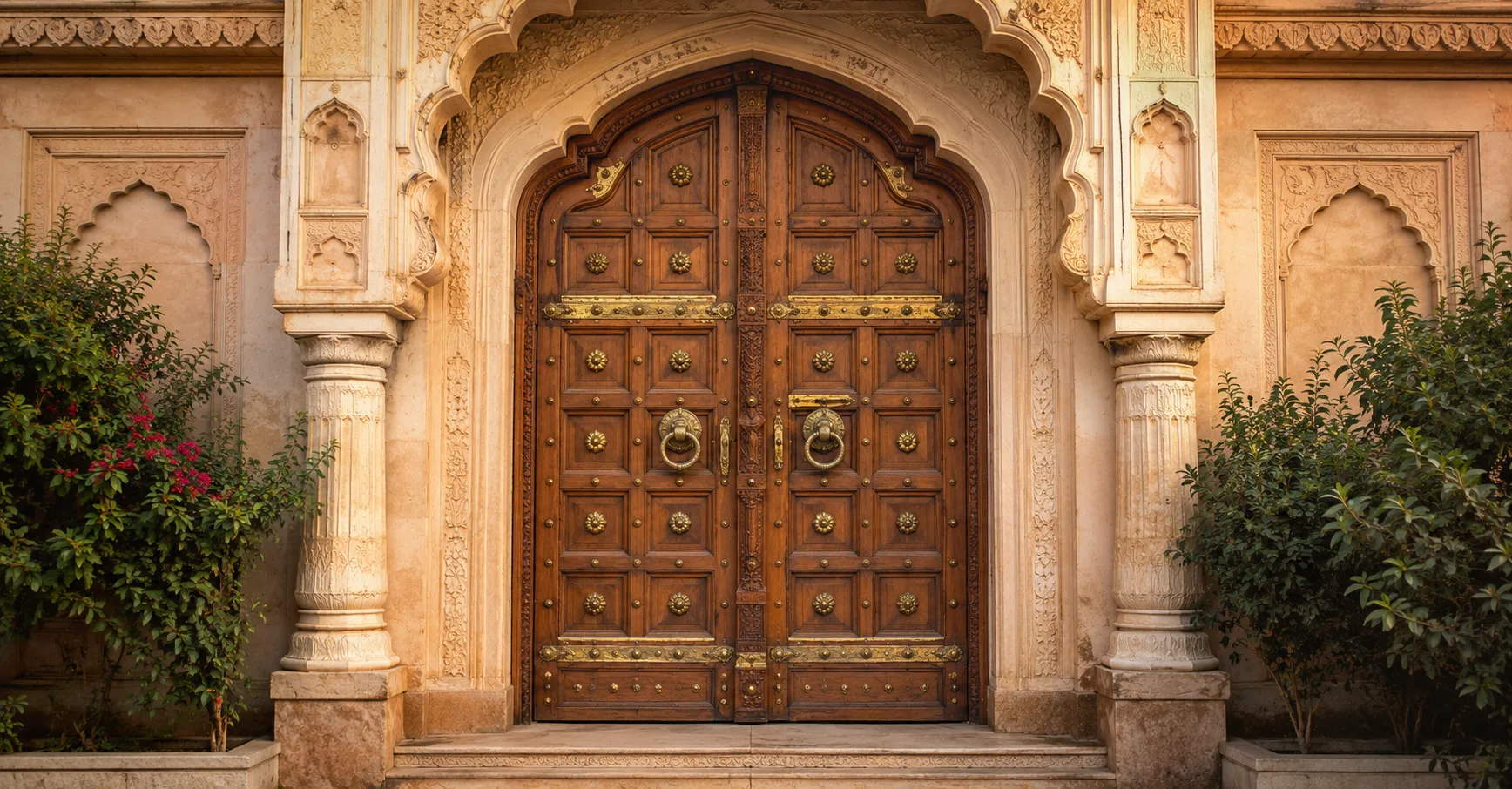
A pair of large, symmetrical doors in solid wood with brass or iron hardware creates scale and formality. The style traces back to Rajasthani and Gujarati havelis, where oversized doors signalled a family’s standing. Teak or sheesham is the usual wood choice since both resist warping in humidity.
The frame is reinforced with hidden steel or timber battens to carry the weight, hinges are sized for load, and brass fittings are usually fitted at the end. A final coat of oil or lacquer protects the wood through monsoons.
2. Minimalist Pivot Door Entry
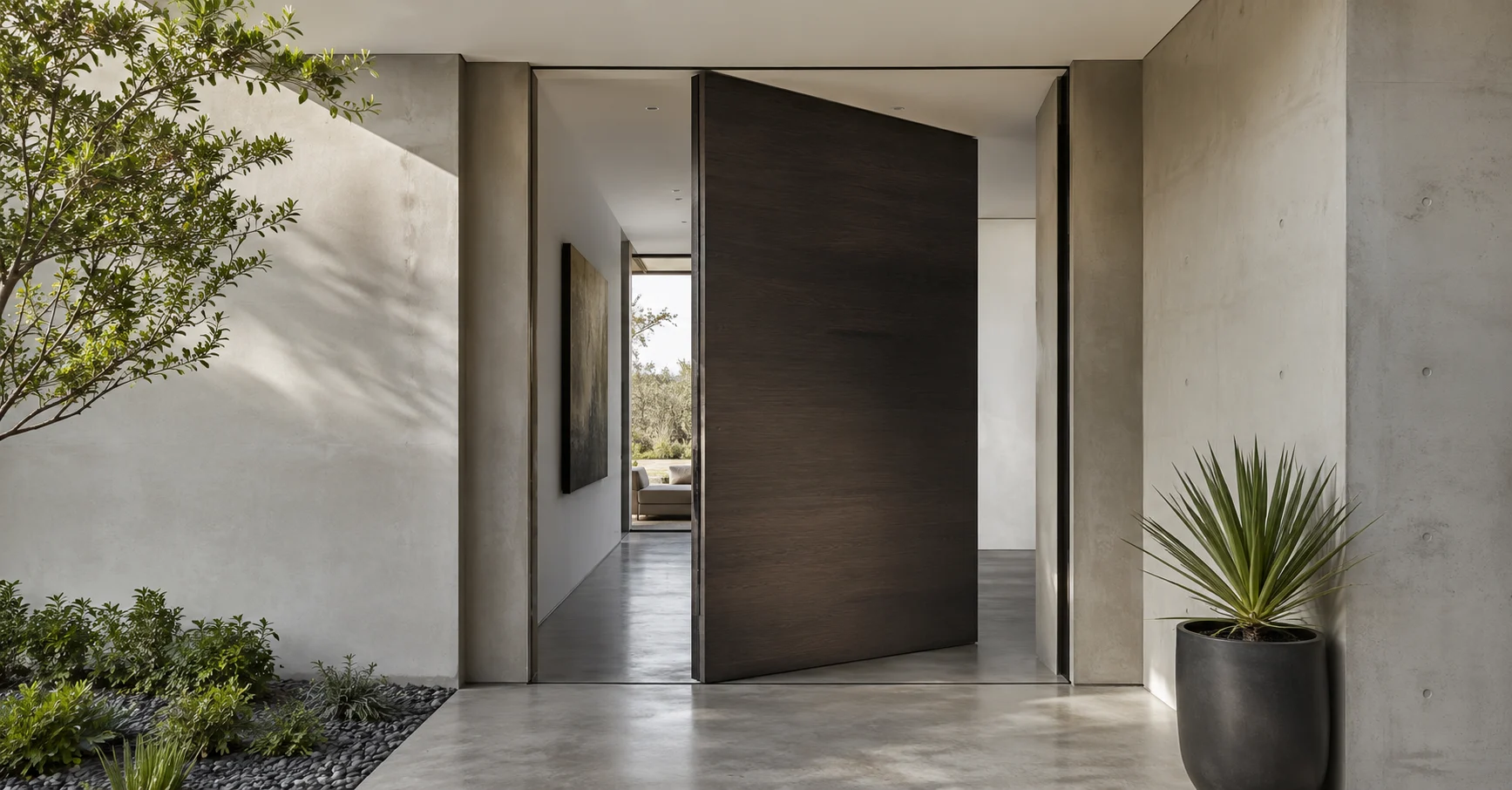
A single oversized door hinged at a central point gives a clean, architectural look popular in modern homes. Because the weight balances around a central axis, pivot doors can be built wider than standard doors without sagging.
The hardware is concealed in the floor and ceiling, giving that frameless look. The door core is usually solid engineered wood or aluminum honeycomb, and the surrounding floor needs to be perfectly level for a smooth swing.
3. Traditional Jharokha-Inspired Entrance
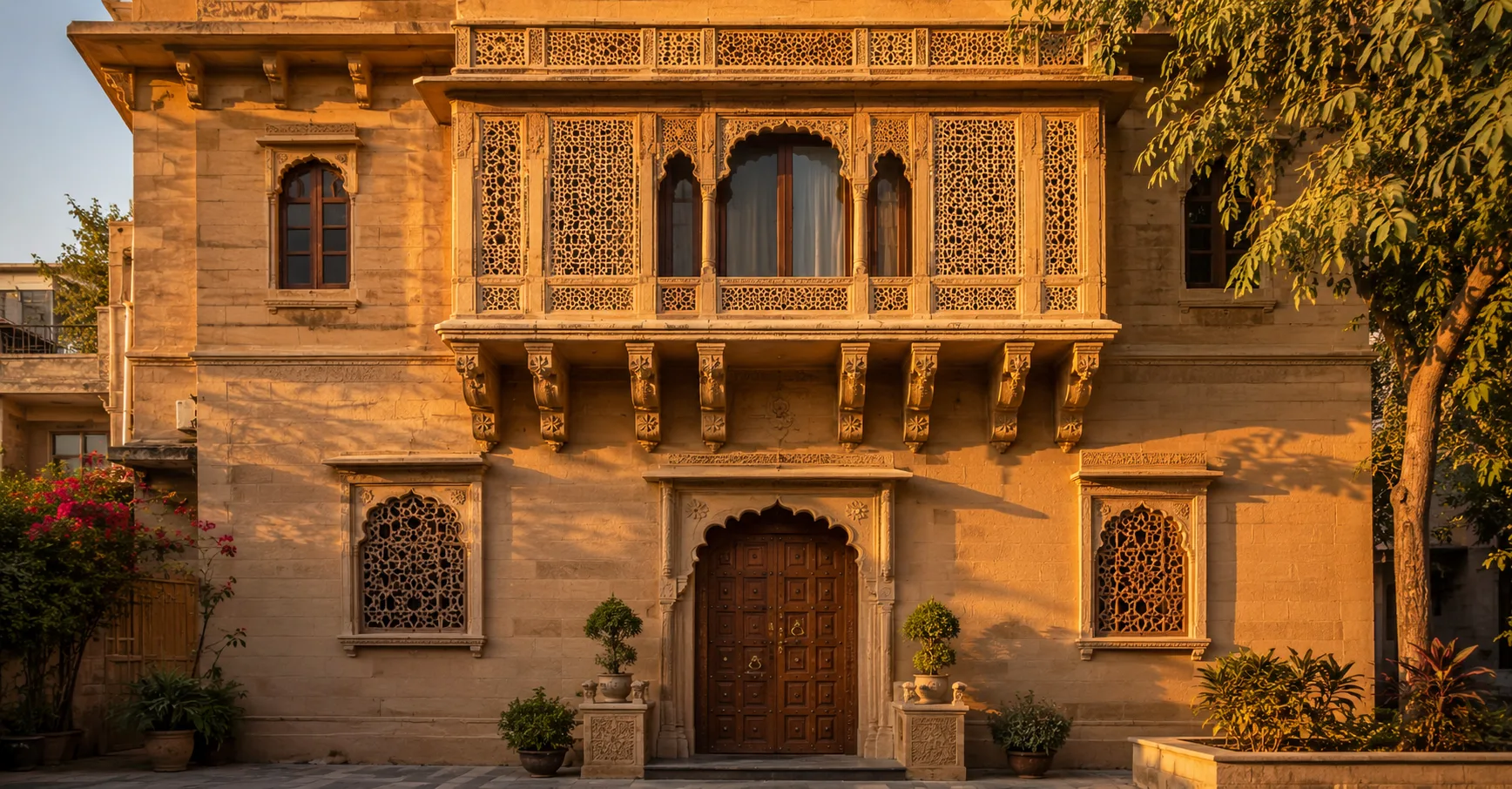
An overhanging balcony or window frame above the door adds depth and an Indian character. Jharokhas were originally built into forts and havelis for ventilation and for privacy when observing the street.
Today’s versions are usually GRC (glass-reinforced concrete) or teak, much lighter than carved stone, mounted on projecting brackets. Larger pieces need a structural engineer’s sign-off before installation.
4. Glass and Metal Contemporary Entry
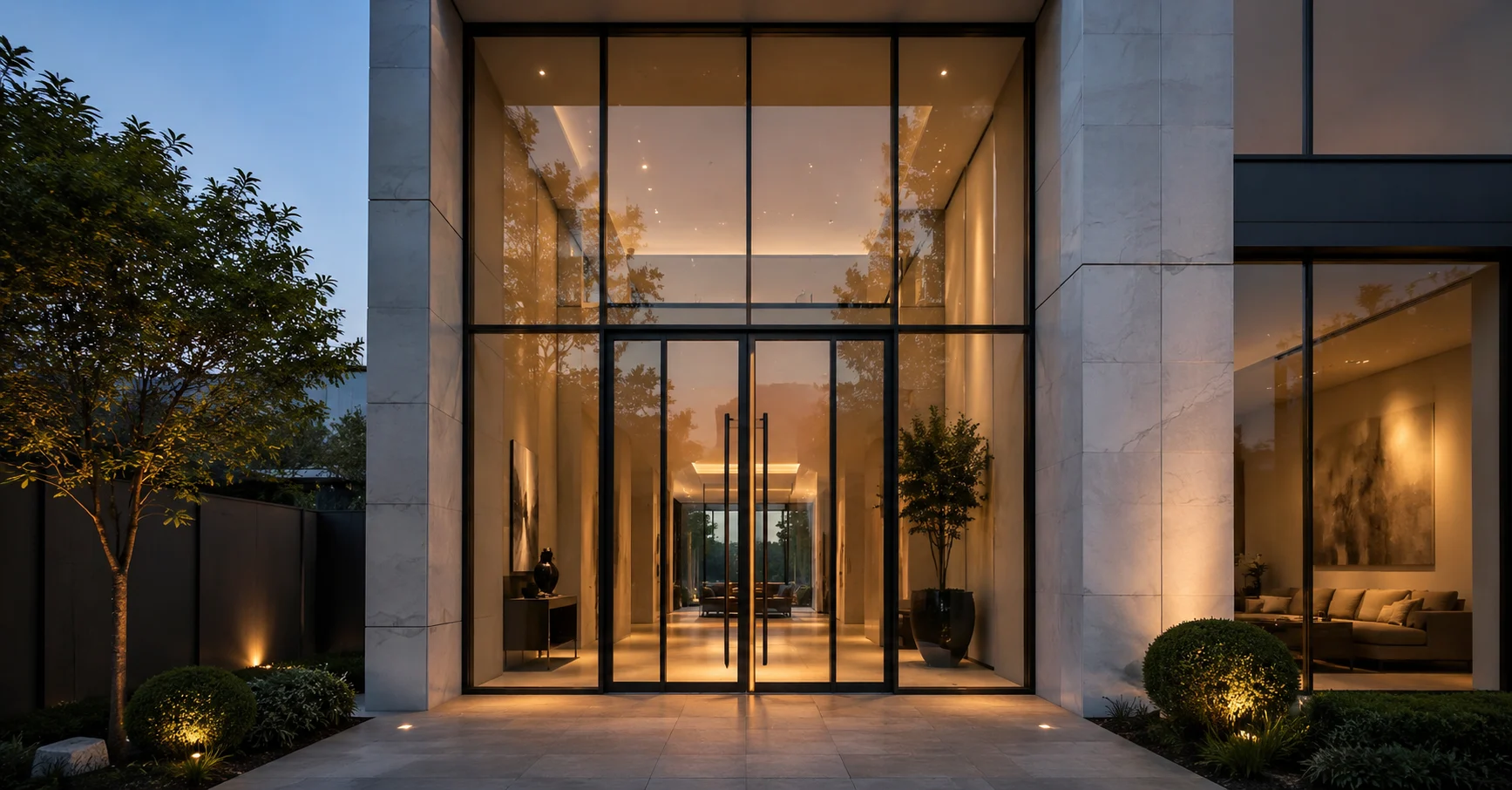
Full-height glass panels in slim metal framing connect the inside of the home with the outside and became common in Indian cities after the early 2000s. Toughened glass is used almost everywhere here since it breaks into blunt pieces rather than sharp shards.
Framing is typically aluminium or mild steel, with 10-12 mm toughened glass. In hotter regions, double glazing helps cut heat gain, and silicone sealant keeps the joints weatherproof.
5. Courtyard-Style Entrance
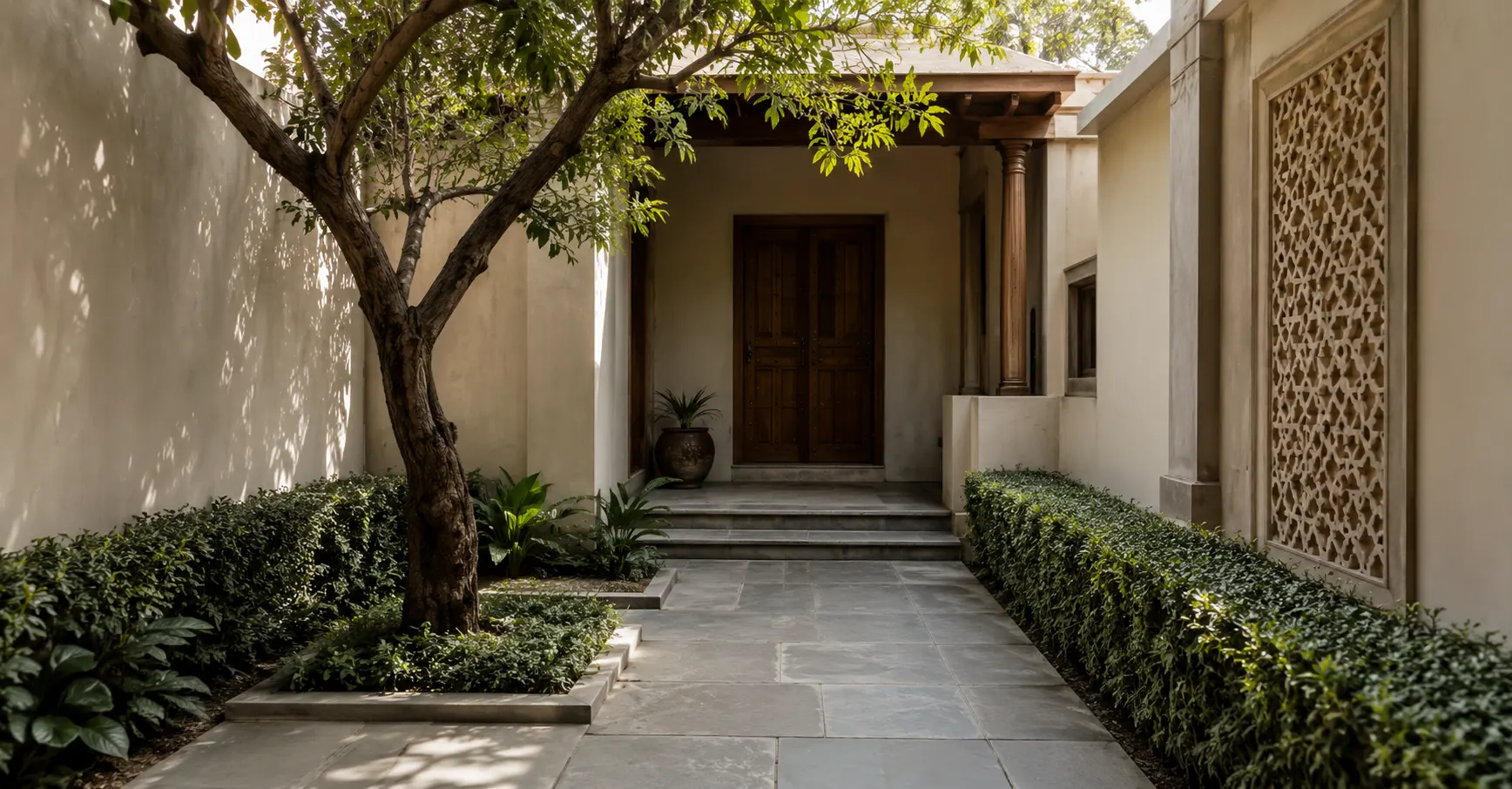
A small transitional courtyard before the main door, drawn from haveli planning, adds privacy and a sense of arrival. It also cools incoming air, which is why older havelis stayed noticeably cooler than homes opening straight onto the street.
This layout needs extra plot depth, usually 6 to 8 feet of walkway. Kota stone or cobblestone paving is common, framed with low hedges or a single feature tree.
6. Vertical Garden / Green Wall Entrance
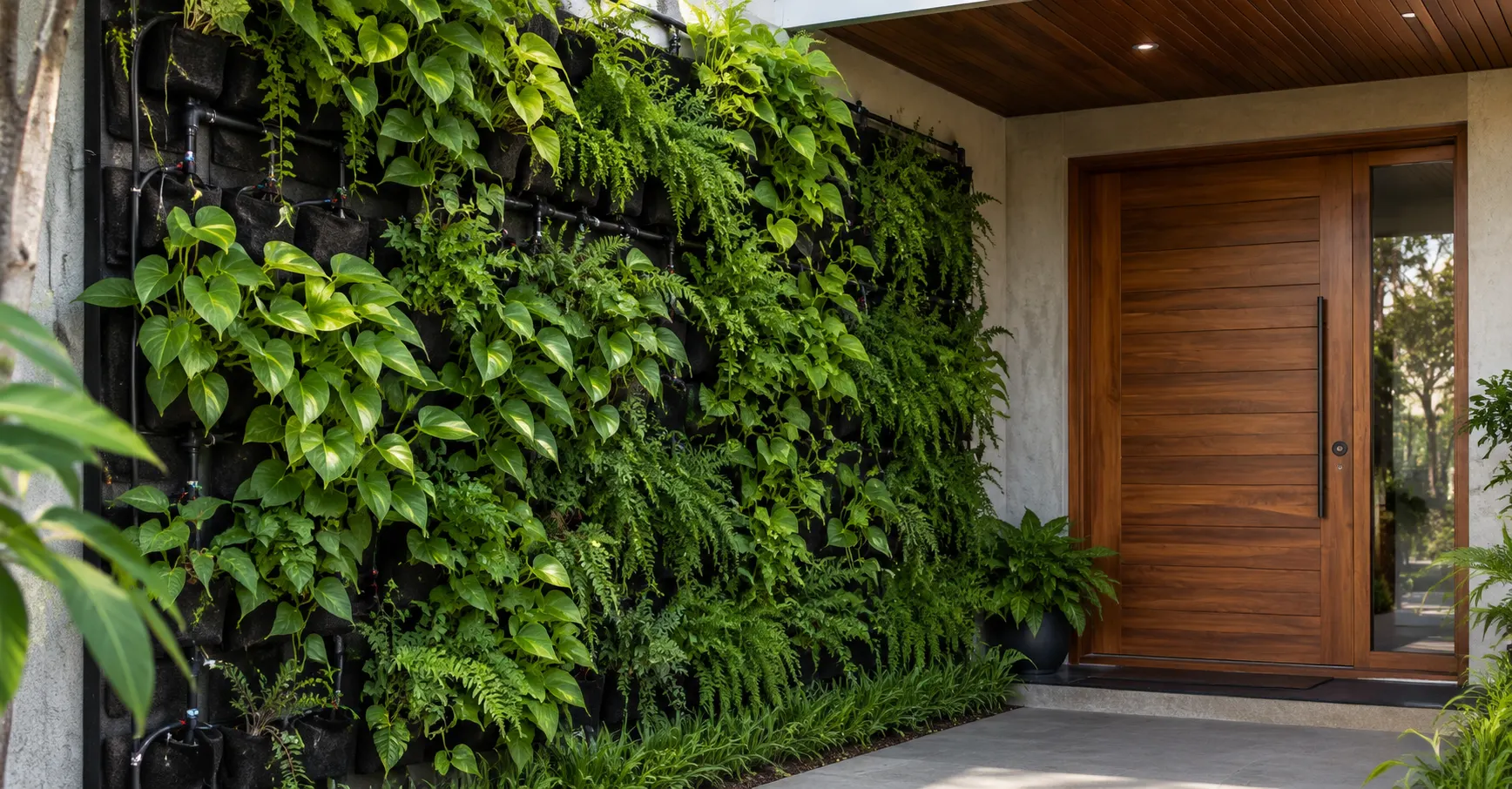
A living wall of plants softens the facade, lowers surface temperature slightly, and helps filter dust. Money plant, ferns, and philodendron are common picks since they handle shade and humidity well.
Most green walls use felt-pocket panels or PVC grids fixed onto a waterproofed wall, with drip irrigation on a timer. Sun exposure is checked first to choose the right plant mix.
7. Statement Lighting Entryway
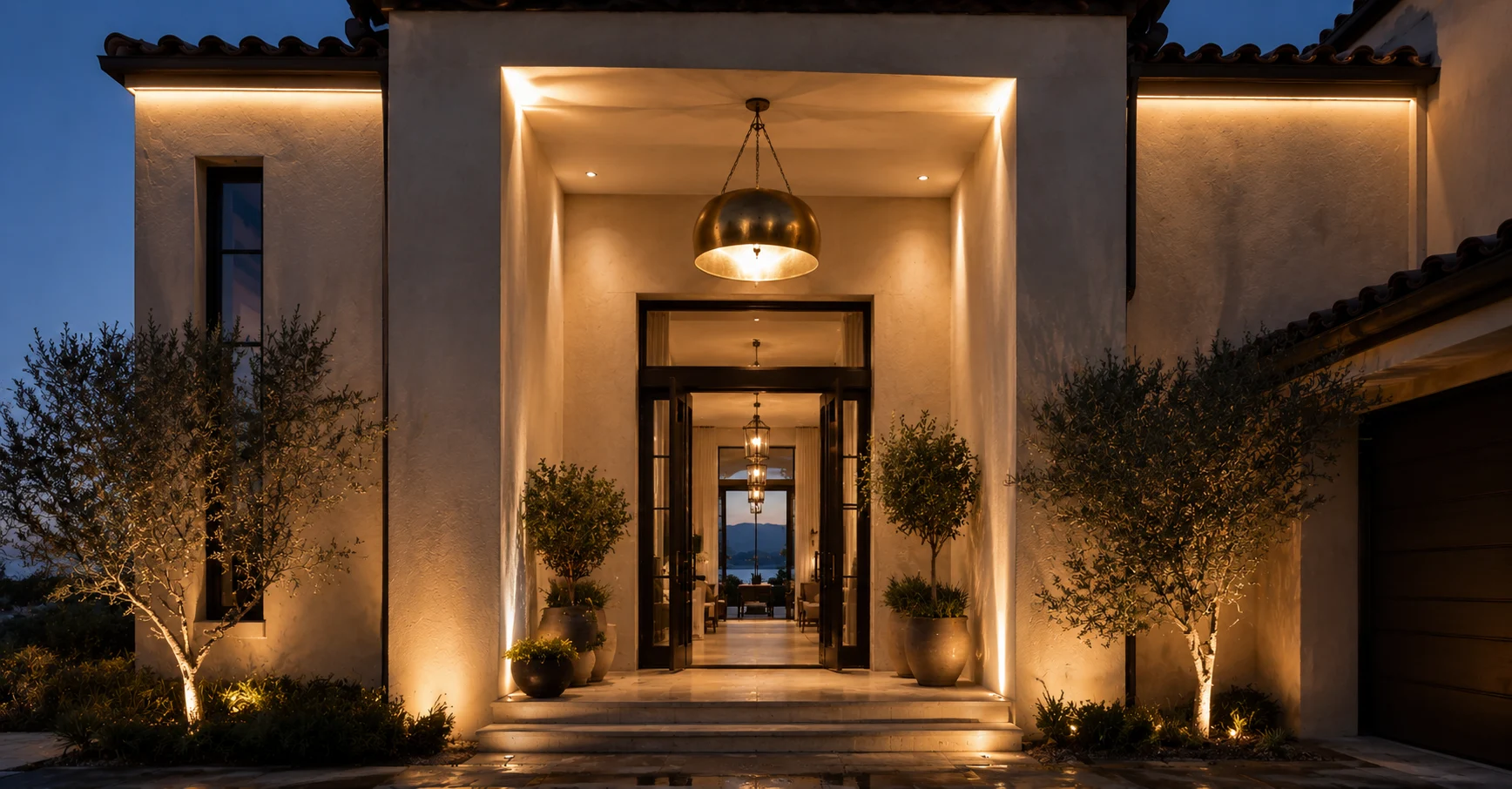
Oversized pendants, brass wall fixtures, or recessed cove lighting can turn a plain entrance memorable after dark. Warm light around 2700-3000K makes it feel inviting, and it’s the cheapest upgrade on this list since it doesn’t touch the structure.
Wiring needs to be planned into the facade early rather than added later. Outdoor fixtures should be IP65 rated, and cove lighting is recessed during construction so only the glow is visible.
8. Indo-Western Fusion Entrance with Jaali Work
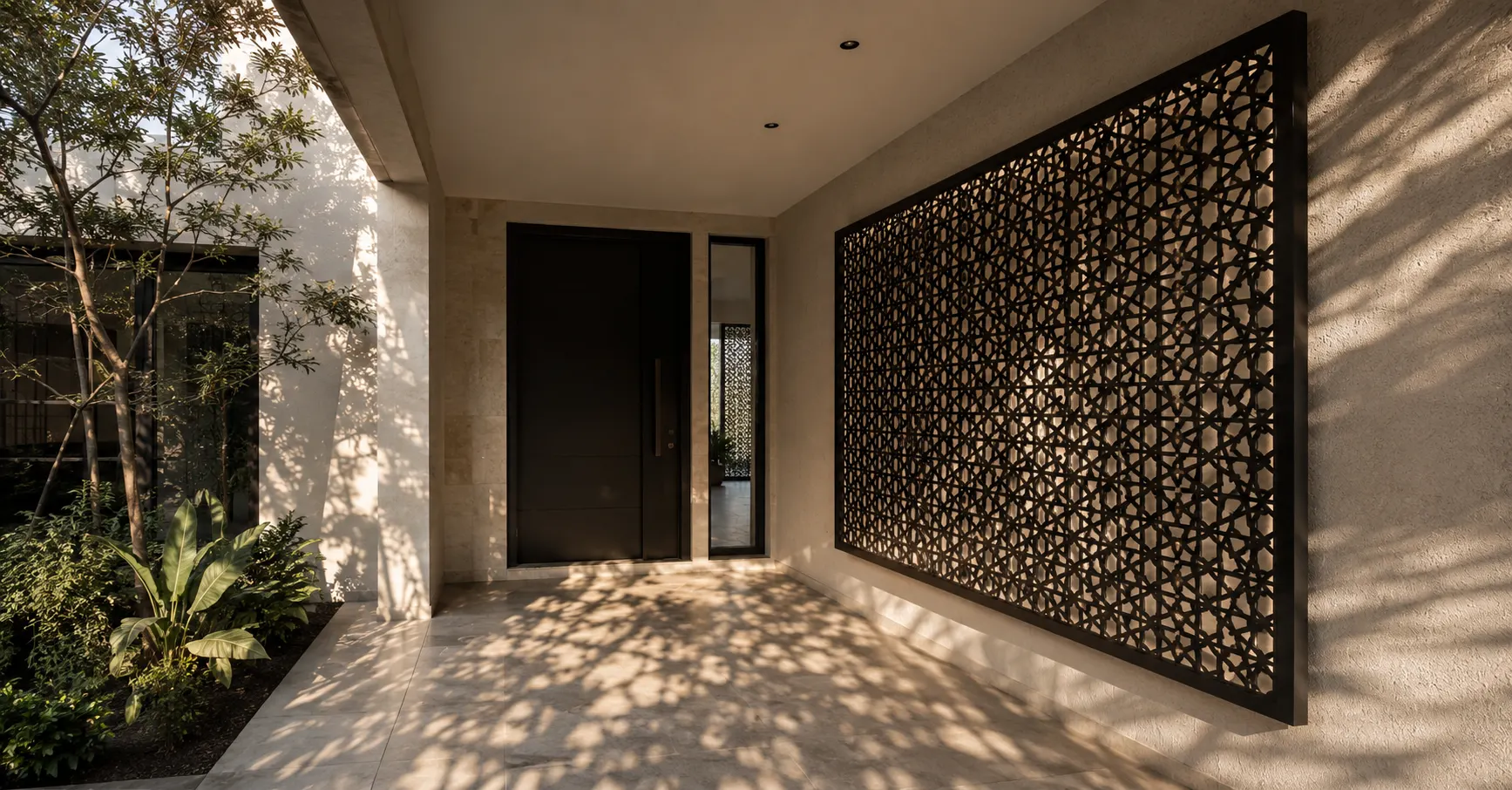
Modern materials, powder-coated metal or precast concrete, combined with traditional jaali (lattice) patterns, feel contemporary while staying rooted in Indian design. Jaali screens go back to Mughal and Rajasthani architecture, originally built for ventilation and privacy.
Panels today are usually laser-cut metal or precast concrete, mounted with a small gap from the wall for airflow. Patterns can be custom-designed digitally, so the shadow effect can be previewed before fabrication.
Key Takeaways
Proportion and a clear focal point matter more than heavy ornamentation.
Material choice should match both the local climate and the home’s architectural style.
Lighting is the most cost-effective way to lift an entrance.
Traditional elements like jaali and jharokhas work well when rebuilt in modern materials.
Whether you’re planning to build a new home or renovate your existing one, Top Interior India makes it easy to find the perfect interior designer for your project.
As one of India’s leading platforms for interior design, we connect homeowners with 1,000+ verified and experienced interior designers across the country. Compare portfolios, explore design styles, and choose the professional who best matches your vision, budget, and lifestyle, making your dream home a reality with confidence.
Conclusion
An entrance sets expectations before a single interior room is seen, and the ones that work best are planned with intent rather than added as an afterthought. It’s also a space that gets skipped often in DIY renovations, usually because it looks simple on the surface until the door doesn’t sit right or the lighting feels harsh.
If you’re weighing a redesign, it’s worth a conversation with one of the top interior designers in India before finalizing materials; small decisions like door weight or wall waterproofing are hard to undo later. Similar entrance ideas are often covered in an interior design magazine in India or in Architect Magazine, a good way to see how these styles play out in real homes.
FAQs
A successful entrance balances proportion, a clear focal point (door, light fixture, or landscaping feature), and materials appropriate to the home's climate and architectural style.
Many Indian homeowners factor in Vastu Shastra guidelines, particularly main door direction and threshold height, into entrance design, though this is a personal/cultural preference rather than a structural requirement.
Updating lighting fixtures and repainting or refinishing the existing door are typically the lowest-cost, highest-impact changes.
Yes, elements like jaali screens and jharokha-inspired overhangs are frequently reinterpreted in modern materials (metal, concrete) to fit contemporary facades without looking dated.
Scope varies widely, from a lighting and door refresh to a full facade renovation involving new materials, landscaping, and structural changes. A professional interior designer can help scope this based on the specific home.