


Every home has a space that feels calm, personal, and meaningful. A well-designed marble mandir not only enhances the aesthetics of your interiors but also creates a peaceful environment for daily prayers and meditation.
Whether you’re designing a compact apartment or a spacious villa, choosing the right Marble Mandir design with the right materials, lighting, storage, and detailing can transform an ordinary corner into the spiritual heart of your home. In this guide, you’ll discover practical design ideas, expert recommendations, and the interior elements that help create a timeless marble temple.
Why Marble Is the First Choice for Mandir Design
Marble is naturally cool, non-porous when sealed, and easy to clean after aarti, diya soot, and flower offerings. Vastu tradition also favours white and light-toned stone for the North-East (Ishan) corner. The best interior designers in India commonly specify three stones for mandirs:
- Makrana white marble: the same stone used in the Taj Mahal; dense, ages beautifully.
- Vietnam white marble: brighter, more uniform, budget-friendlier than Makrana.
- Banswara purple-vein marble: subtle grey-lilac veining for contemporary homes.
07 Marble Mandir Designs to Consider
As one of India’s leading interior design platforms, Top Interior India, published over a thousand residential home project case studies. Across these projects, we noticed a recurring trend, a strong preference among homeowners for elegant marble mandir designs. Given this widespread appreciation, we’ve curated the Top 7 Marble Mandir Designs that are highly recommended for Indian homes.
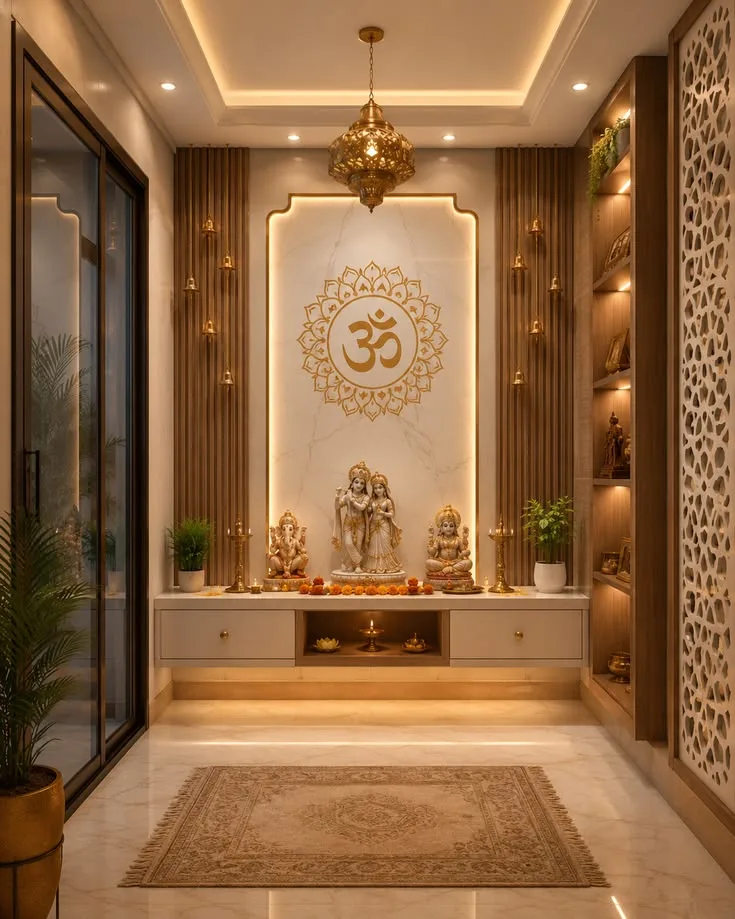
1. Backlit Wall-Mounted Marble Mandir
A slim carved marble panel fixed to the wall with concealed LED strips behind it. Ideal for apartments and flats where floor space is tight.
Elements used: thin Makrana marble slab (12–15mm), jaali cutwork, warm-white backlight, brass hooks for hangings.
Best for: 1–2 BHK homes, rental properties.
Designer tip: Keep the slab under 15mm thick, anything heavier needs a load-bearing wall bracket, which adds cost and limits where you can install it.
Watch out for: Cheap LED strips yellow out within a year; ask for 3000K CRI 90+ strips specifically.
2. Temple-Arch Floor Standing Mandir
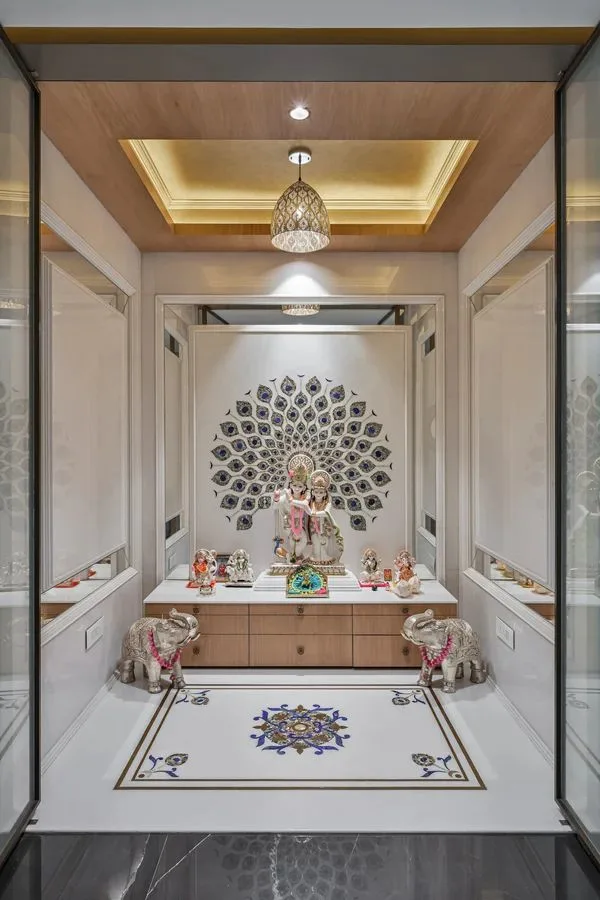
A classic domed structure with pillars, mimicking traditional North Indian temple architecture.
- Elements used: carved pillars, arched dome (shikhar), inlay flooring, brass bell.
- Best for: Villas, duplexes, joint-family homes.
- Designer tip: Order the dome and pillars from the same marble block, not the same “type.” Slabs from different blocks often have visibly mismatched veining once installed.
- Watch out for: This design needs a minimum ceiling height of 9 ft, measure before you fall in love with the design.
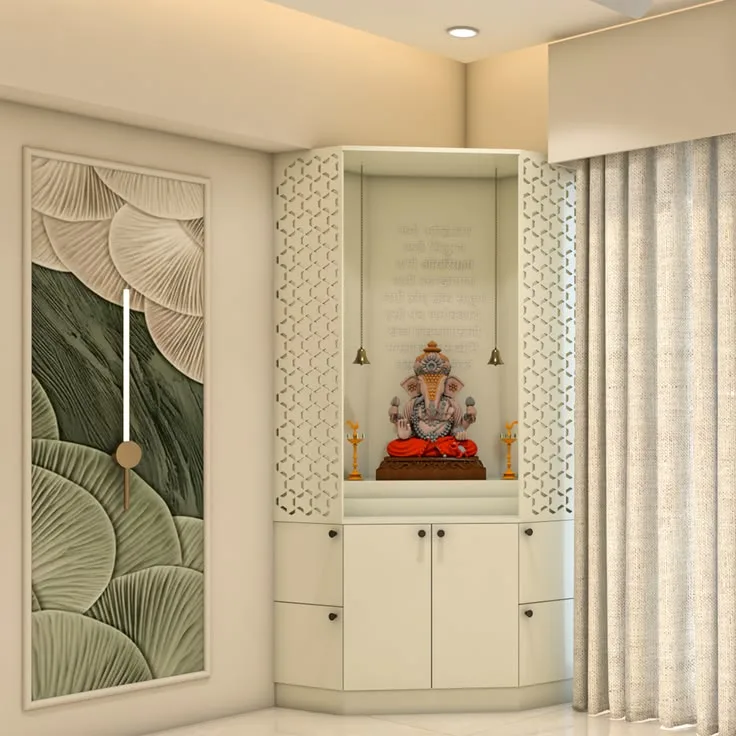
3. Corner Niche Marble Mandir
Built into a wall corner using a recessed marble frame, a favourite among top interior designers of India for small urban homes.
- Elements used: L-shaped marble base, corner LED cove, minimal carving.
- Best for: Studio apartments, home offices with a small pooja corner.
- Designer tip: This is the only design that can be planned during the civil/masonry stage itself, recessing the niche into the wall before plastering saves you a second round of construction later.
- Watch out for: Needs a non-load-bearing wall; a structural wall will require additional reinforcement work.
4. Green Marble Mandir with Gold Inlay
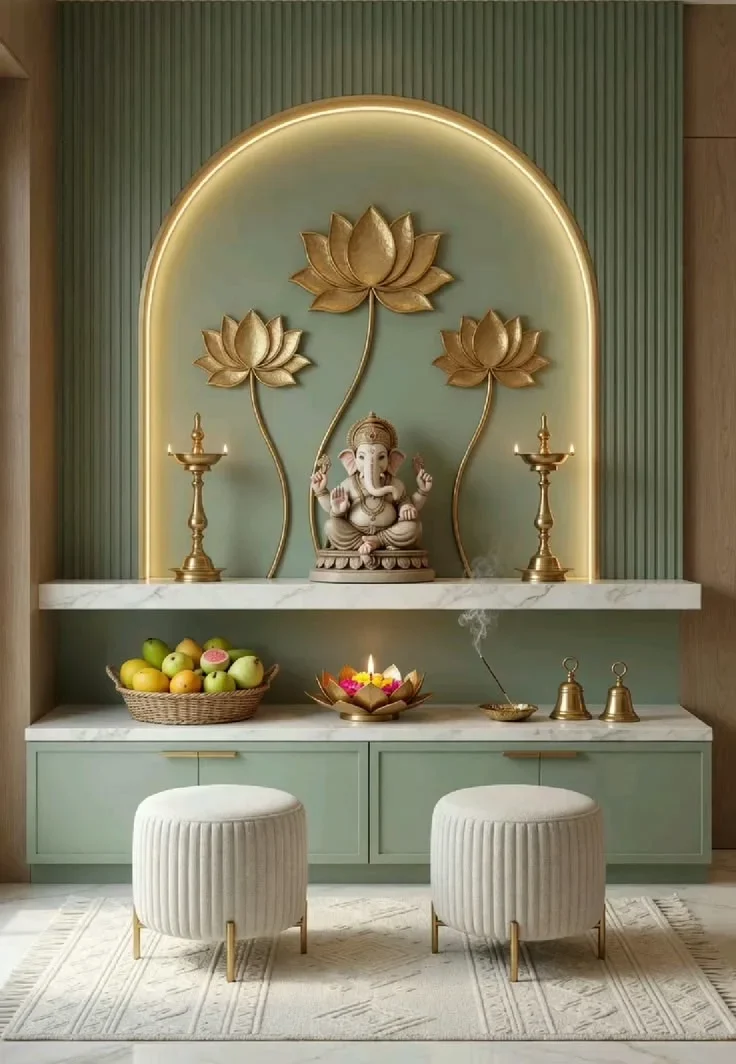
Uses green marble (associated with prosperity in Vastu) accented with brass or gold-leaf inlay work.
- Elements used: Green Marakoba marble, brass inlay lines, matte finish.
- Best for: Homeowners wanting a distinct, non-white palette.
- Designer tip: Go matte, not polished, on green marble, the polished finish reflects light unevenly and can make the inlay lines look broken from certain angles.
- Watch out for: Green marble is more porous than white marble; it needs sealing every 8–10 months instead of the usual 12–18.
5. Jharokha-Style Marble Mandir
Inspired by Rajasthani window architecture, an ornate carved frame that gives a “window into the divine” effect.
- Elements used: deep relief carving, twin pillars, arched jharokha frame, ambient uplighting.
- Best for: Statement pooja rooms, farmhouses.
- Designer tip: Deep relief carving traps dust in the grooves. Budget for a soft-bristle brush clean weekly, or the detailing gets lost within months.
- Watch out for: This is the heaviest of all seven designs, confirm floor load capacity before installing on an upper floor.
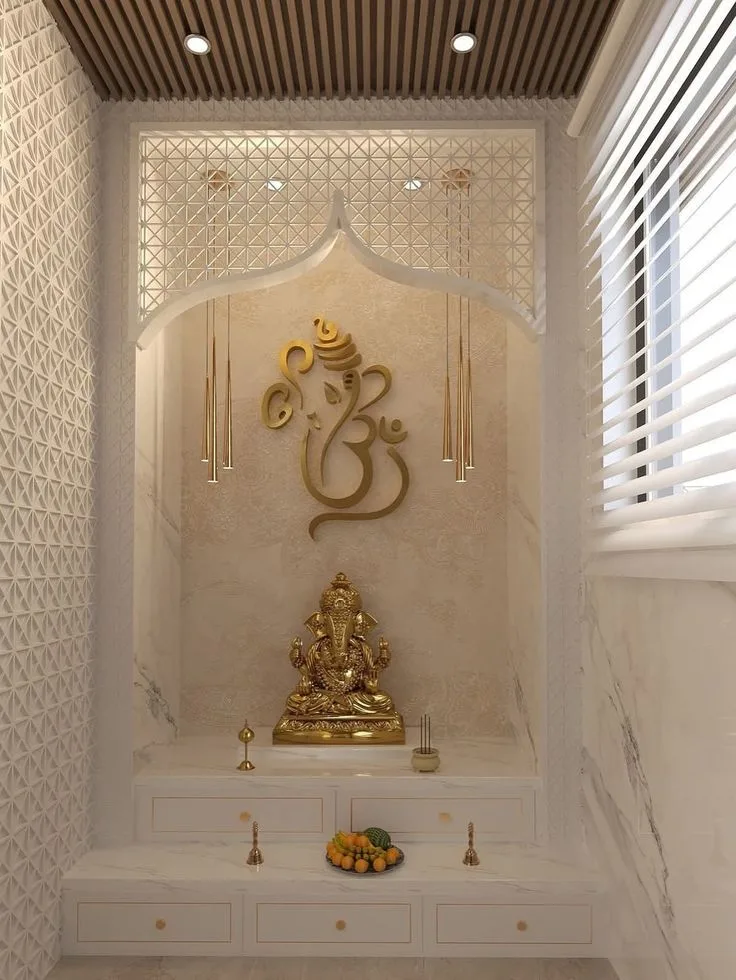
6. Minimalist Pink Onyx Mandir
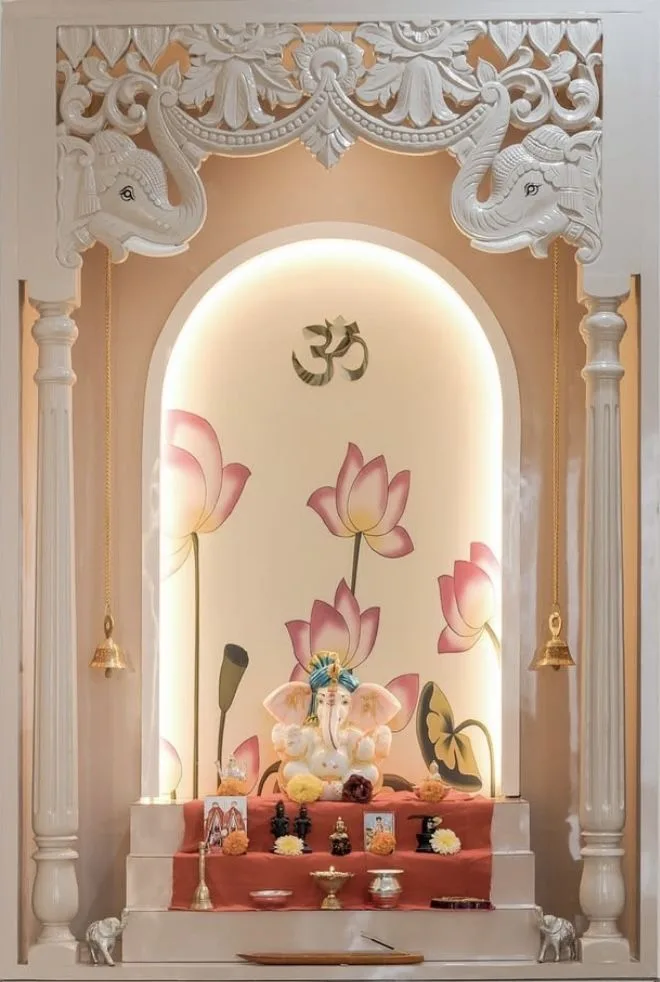
A contemporary take using translucent pink onyx that glows when backlit, popular in modern luxury projects.
- Elements used: onyx panel, hidden LED, single-shelf brass idol stand.
- Best for: Modern/contemporary interiors, penthouses.
- Designer tip: Onyx only shows its “glow” effect when backlit correctly, insist on a lighting mock-up before final installation, since the glow intensity varies by slab thickness.
- Watch out for: Onyx is softer than marble and scratches more easily; avoid placing metal items directly on the surface.
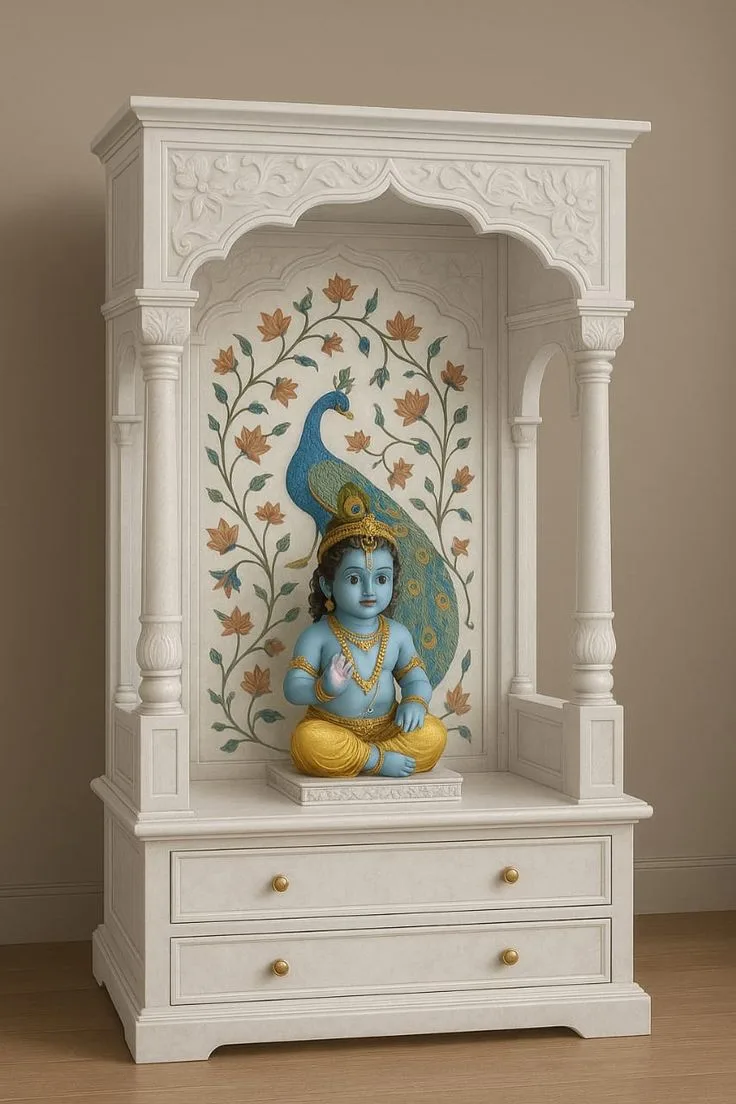
7. Freestanding Marble Mandir with Storage Base
A full unit with a carved top section and a functional storage cabinet below for pooja essentials.
- Elements used: two-tier marble structure, soft-close drawers, marble flooring plinth.
- Best for: Families needing storage for daily rituals.
- Designer tip: Ask for a marble top with a plywood-and-veneer base instead of solid marble throughout, it cuts weight and cost by nearly 40% without affecting the visible finish.
- Watch out for: Soft-close drawer mechanisms near diyas and incense can degrade faster from heat; choose a heat-resistant hinge rated for kitchen-cabinet use.
How to Choose the Right Marble Mandir Design: 5-Step Checklist
- Measure the available space and confirm the North-East corner is usable.
- Fix the stone budget first, stone is 40–55% of total mandir cost.
- Choose jaali or solid backdrop based on ventilation for diyas and incense.
- Plan electrical points early: backlight, spotlight, and bell/speaker point.
- Shortlist 2–3 of the top interior designers in India or your city and compare mandir portfolios, not just living-room work.
Final Thoughts
A marble mandir isn’t a single purchase decision, it’s a combination of material, craft, and placement choices made correctly the first time, because relocating a pooja unit later is rarely simple. Whether you choose a minimalist backlit panel or a full jharokha-style structure, the goal stays the same: a space that feels calm before the rest of the day begins.
FAQs
Makrana white marble is the most durable and traditional choice; Vietnam white is a brighter, more affordable alternative for modern flats.
Yes. Vastu recommends white or light-coloured stone in the North-East corner, which is why marble is the preferred mandir material in most Indian homes.
A compact wall-mounted marble mandir starts around ₹35,000, mid-range designs cost ₹60,000–₹2.5 lakh, and luxury inlay pooja rooms can exceed ₹4 lakh.
Yes. Floating and corner marble mandirs need only 5–12 sq. ft. of wall or corner space and are the most requested formats in metro apartments.
Wipe daily with a soft damp cloth, avoid acidic cleaners, keep diyas on a brass or glass plate, and reseal the marble every 12–18 months.