

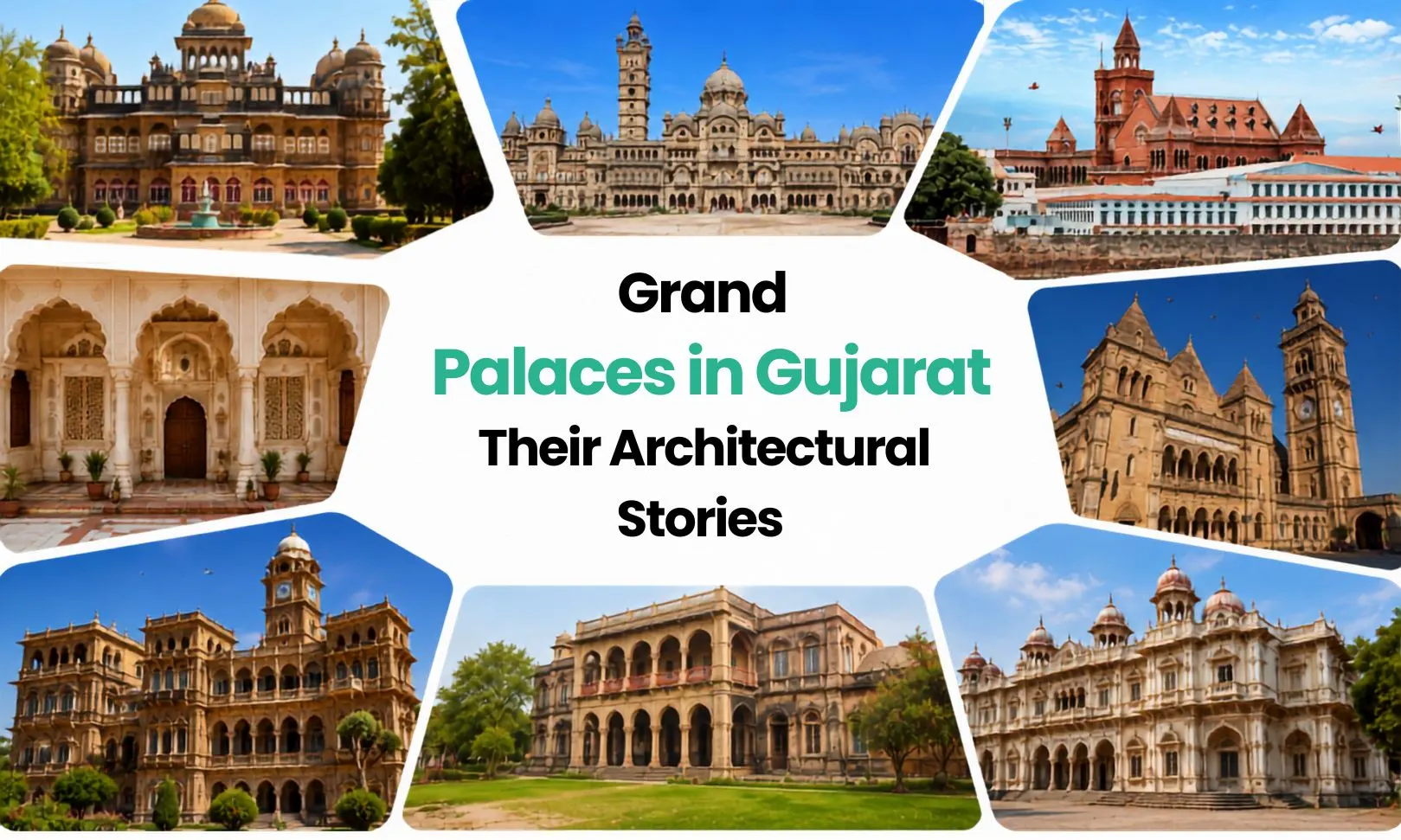
Gujarat is home to some of India’s most fascinating architectural palaces, where royal history, regional craftsmanship, and European influences come together. From Vadodara’s grand royal estates to the stone-built palaces of Kutch and the hilltop charm of Wankaner, these architectural palaces in Gujarat tell fascinating stories through their design.
Top 7 Palaces in Gujarat Known for Architectural Excellence
Each palace has its own architectural identity. Some are known for monumental scale, while others stand out for carved stone, mirror work, Gothic details, or multi-regional craftsmanship.
1. Laxmi Vilas Palace, Vadodara
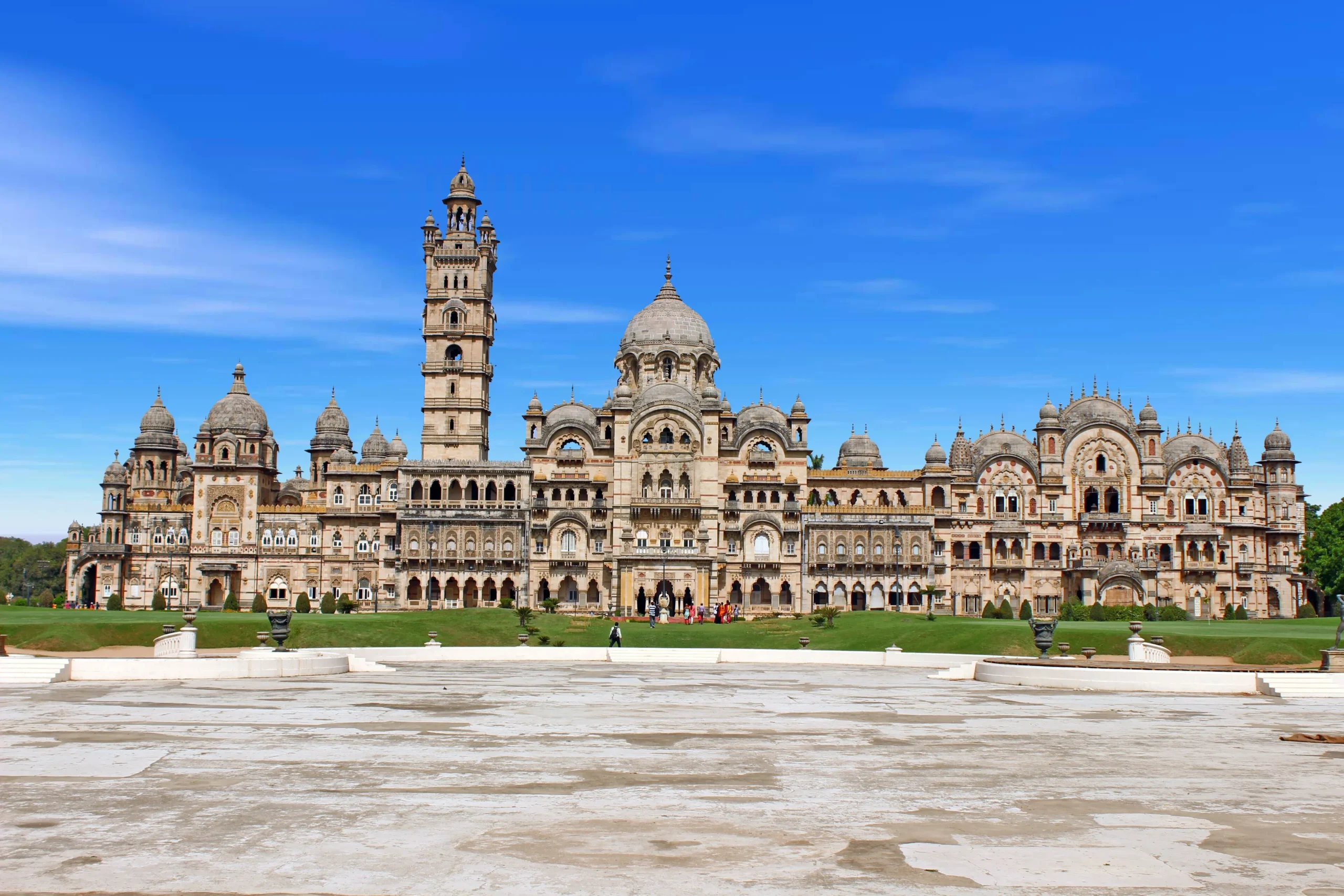
Built in 1890 for Maharaja Sayajirao Gaekwad III, Laxmi Vilas Palace is one of Gujarat’s most prominent royal landmarks. Its design is associated with Major Charles Mant, while architectural sources also credit R. F. Chisholm. The palace reflects an Indo-Saracenic character with domes, arches, towers, mosaics and European-inspired interiors.
The palace was planned as part of a much larger royal estate. Its grounds include the historic Navlakhi stepwell, creating an interesting connection between 19th-century palace architecture and Gujarat’s traditional water architecture.
2. Prag Mahal, Bhuj
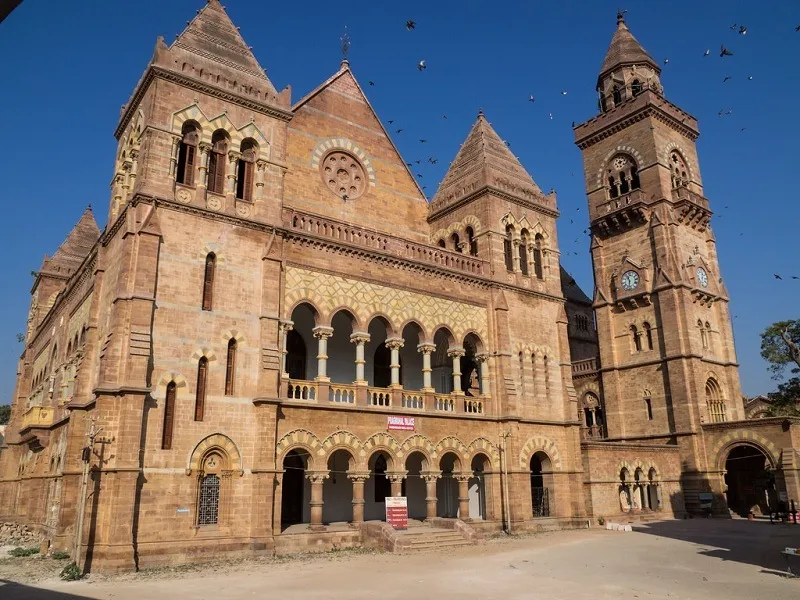
Located in Bhuj, Prag Mahal was commissioned by Rao Pragmalji II and designed by Colonel Henry Saint Wilkins. Italian craftsmen were involved in its construction, giving the palace a distinctive Italian Gothic character.
The building is known for its Gothic arches, detailed stonework and tall clock tower. Its position besides Aina Mahal creates an interesting architectural contrast between European Gothic design and Kutch’s decorative palace traditions.
3. Aina Mahal, Bhuj
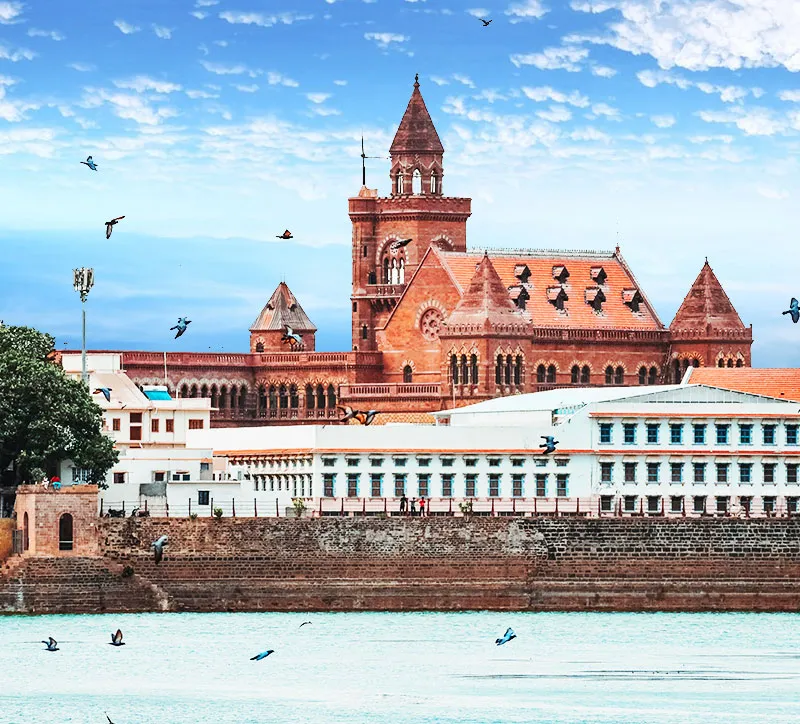
Aina Mahal was commissioned during the reign of Maharao Lakhpatji and is closely associated with Ram Singh Malam, who brought European artistic and technical influences to Kutch.
Unlike palaces that depend mainly on monumental scale, Aina Mahal is celebrated for its interiors. Mirrors, glass, tiles and intricate decorative work create a distinctive visual experience based on light, reflection and craftsmanship.
4. Vijay Vilas Palace, Mandvi
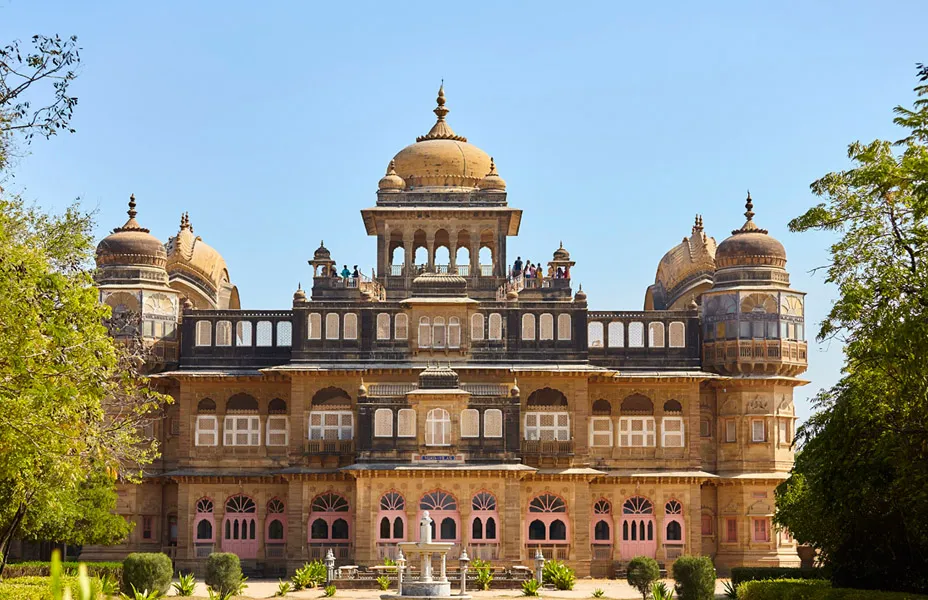
Built between 1920 and 1929 as a summer residence for Yuvraj Vijayaraji, Vijay Vilas Palace showcases a strong Rajput architectural vocabulary. Its red sandstone structure features jalis, jharokhas, chhatris, domes, carved stonework and coloured glass.
One of its defining characteristics is its multi-regional craftsmanship. Artisans from Jaipur, Bengal, Saurashtra and Kutch, along with local craftsmen, contributed to different elements of the palace.
5. Ranjit Vilas Palace, Wankaner
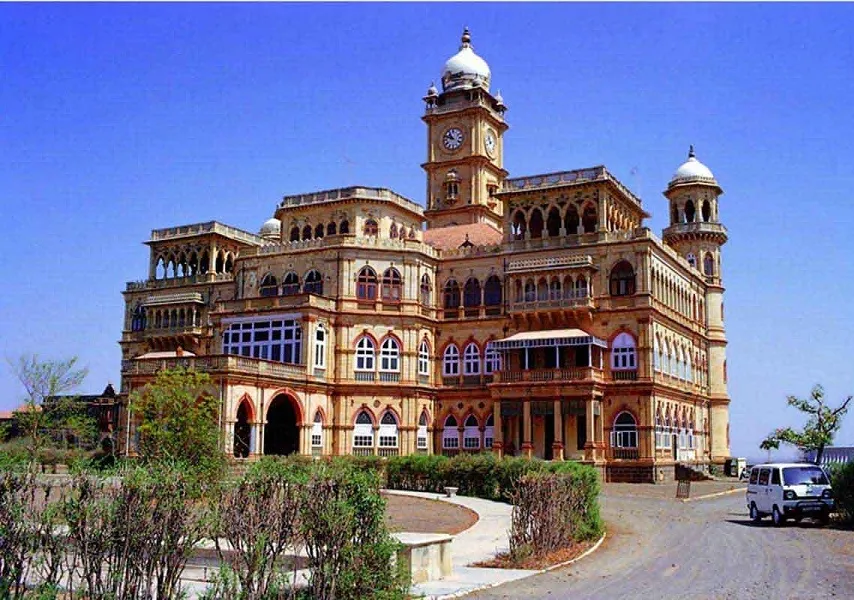
Set in Wankaner, Ranjit Vilas Palace demonstrates how different architectural traditions can be combined within one royal residence. Its design incorporates Venetian Gothic, Italianate, Mughal and Rajput influences.
Arches, columns, jharokhas, domes and European-style openings appear together, creating a layered architectural character. Its elevated setting also strengthens the relationship between the palace and the surrounding landscape.
6. Nilambag Palace, Bhavnagar
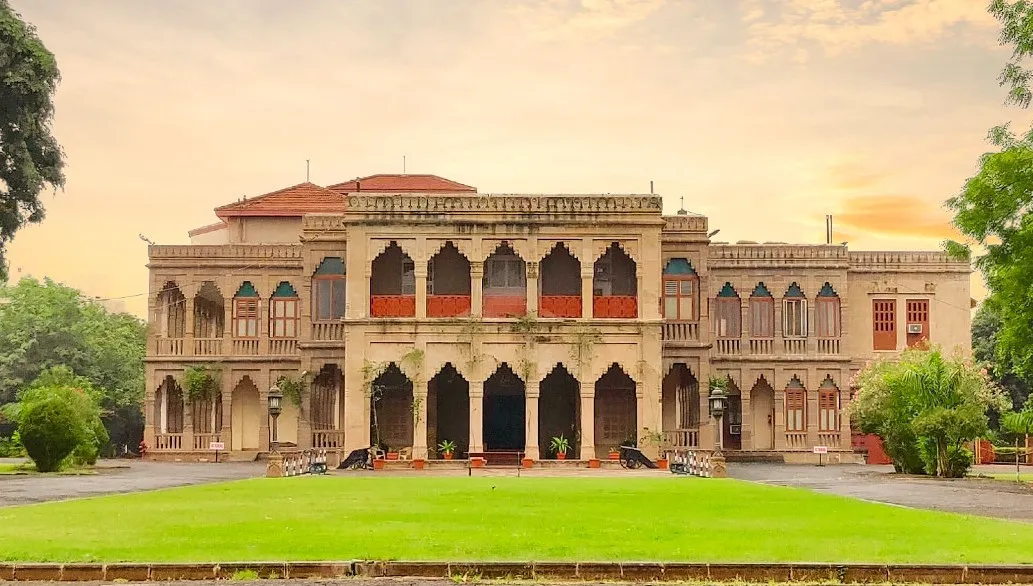
Nilambag Palace presents a different architectural story. Its architect is not consistently documented, with different historical sources attributing its design to different individuals. This makes it more appropriate to focus on its architectural planning rather than assign one definitive architect.
The palace is notable for its relationship between the main residence, landscaped grounds, circulation areas, and other parts of the royal estate. This broader planning shows that royal architecture was about creating a complete environment rather than designing only an impressive façade.
7. Naulakha Palace, Gondal
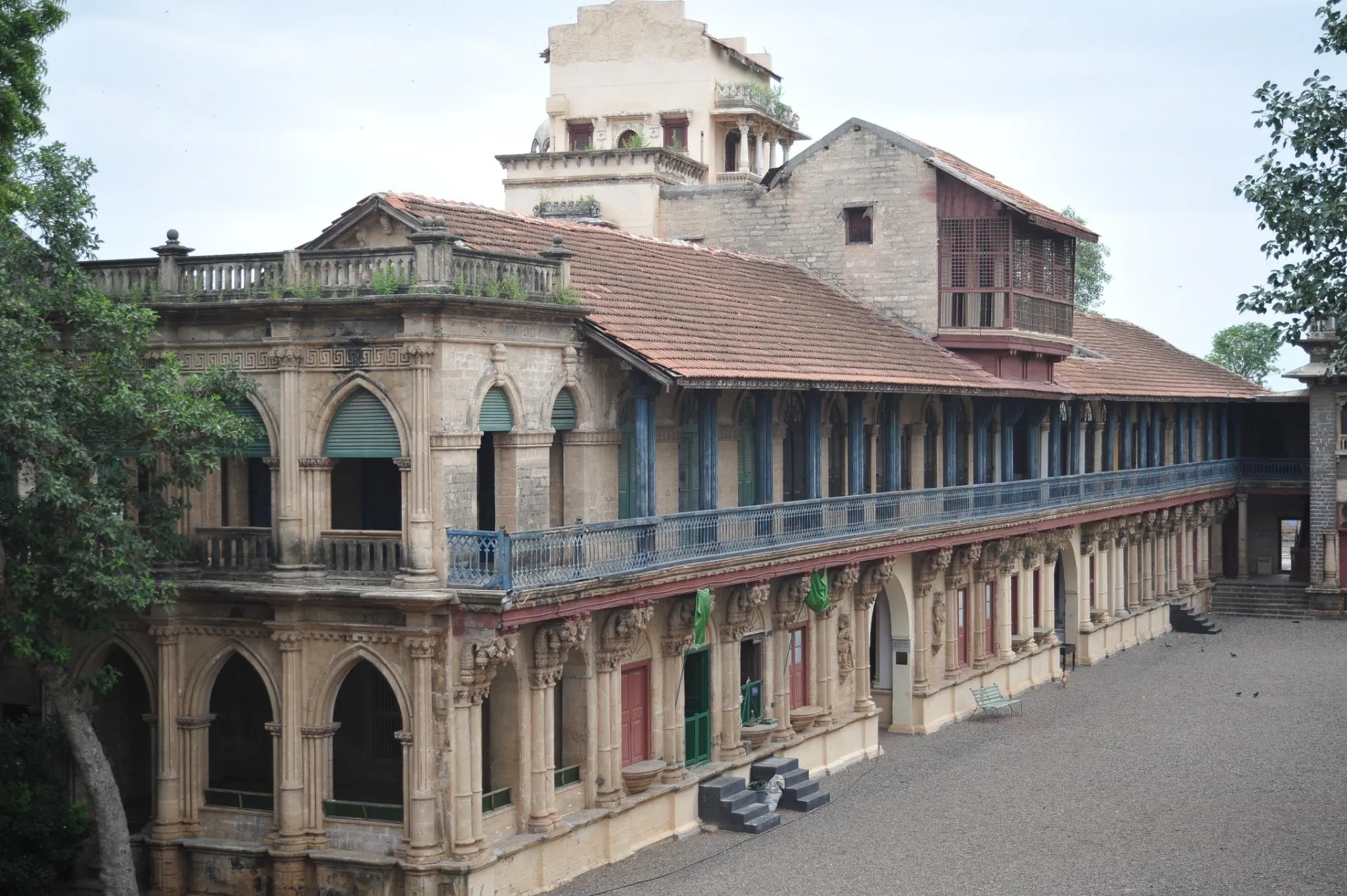
Located within Gondal’s historic Darbargadh complex, Naulakha Palace is particularly known for its detailed craftsmanship. Its stone façade, carved arches, jharokhas, pillared courtyard and spiral staircase give it a distinctive regional character.
The palace demonstrates how traditional craftsmanship can become an important part of architectural identity. Here, carved stone is not merely decoration; it plays a central role in defining the building’s appearance.
Conclusion
The grand palaces of Gujarat are more than reminders of the state’s royal past. They represent different approaches to architecture, craftsmanship, materials, and spatial planning. From Laxmi Vilas Palace and its Indo-Saracenic character to Aina Mahal’s decorative interiors and Vijay Vilas Palace’s multi-regional craftsmanship, each landmark tells a different architectural story.
Together, these architectural palaces in Gujarat show how local traditions could absorb new influences while maintaining a strong regional identity. Their buildings, interiors, and craftsmanship continue to offer valuable insights into Gujarat’s architectural heritage.
FAQs
Laxmi Vilas Palace is one of Gujarat's strongest examples, combining Indian, Mughal and European architectural influences at a large scale.
Colonel Henry Saint Wilkins designed Prag Mahal in the Italian Gothic style during the reign of Rao Pragmalji II.
Aina Mahal is notable for Ram Singh Malam's use of mirrors, glass, tiles and European decorative techniques, creating a distinctive royal interior.
Its design combines Rajput planning with craftsmanship from Kutch, Jaipur, Bengal and Saurashtra, creating a distinctly multi-regional architectural character.
Ranjit Vilas Palace in Wankaner combines Venetian-Gothic and Italianate elements with Mughal and Rajput forms.
Aina Mahal in Bhuj is particularly known for its elaborate mirror work, glass decoration, tiles and European-inspired decorative techniques.