
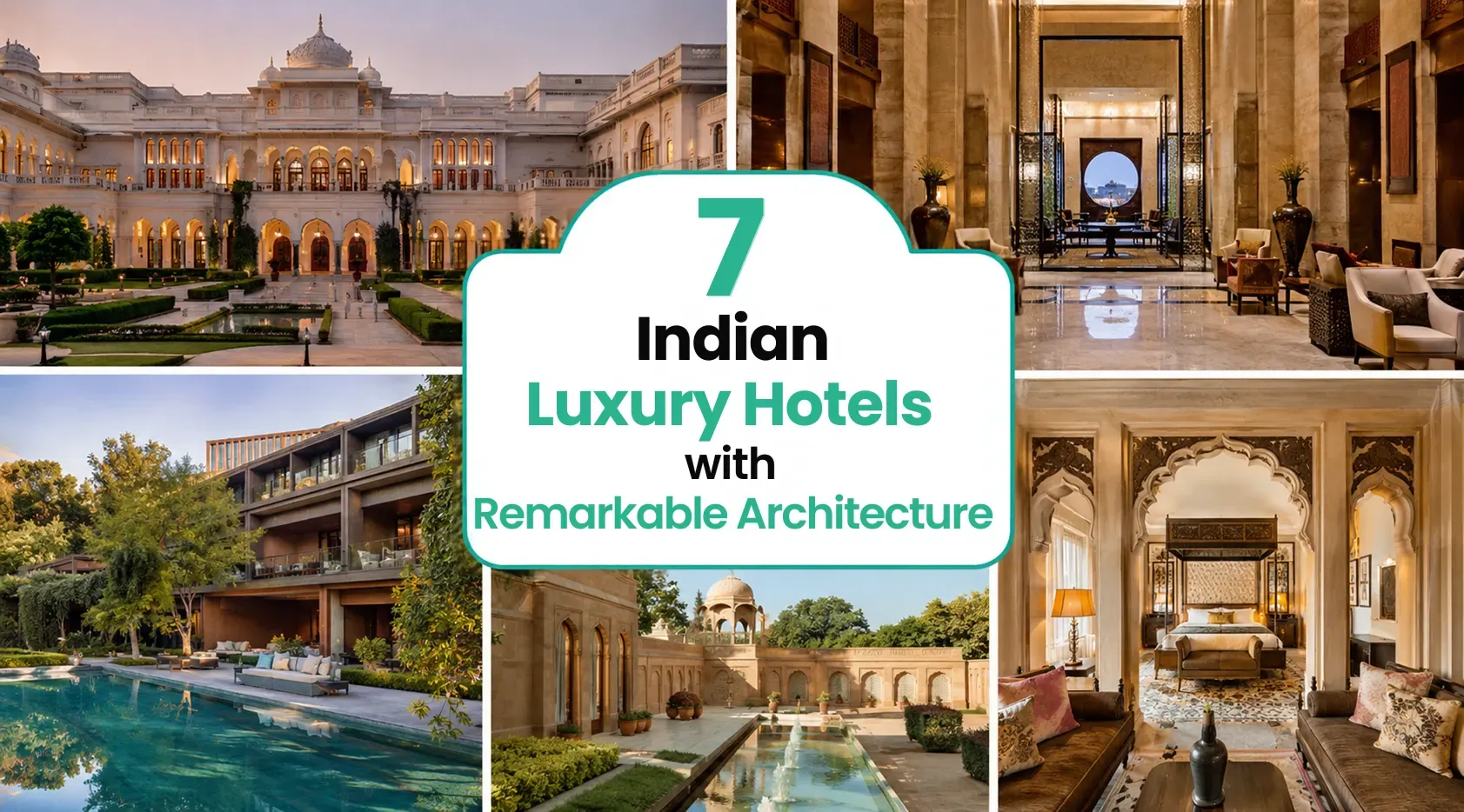
Luxury hotels in India are often palaces first and hotels second, and you can still see it in every arch, courtyard, and carved stone screen. Sandstone facades glow in the afternoon sun, marble courtyards open onto still water, and each corner carries the craftsmanship of a different era.
Guests come for the royal experience, but architects and interior designers come for something else: a masterclass in how heritage design can live on in a modern space. From Udaipur’s lakeside palaces to Delhi’s Art Deco landmarks, these seven hotels show how materials, layouts, and fine detailing can turn a building into an experience.
Top 7 Luxury Hotels in India and Their Architectural Styles
1. The Oberoi Udaivilas, Udaipur
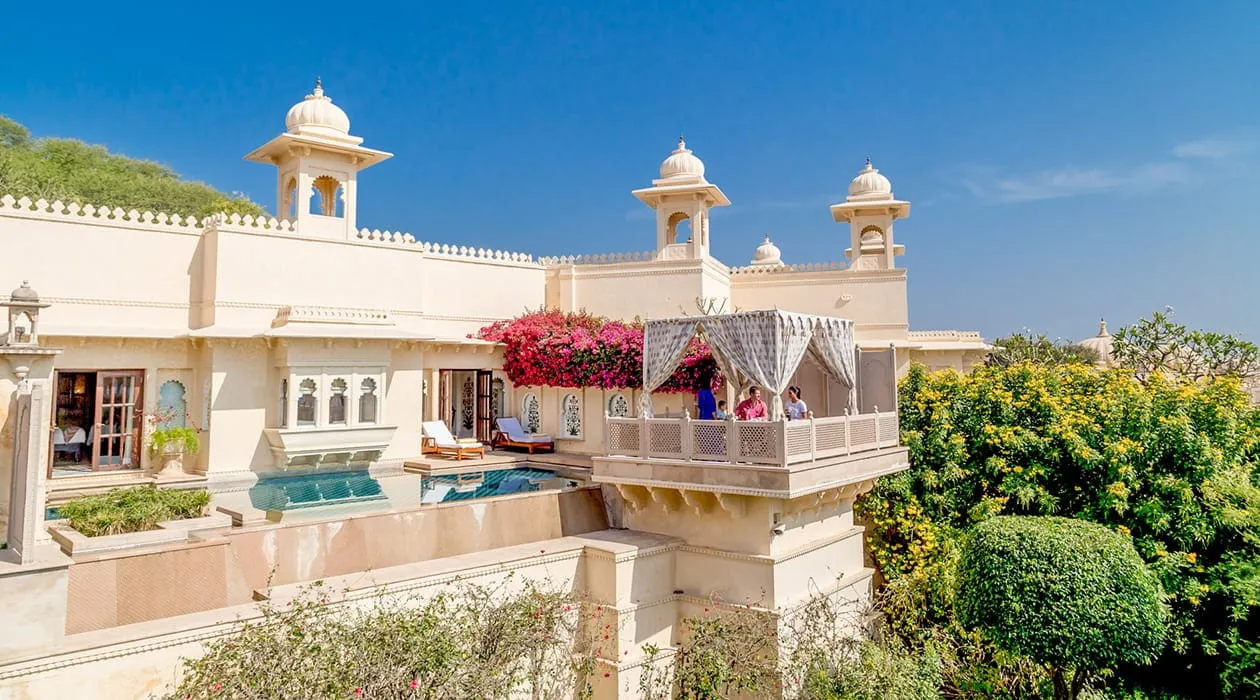
- Style: Mewari palace architecture
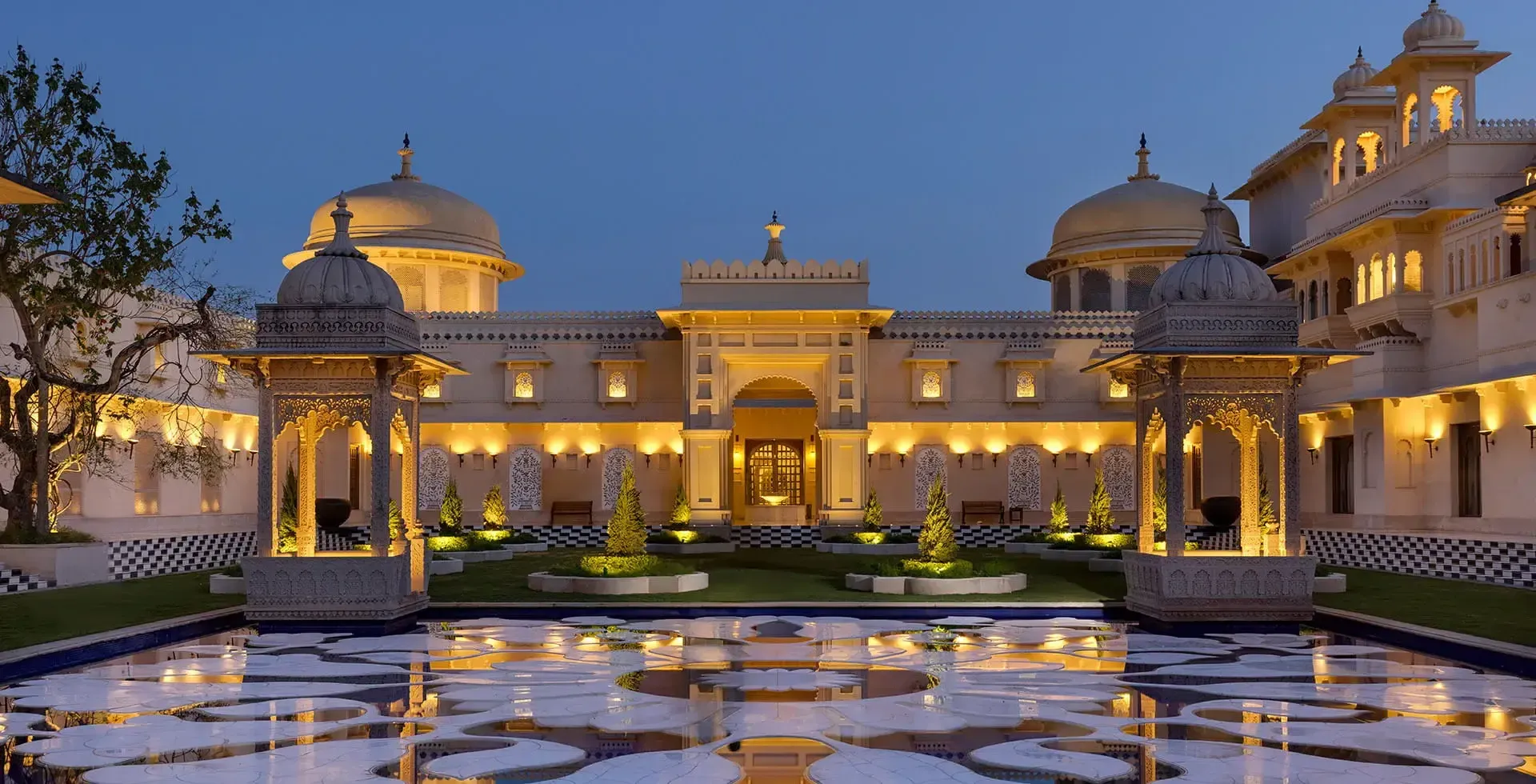
- What stands out: Opened in 2002, this hotel is a modern build that follows the logic of a traditional Mewar palace. Guests move through a sequence of courtyards, fountains, and water channels, with domed pavilions (chhatris) overlooking Lake Pichola. The lesson here is how new construction can feel centuries old through proportion and craftsmanship.
2. Taj Lake Palace, Udaipur
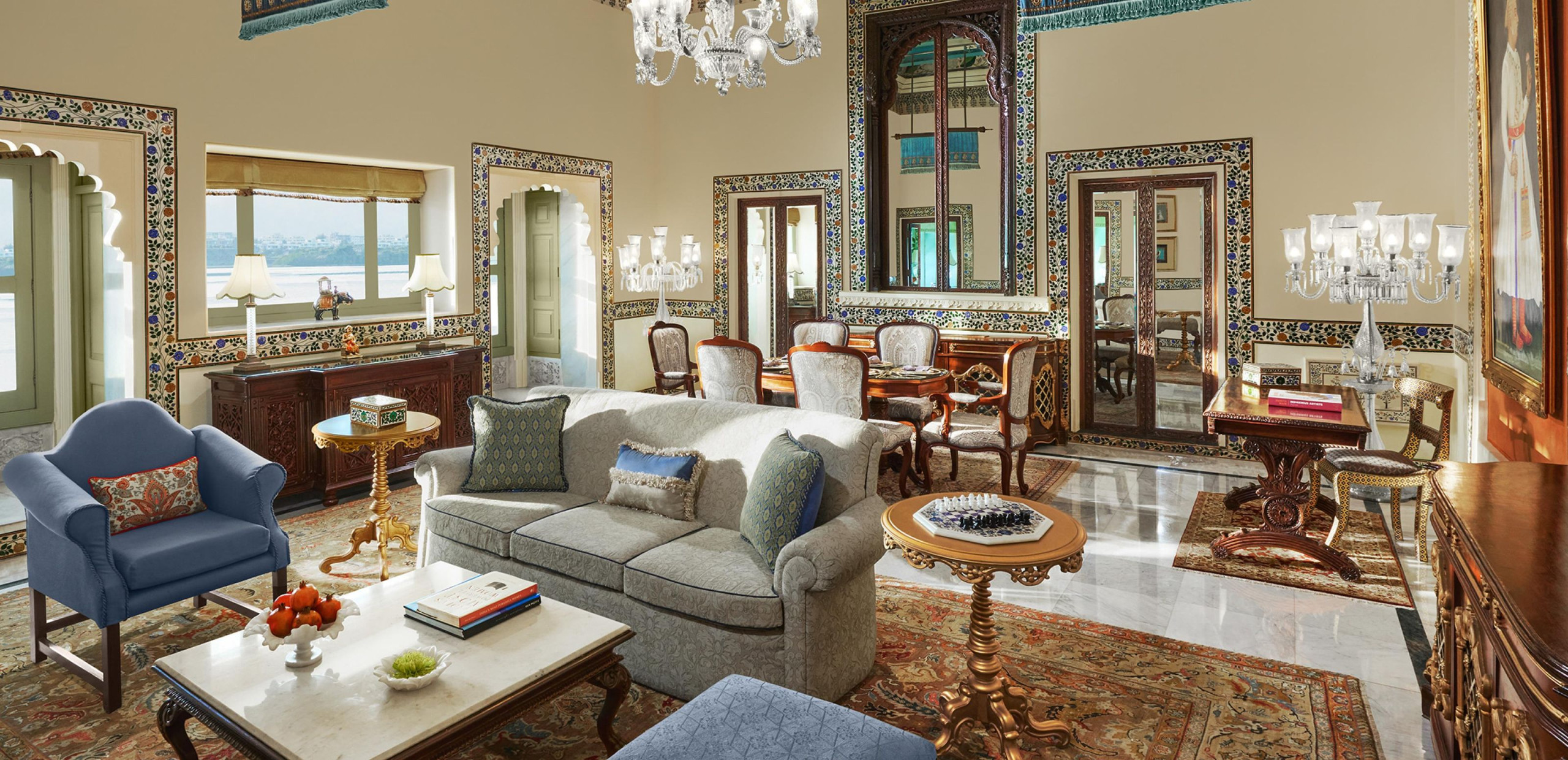
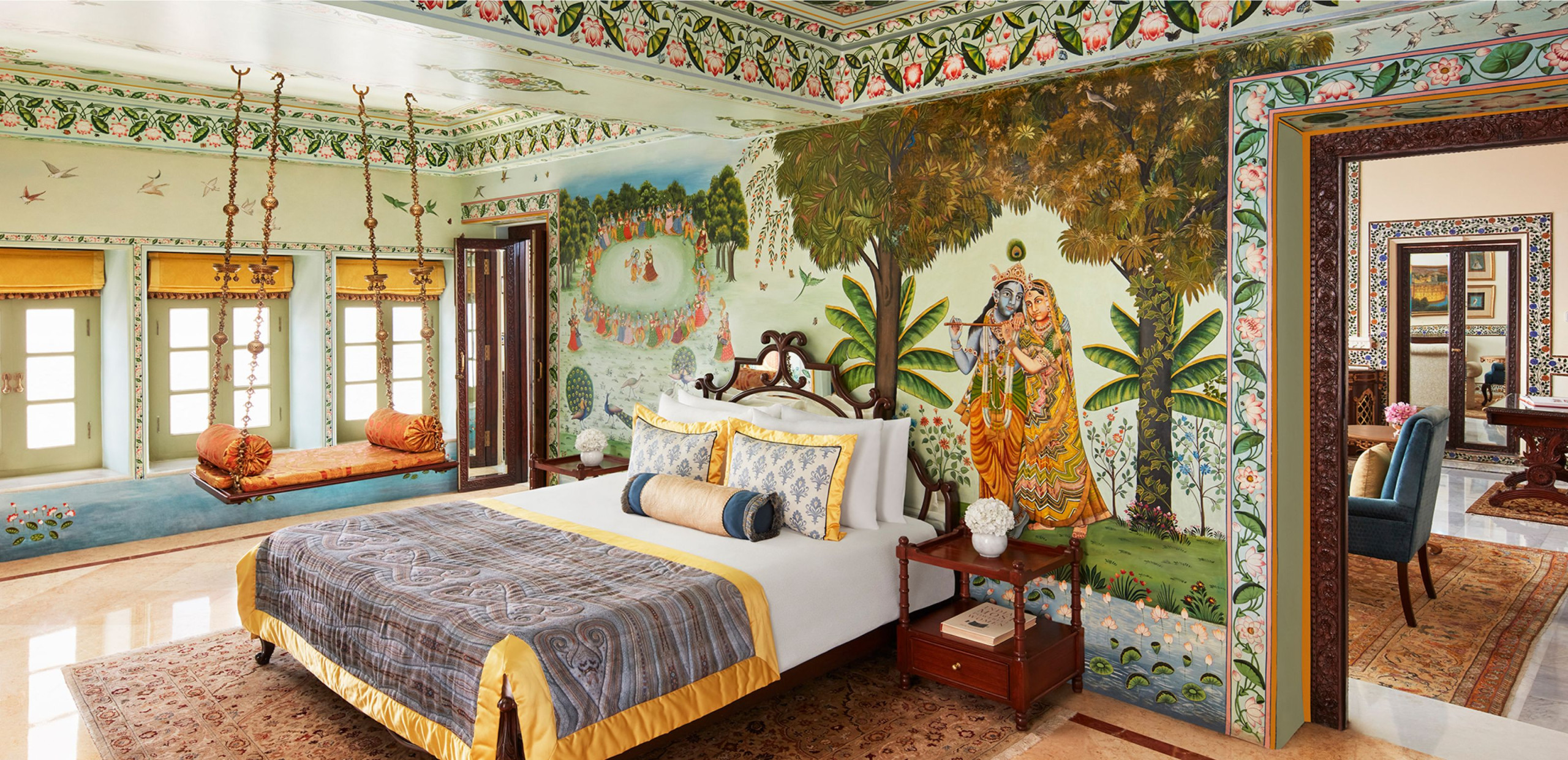
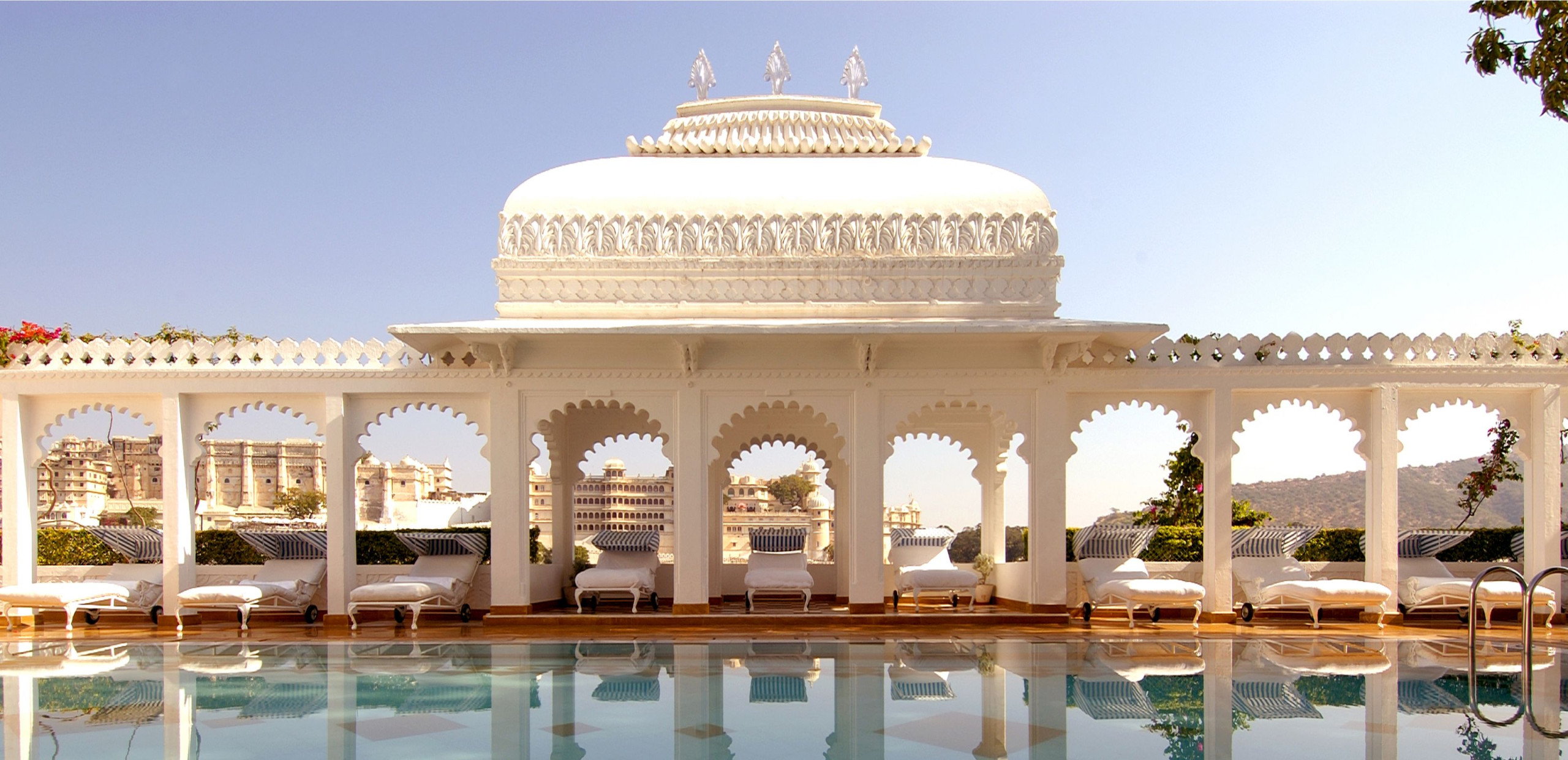
- Style: Rajput palace with Mughal influences
- What stands out: Built between 1743 and 1746 as a summer retreat for Maharana Jagat Singh II, the palace covers the entire Jag Niwas island. Its white marble walls, columned courtyards, and cusped arches make the water itself part of the design, since the lake acts as both moat and mirror.
3. Rambagh Palace, Jaipur
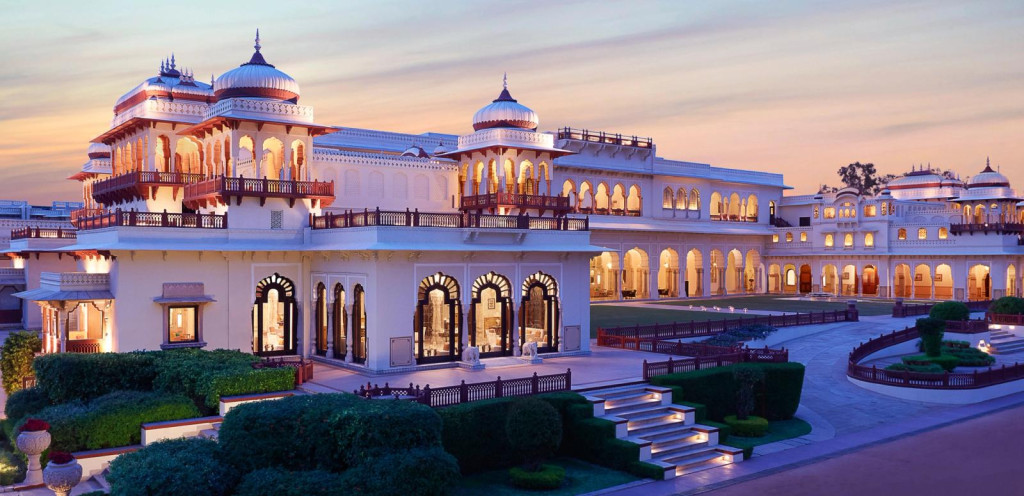
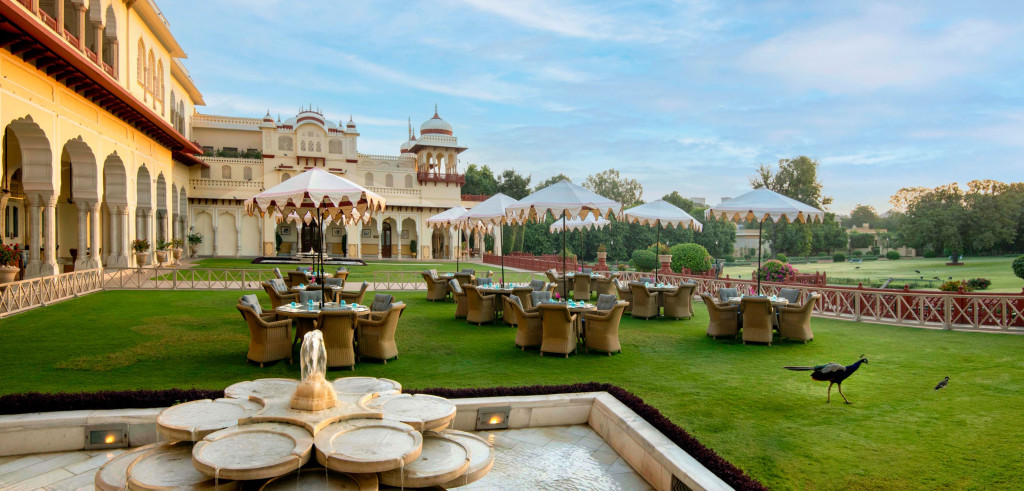
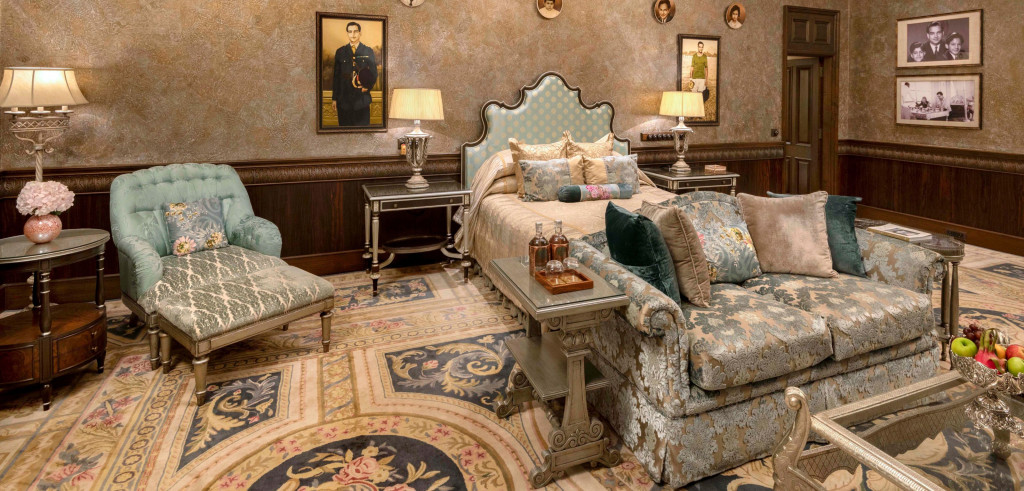
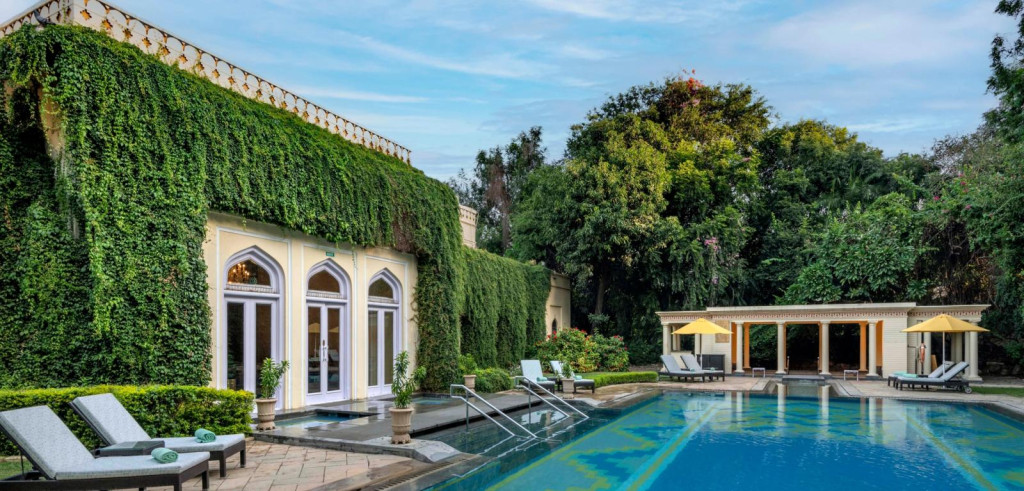
- Style: Rajput architecture with Mughal garden planning
- What stands out: It began as a garden house in the 1830s and later became the residence of the Maharaja of Jaipur. Carved jaali screens, arched verandas, and symmetrical lawns reflect the Rajput-Mughal blend of Jaipur. It shows how filtered light through lattice work can shape a room’s mood.
4. Umaid Bhawan Palace, Jodhpur
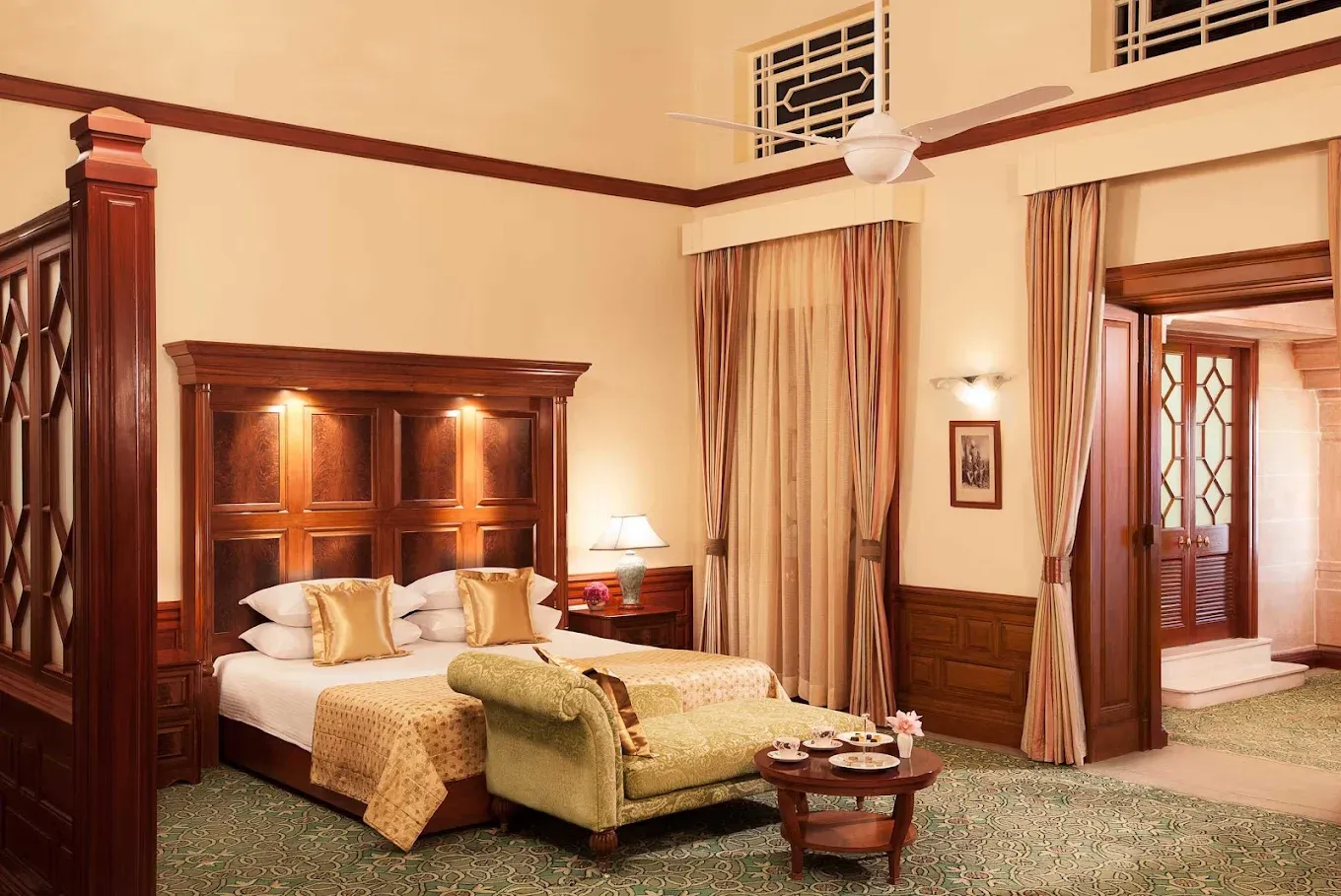
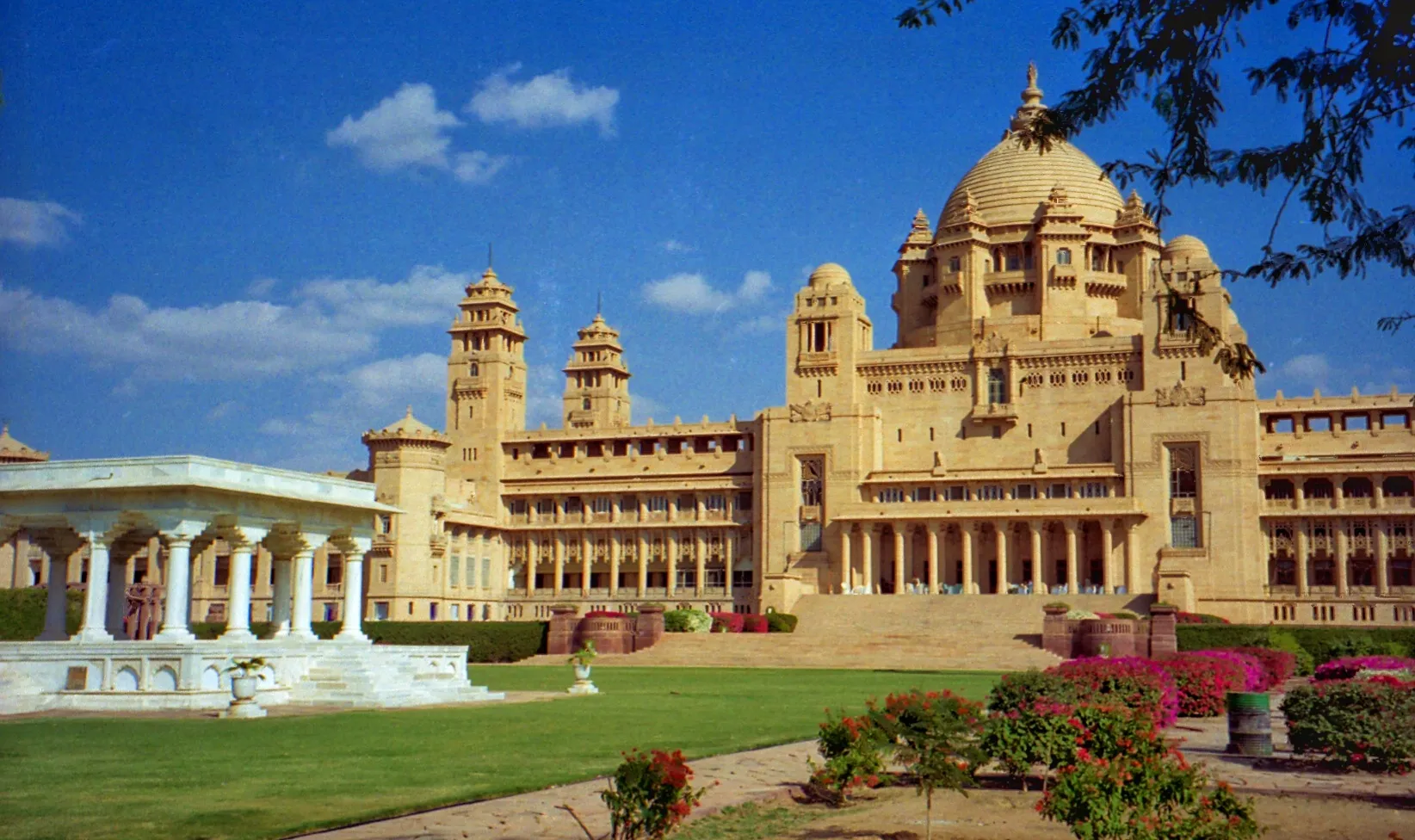
- Style: Indo-Saracenic with Art Deco
- What stands out: Designed by British architect Henry Vaughan Lanchester and completed in 1943, it is built from golden Chittar sandstone without mortar-heavy ornament. The huge central dome and clean geometry give it a monumental yet orderly look, a good example of Indian tradition meeting early modernism.
5. Taj Falaknuma Palace, Hyderabad
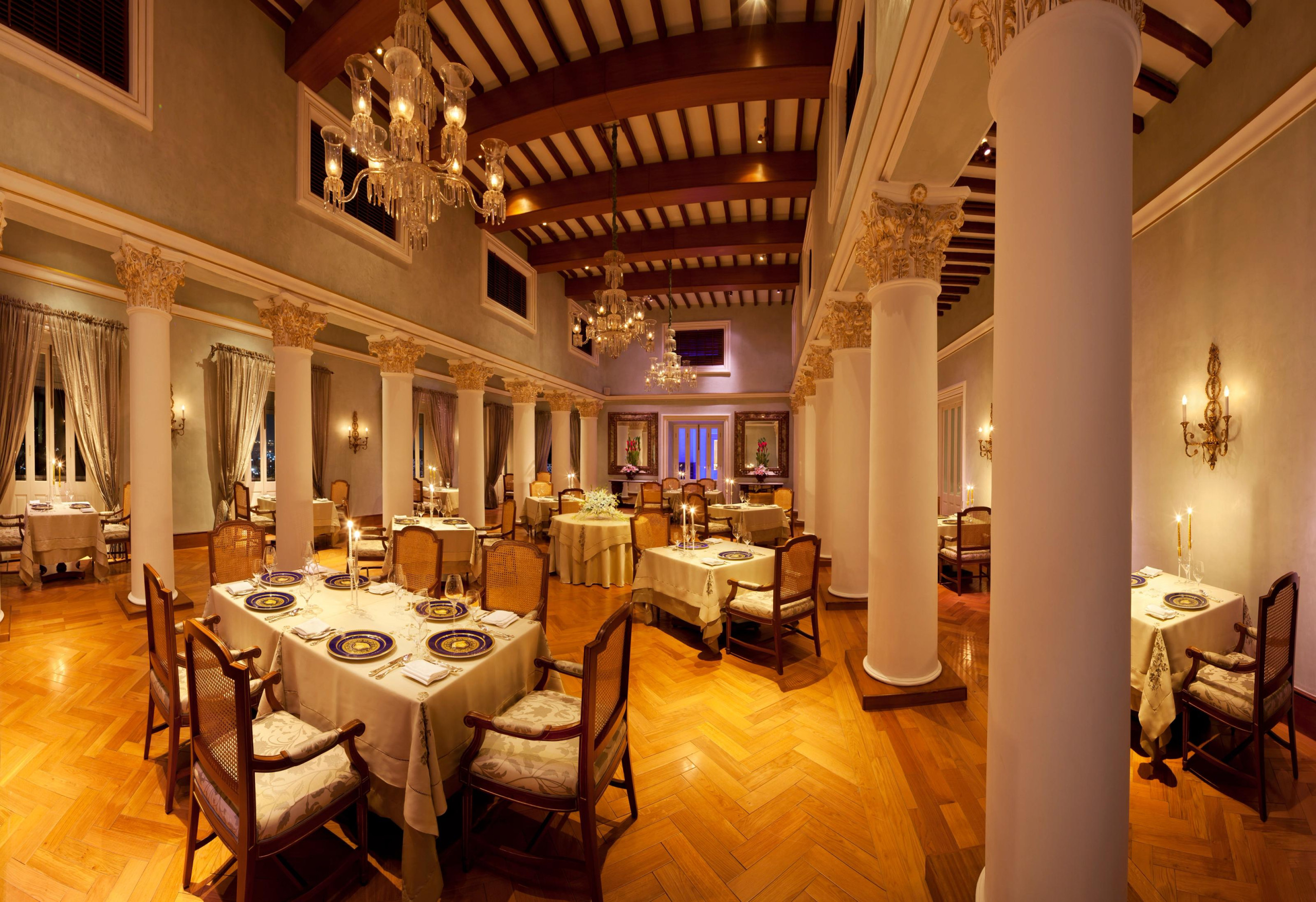
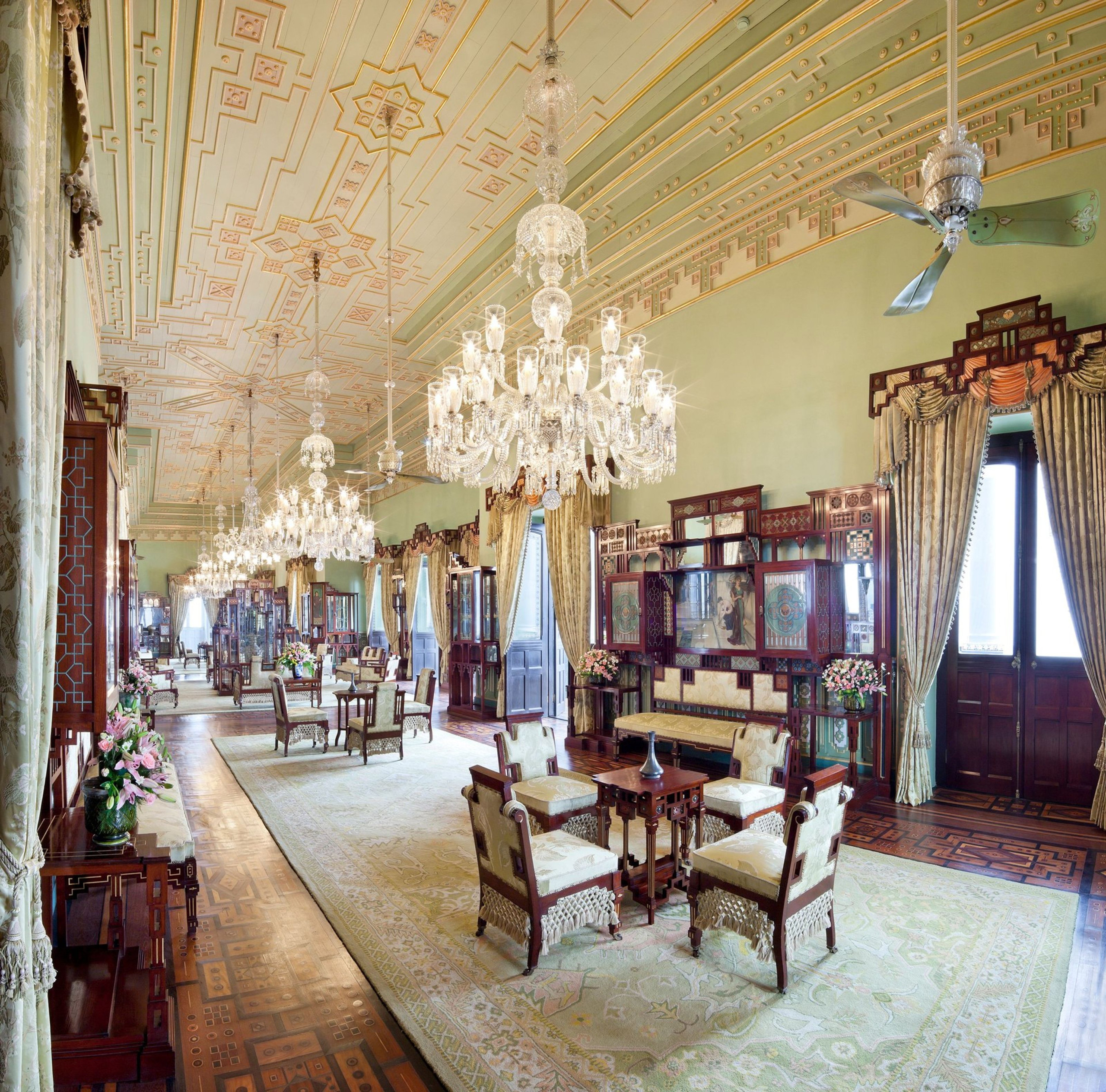
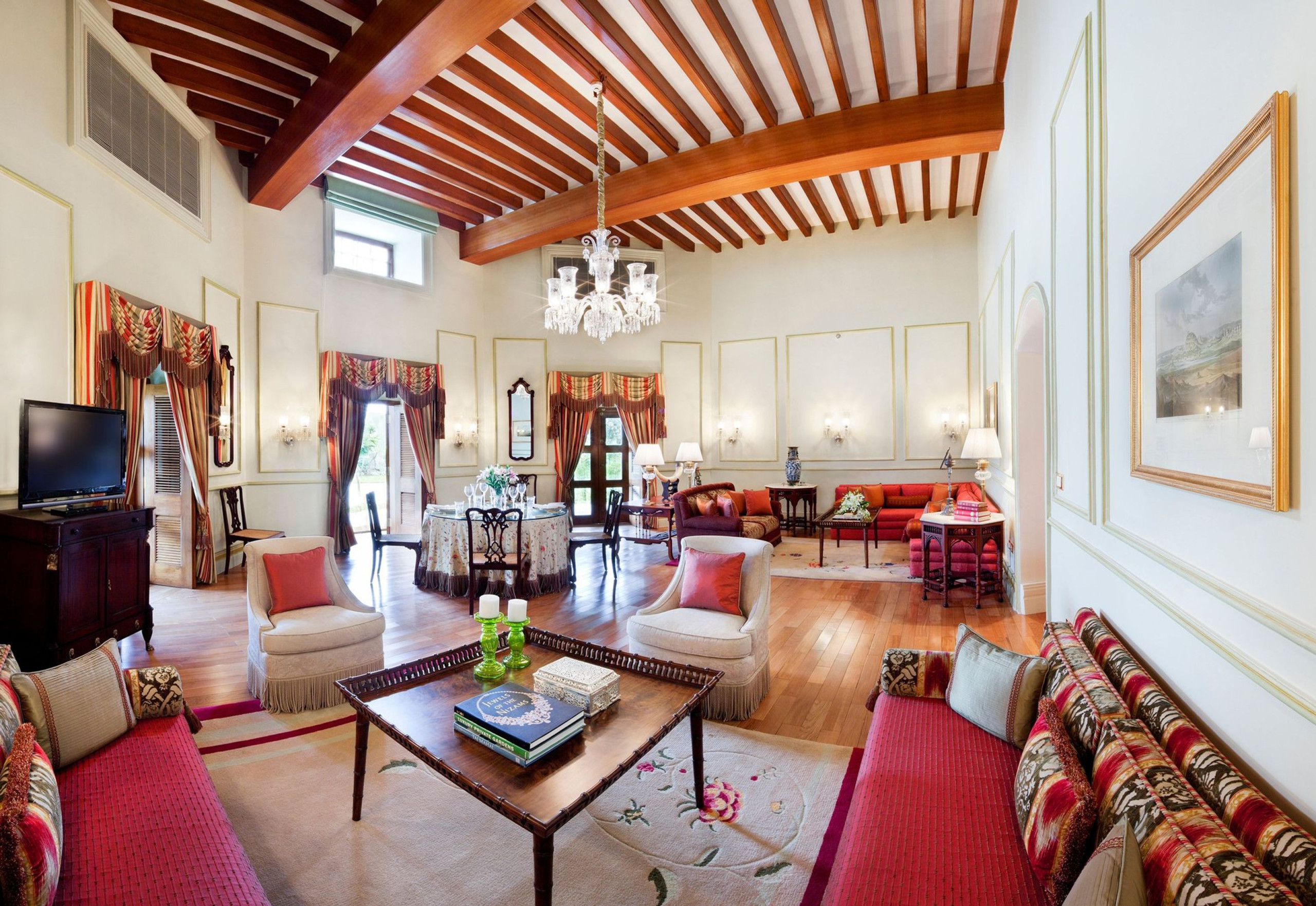
- Style: Italian and Tudor influences
- What stands out: Completed in 1893 and designed by William Ward Marrett, the palace sits on a hilltop overlooking Hyderabad. Highlights include a sweeping Italian marble staircase, stained-glass windows, and richly painted ceilings. It proves that European styles, when handled with local patronage and craftsmanship, can still feel rooted in Hyderabad’s history.
6. The Imperial, New Delhi
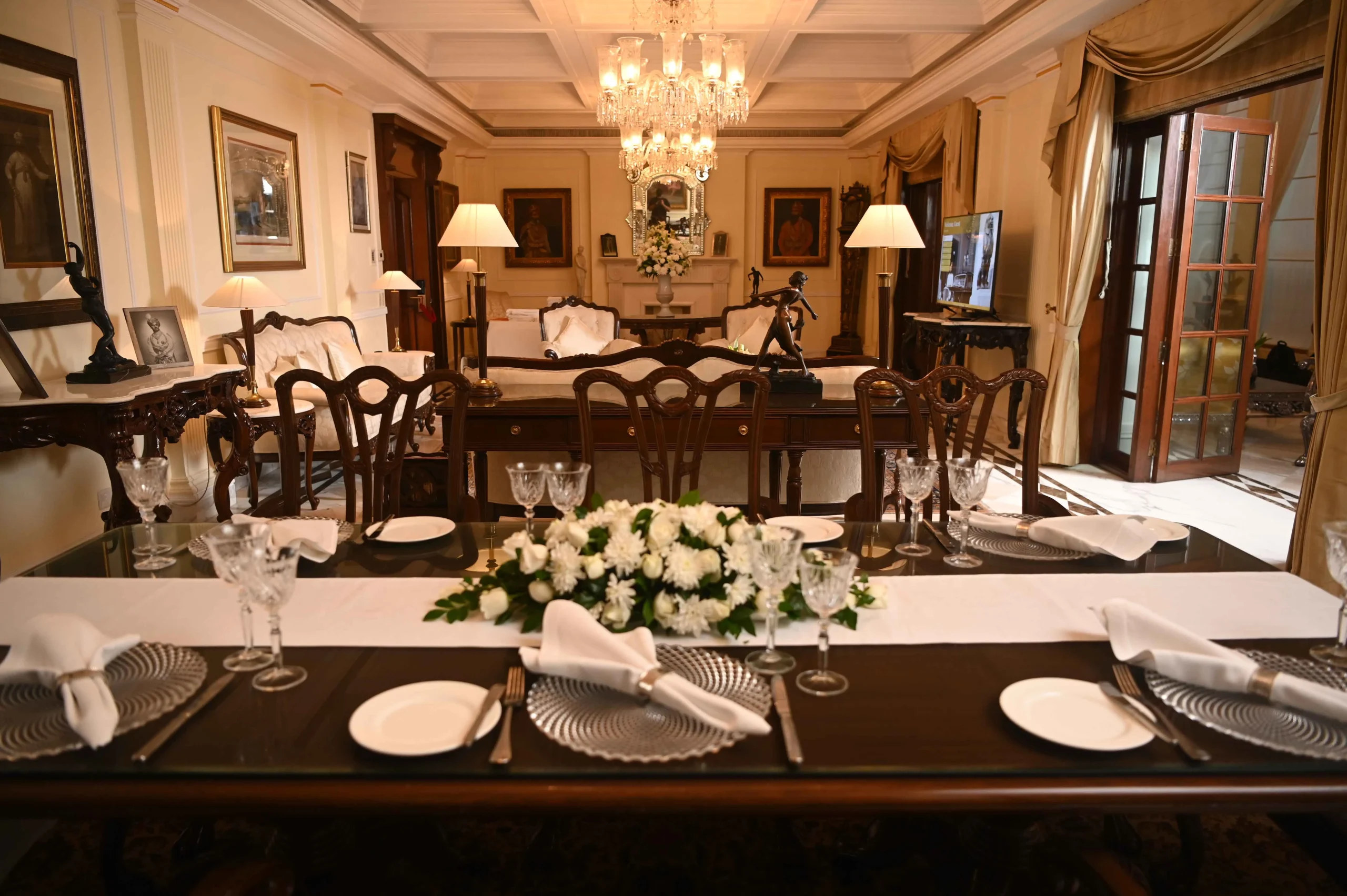
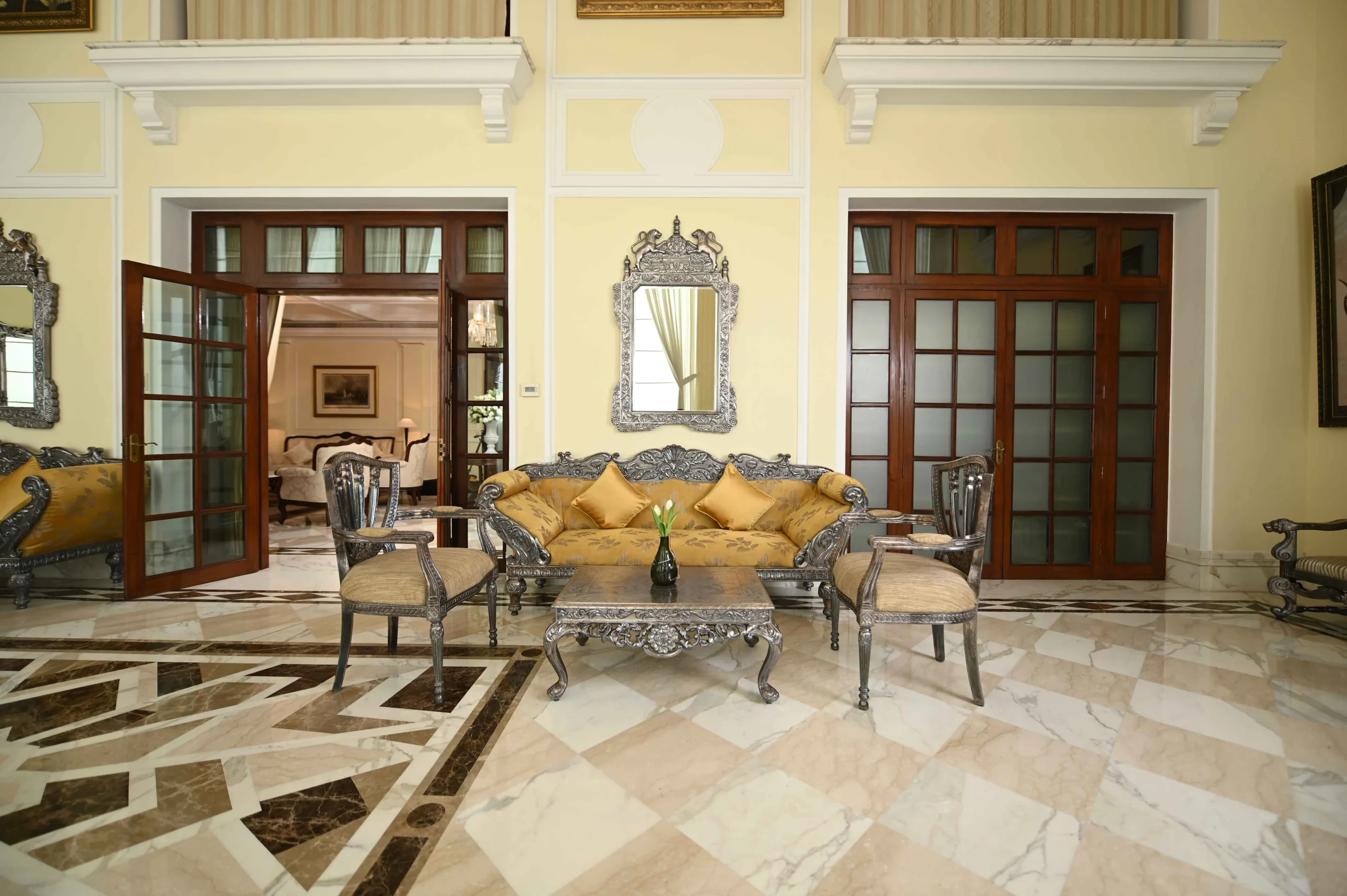
- Style: Art Deco with colonial-era details
- What stands out: Opened in 1936, the hotel sits on Janpath and reflects the colonial design language of New Delhi’s early years. White colonnades, tall ceilings, and period furniture give it a calm, formal character. It is useful for anyone studying how Art Deco was adapted for the Indian climate and light.
7. The Leela Palace New Delhi
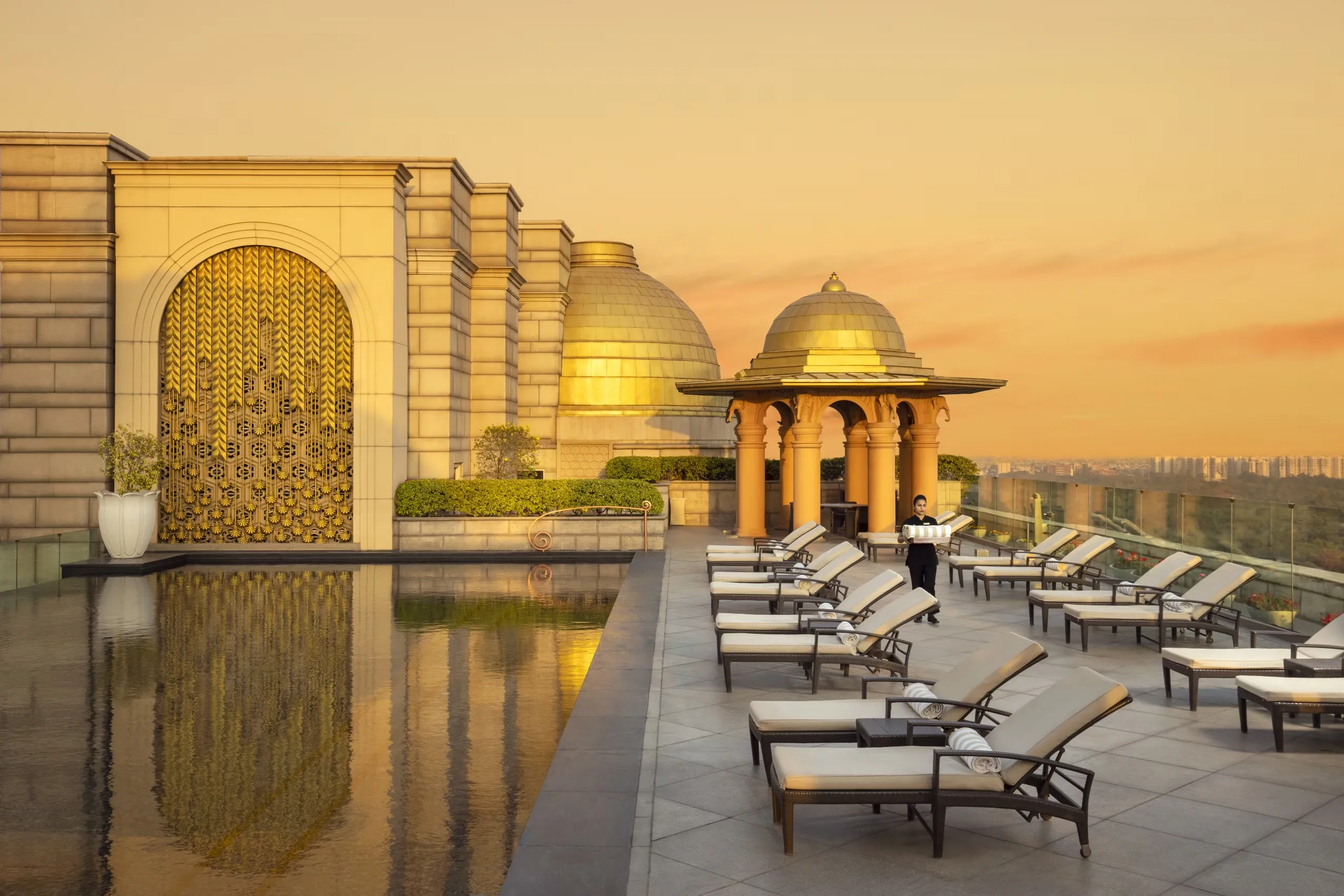
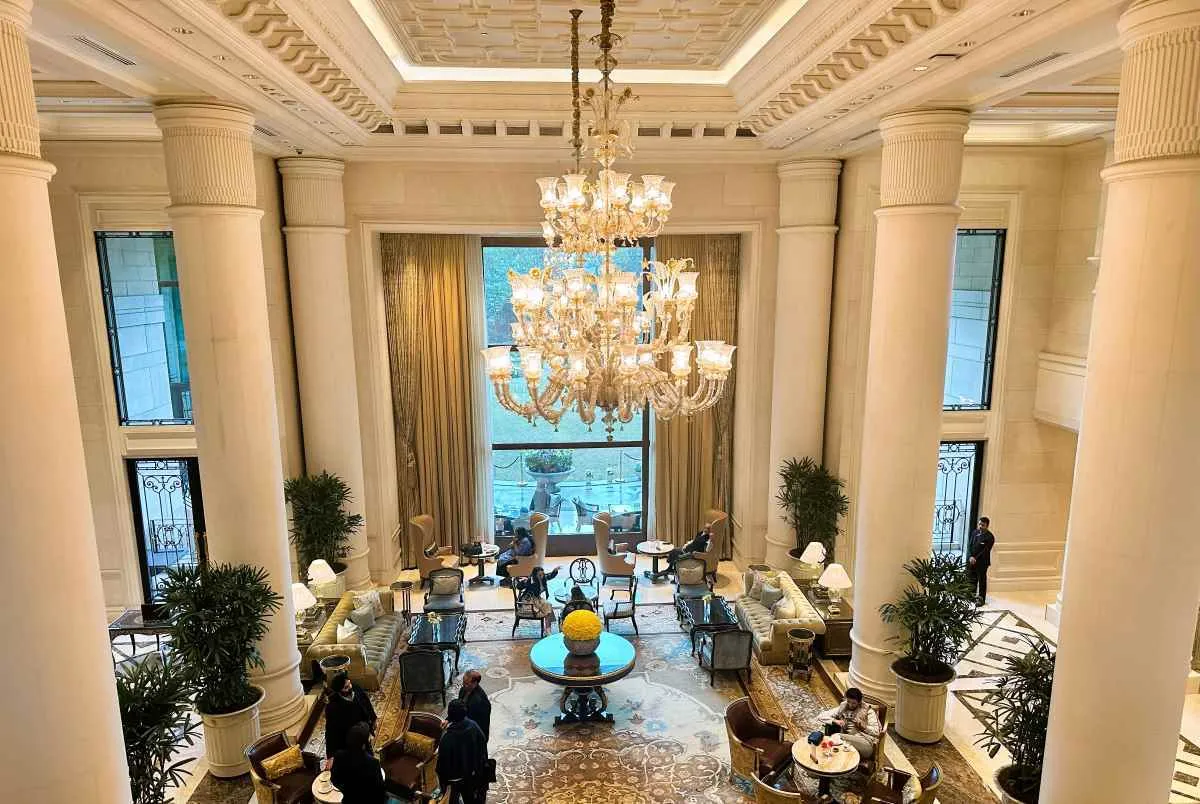
- Style: Contemporary palace design inspired by Lutyens’ Delhi
- What stands out: Opened in 2011 in Chanakyapuri, this hotel takes cues from the grand, symmetrical look of Lutyens’ Delhi. Brass accents, large chandeliers, and carefully placed Indian artefacts give a traditional feel to a modern luxury setting.
Design Lessons for Architects and Interior Designers
Let materials do the work: Marble, sandstone, and carved wood bring texture and a premium finish without heavy decoration.
Plan for movement: Courtyards, arches, and layered entrances guide guests naturally and create depth.
Layer your lighting: Natural light through jaalis, paired with statement chandeliers or brass fixtures, adds drama and warmth.
Stay rooted in place: Local motifs and regional materials give a space an identity that generic luxury lacks.
At Top Interiors India, architects and interior designers can explore design inspiration, projects, and industry professionals for their upcoming projects.
Conclusion
From lakeside palaces in Udaipur to Art Deco landmarks in Delhi, these hotels show that luxury in India is closely tied to its building traditions. Studying their materials, layouts, and details can help anyone planning a premium home or hospitality space design with more confidence and character.
FAQs
The Oberoi Udaivilas in Udaipur follows Mewari palace design, with domed pavilions, courtyards, and reflection pools beside Lake Pichola.
Taj Lake Palace sits on an island in Lake Pichola, Udaipur, and is known for its white marble architecture.
Quartz, granite, sintered surfaces, durable laminates and easy-clean tiles are practical choices. The right material should also suit the kitchen's exposure to heat, moisture, stains, and daily cooking.
Rambagh Palace in Jaipur combines Rajput craftsmanship with Mughal-style gardens and carved marble jaalis.
Umaid Bhawan Palace in Jodhpur mixes Art Deco with Indo-Saracenic elements, and The Imperial in New Delhi also shows strong Art Deco influence.
Taj Falaknuma Palace in Hyderabad, with its Italian marble staircase and stained-glass windows.
The Leela Palace New Delhi, which draws on Lutyens' Delhi while using modern luxury styling.