

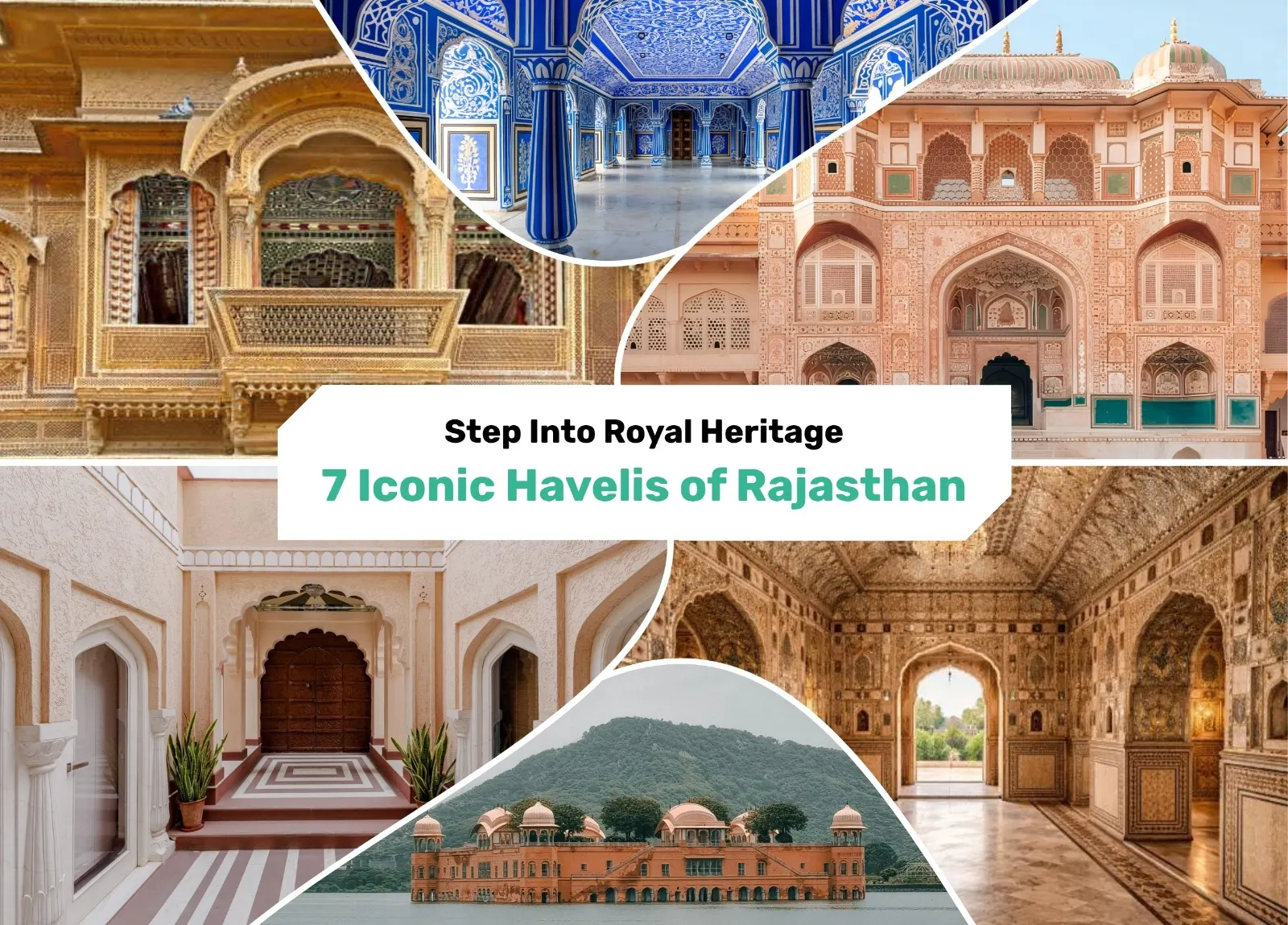
Rajasthan’s most celebrated historic havelis, including Patwon Ki Haveli and Nathmal Ki Haveli in Jaisalmer, the Mandawa and Poddar Havelis of Shekhawati, Bagore Ki Haveli in Udaipur, Salim Singh Ki Haveli in Jaisalmer, and Rampuria Haveli in Bikaner, showcase intricate jaali (lattice) work, frescoed walls, carved sandstone facades, and courtyard-centric planning. These structures remain some of India’s finest examples of Rajput and Mughal-influenced residential architecture.
At Top Interior India, we study these historic structures closely because their design principles, courtyard ventilation, ornamental restraint, and material honesty still inform how we approach modern Indian homes today.
What Is a Haveli?
A haveli is a courtyard mansion, usually built by a wealthy merchant (Marwari) or noble family between the 18th and 19th centuries. The word comes from the Persian hawli, meaning an enclosed space. The idea behind every haveli is simple: build around one or more inner courtyards so light and air can come in, while the house stays cool and private. In a desert climate, that’s not decoration, it’s how a house survives summer.
7 Historic Havelis That Redefined Rajasthan’s Architecture
1. Patwon Ki Haveli, Jaisalmer
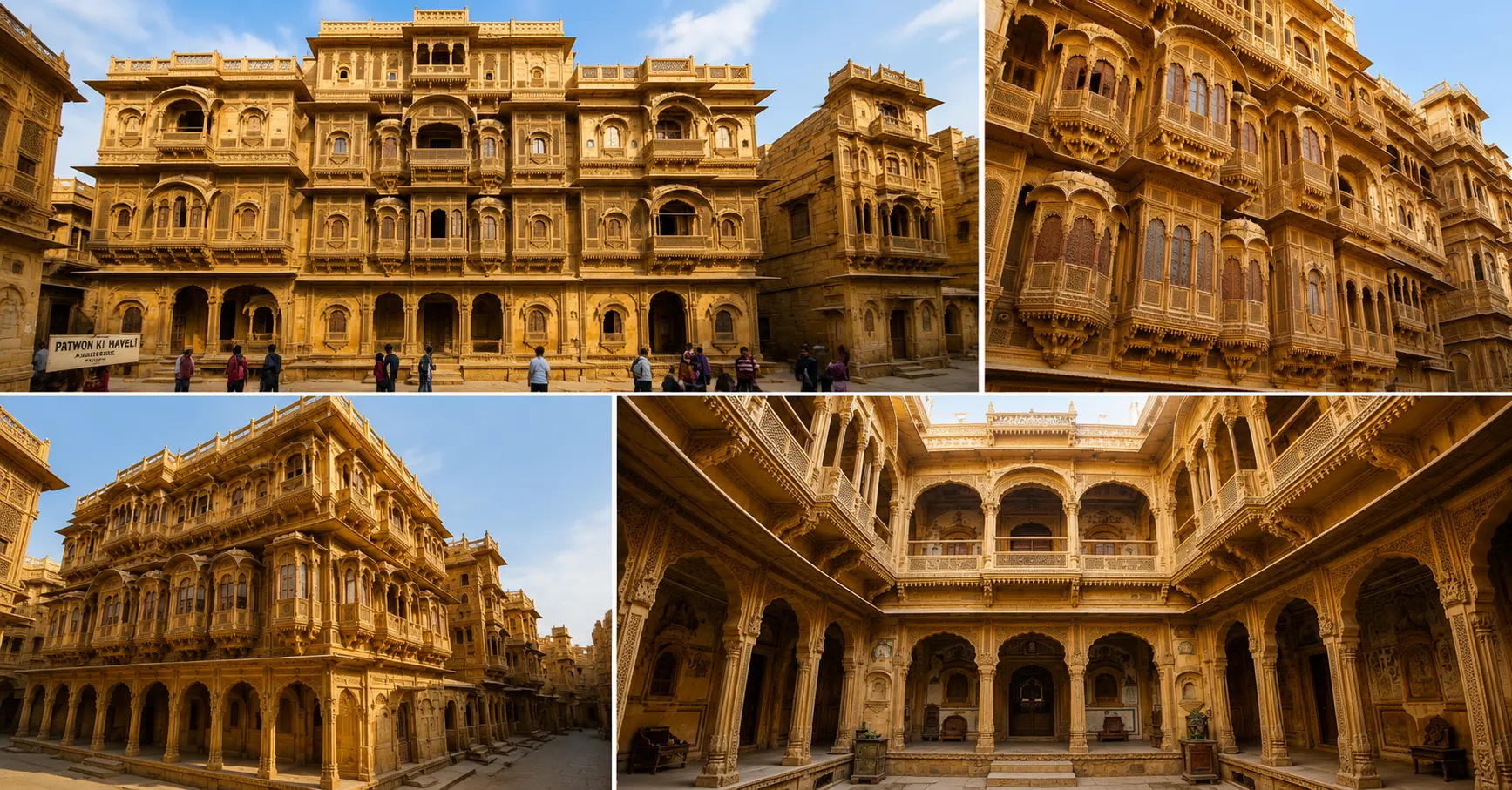
Built in 1805 by Guman Chand Patwa, a gold and silver thread trader. It’s actually five havelis joined into one complex, one for each of his sons, built over roughly 55 to 60 years.
Architecture:
- Five separate residences under one continuous yellow sandstone facade, each floor slightly different from the one below it
- Around 60 jharokhas (carved balconies), no two identical, used for ventilation as much as decoration
- Interiors have mirror-work ceilings, gold-leaf paintwork, and deep-set arched gateways that keep direct sun off the entrance
2. Nathmal Ki Haveli, Jaisalmer
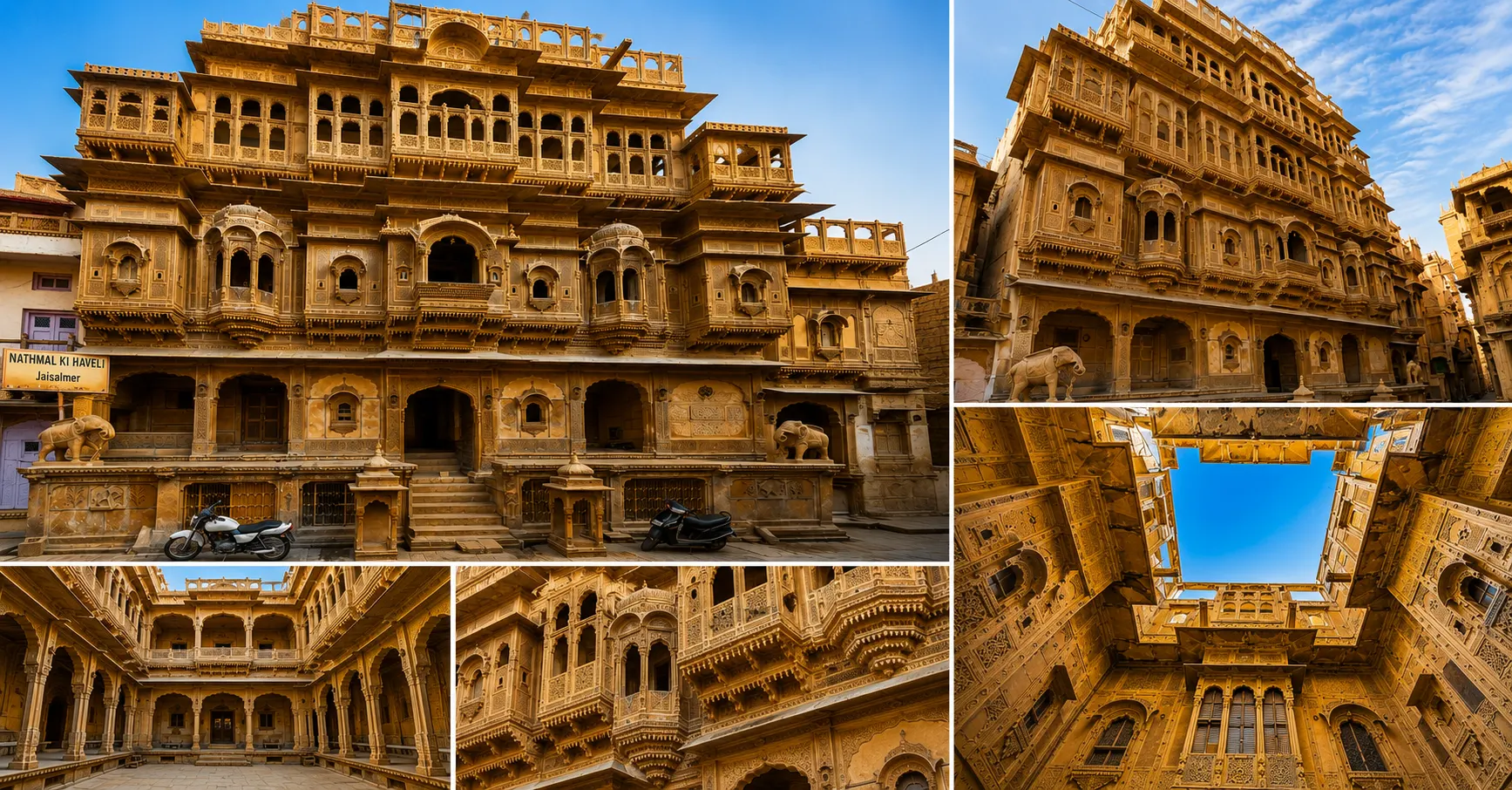
Built in 1885 for Diwan Mohata Nathmal, then Jaisalmer’s prime minister. Two brothers, Hathi and Lulu, carved the two halves of the facade at the same time, working from opposite ends without much coordination.
Architecture:
- Facade looks symmetrical from a distance, but the two halves have different carving up close, since each brother worked independently
- Two life-size elephant sculptures in yellow sandstone flank the entrance
- Carvings blend Islamic arch forms with Rajput floral and animal motifs, plus unusual images of trains, bicycles and fans carved from verbal descriptions, not direct sight
3. Salim Singh Ki Haveli, Jaisalmer
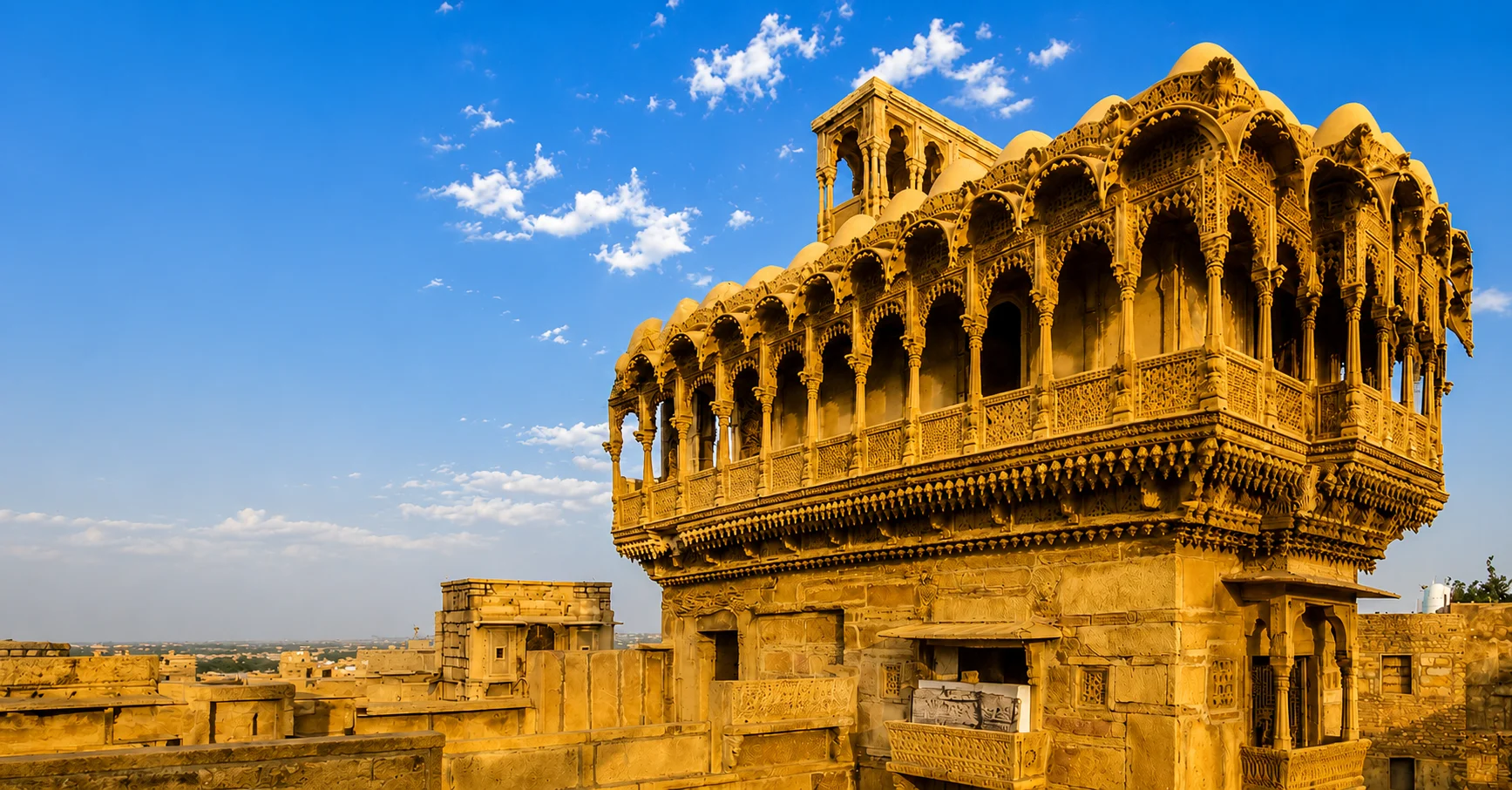
Built in 1815 by Salim Singh, Jaisalmer’s prime minister. He built it taller than the Maharaja’s own palace, so the king had the top floors demolished.
Architecture:
- Roof curves outward like a ship’s stern, in a peacock-inspired shape, capped with pale blue cupolas
- 38 balconies, each carved with its own bracket design
- Built without cement or mortar; stones are held together with iron clamps, an unusual structural technique for the period
4. Mandawa Haveli, Shekhawati
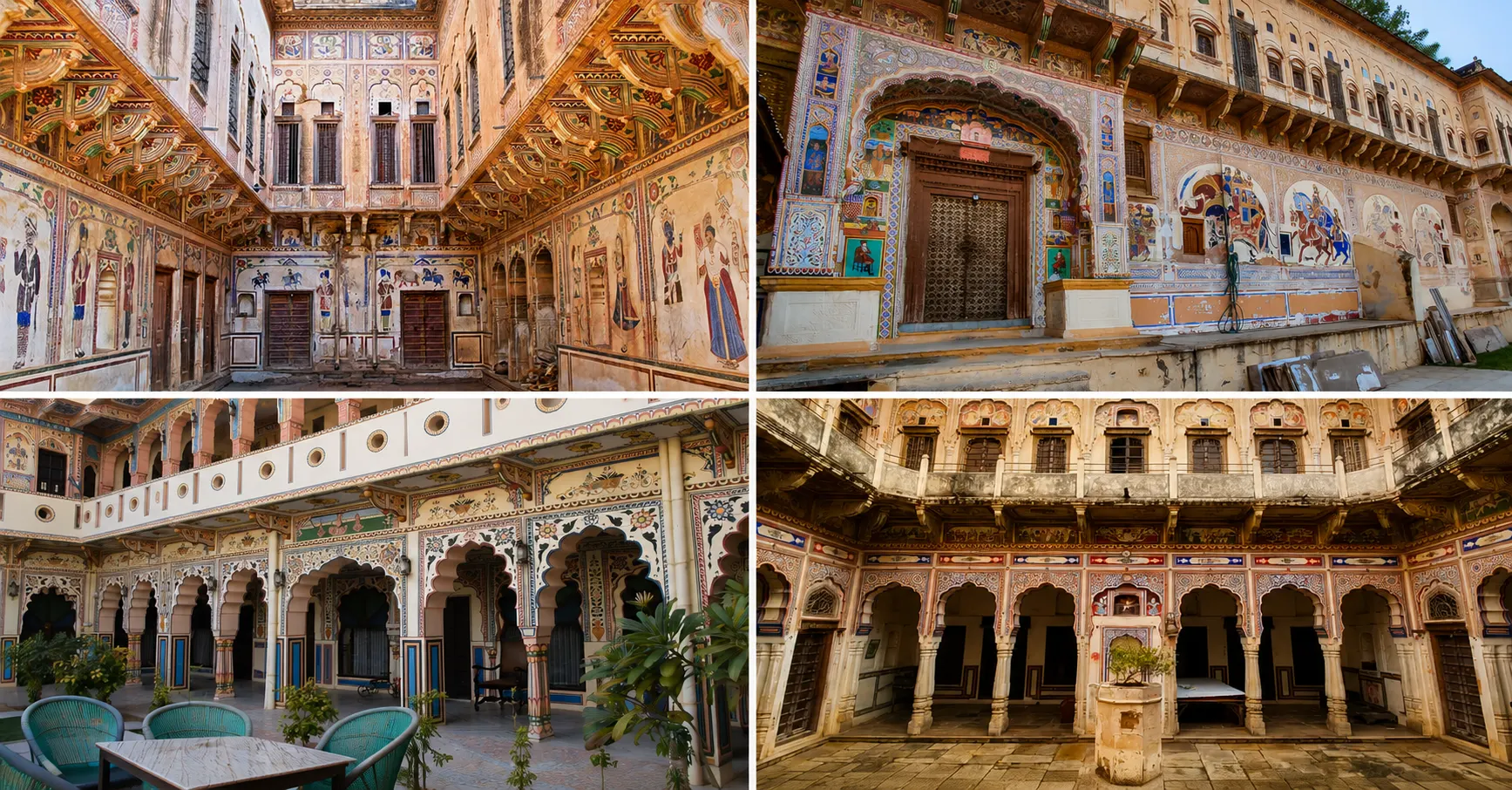
Thakur Nawal Singh built Mandawa’s fort in 1755 to guard a stop on the Silk Route caravan trail. Once the town felt safe, merchant families settled in and covered their havelis in frescoes.
Architecture:
- Walls painted with natural mineral pigments, some frescoes still holding colour after 150+ years without repainting
- Murals shift from mythology and hunting scenes to trains, cars and gramophones on buildings from the same street, marking the arrival of the colonial-era trade
- The fort structure has thick rubble-and-lime walls built for defence, since it went up before the merchant havelis around it
5. Poddar Haveli, Nawalgarh
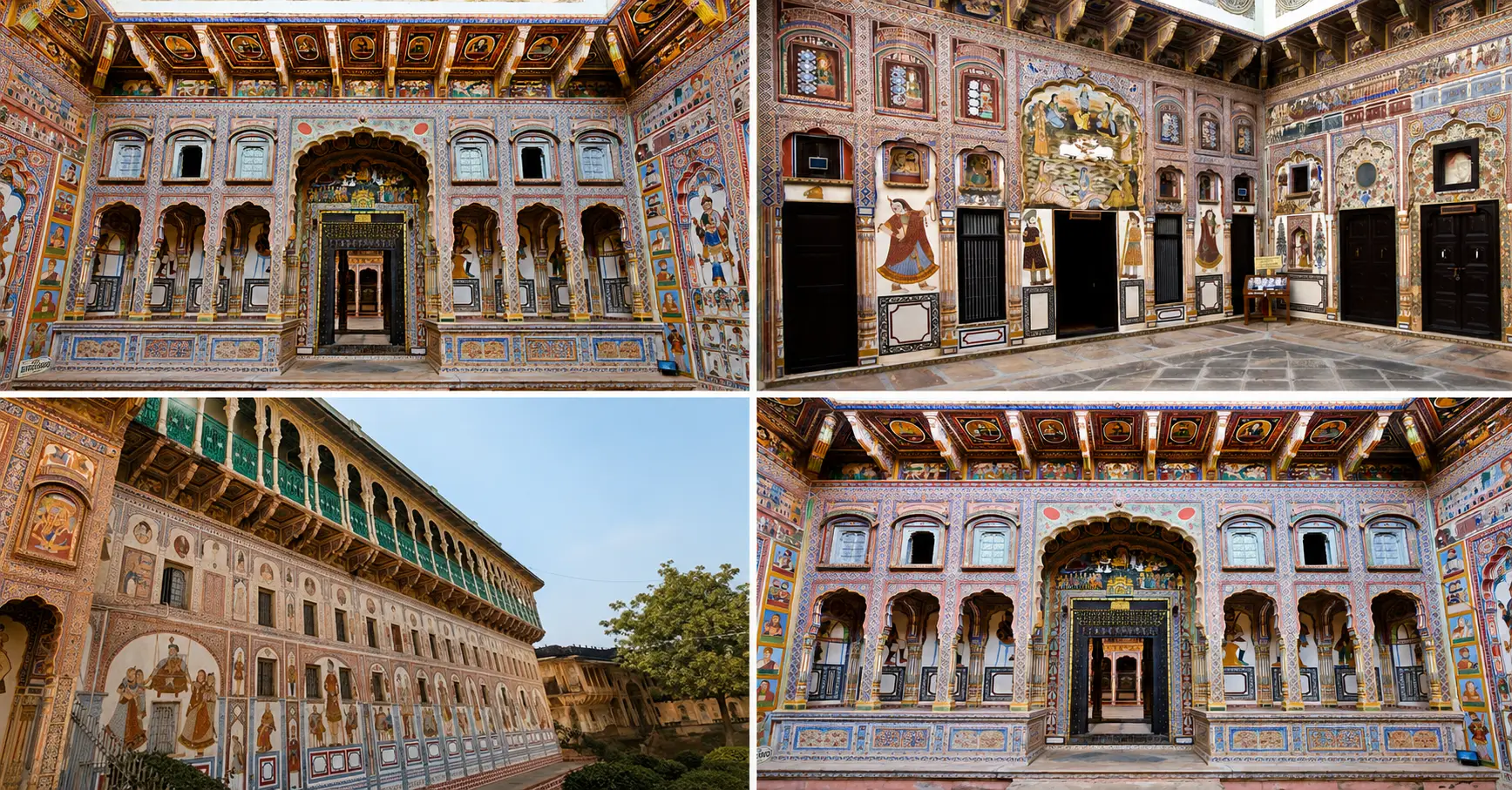
Restored and converted into a private museum. Most Shekhawati havelis have faded badly, so this is the clearest surviving example of what the frescoes looked like when new.
Architecture:
- Multi-courtyard layout: an outer courtyard for business and guests, an inner one kept private for the family
- Ceiling frescoes, and door frames restored using the original lime-plaster technique
- Facade painting uses a much wider colour range than most surviving Shekhawati havelis, since restoration reintroduced pigments that had faded elsewhere
6. Bagore Ki Haveli, Udaipur
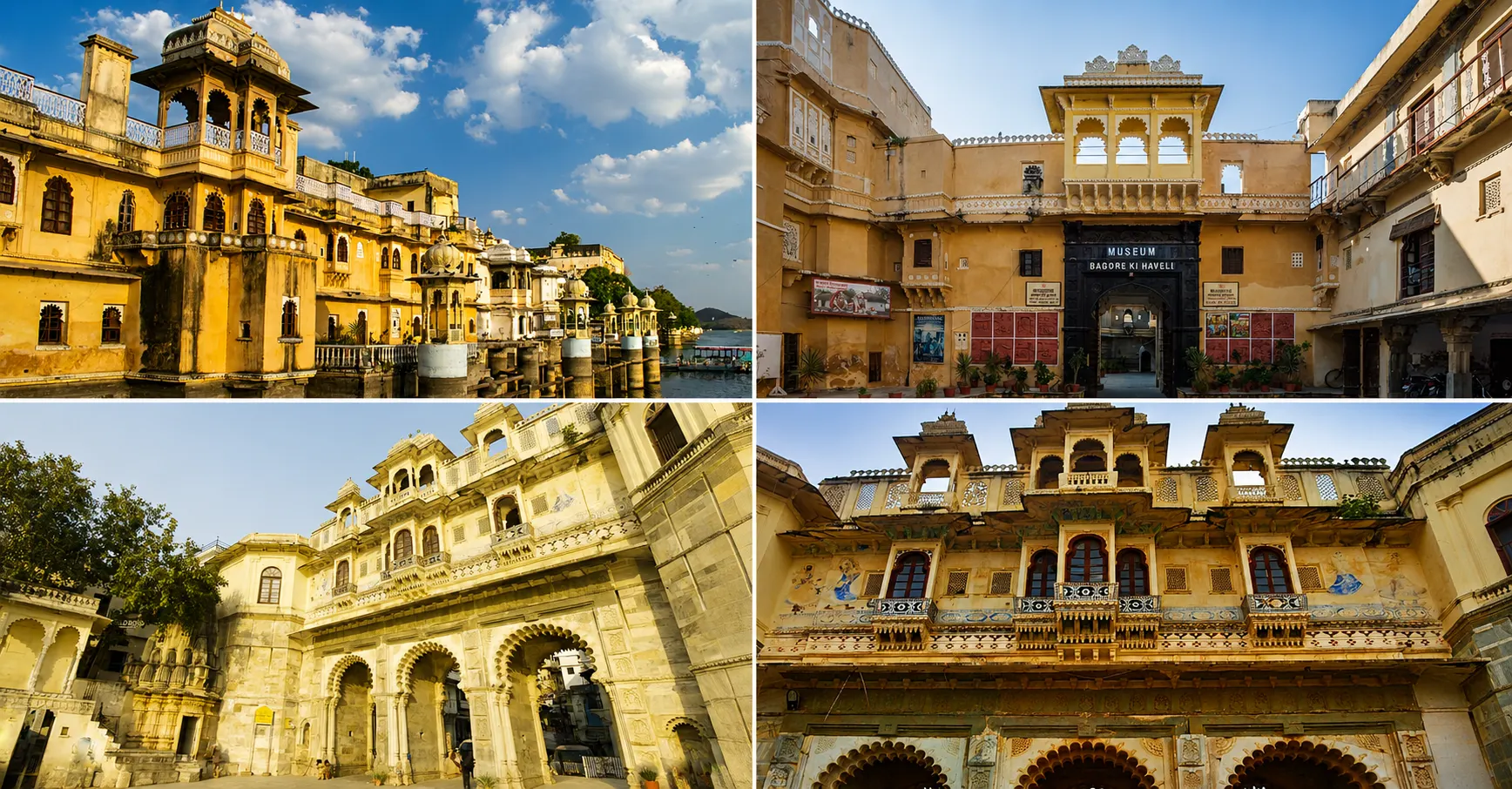
Built around 1751 by Amar Chand Badwa, Mewar’s prime minister. It later passed to the royal family, and Maharaj Shakti Singh of Bagore added the triple-arched gateway that gives the haveli its name.
Architecture:
- Faces Lake Pichola directly, so it’s built with wide-open terraces instead of the tight, closed courtyards typical of desert havelis
- Over 100 rooms connected through mirror-work chambers and glass-inlay walls
- Neem Chowk, the main courtyard, was designed with raised balconies on all sides so performances below could be seen from every level
7. Rampuria Haveli, Bikaner
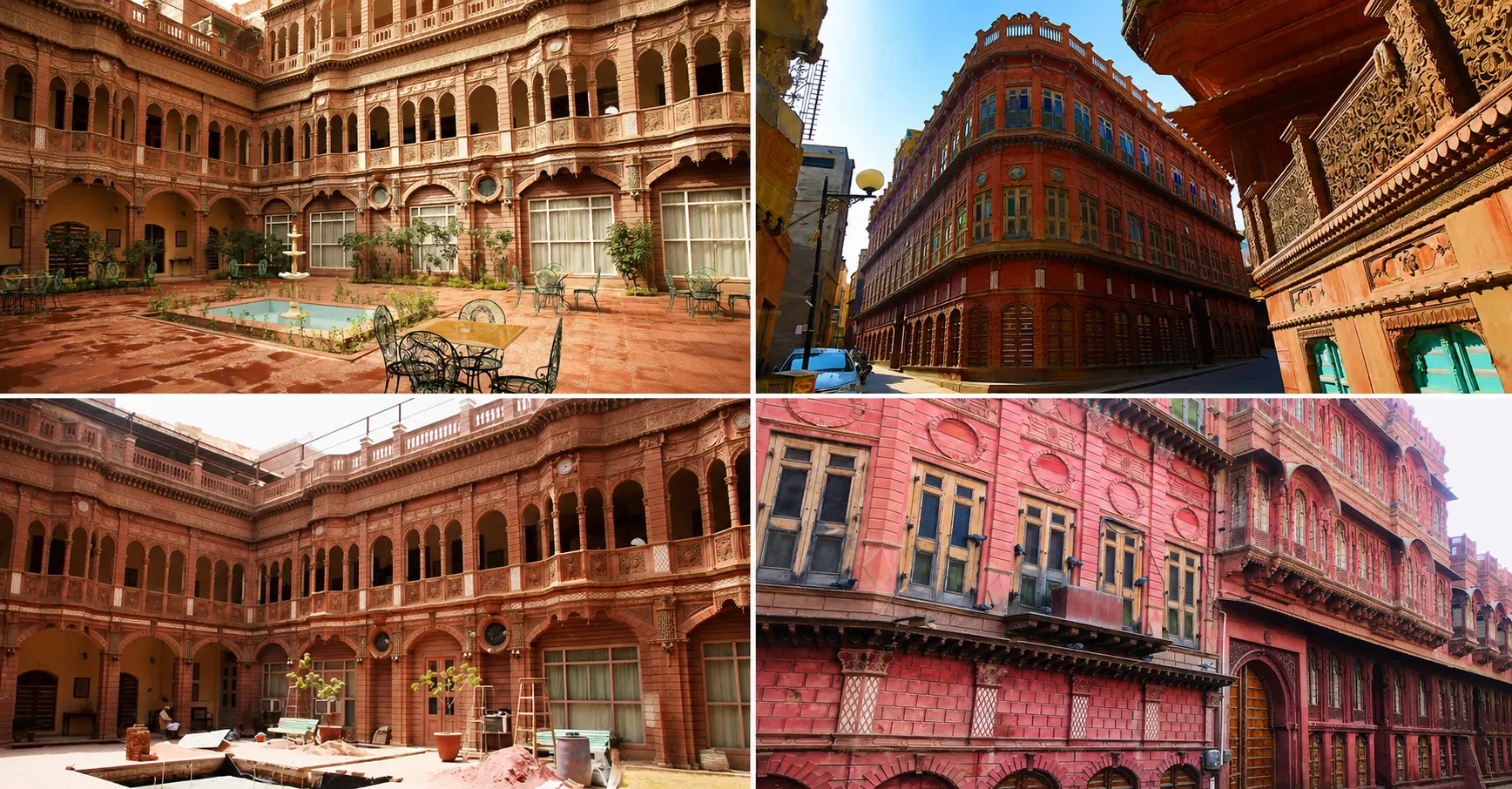
Built by the Rampuria merchant family, whose trade extended well beyond Rajasthan. That outside exposure shows directly in the building’s design.
Architecture:
- Red sandstone jharokhas carved in the local style, but paired with stained glass windows and cast-iron balcony railings, a European detail rarely seen elsewhere in Rajasthan
- Cornices combine Rajput stone carving with colonial-style mouldings
- Facades were built taller and narrower than Jaisalmer or Shekhawati havelis, fitting Bikaner’s denser street layout
Design Lessons Modern Interiors Can Borrow From Havelis
Before havelis looked beautiful, they solved problems: heat, glare, and privacy. That’s the part worth actually copying.
- Courtyard planning: a small internal light well or atrium does what a chowk used to do, it keeps air moving through the house.
- Jaali-inspired screens: perforated partitions cut down heat and glare without shutting off airflow. Modern jaali-pattern room dividers use the same idea.
- Detailing in one place, not everywhere: Havelis put their best carving at entrances and ceilings instead of spreading it across every wall. It reads stronger when it has a focal point.
- Letting materials look like themselves: sandstone, lime plaster, and wood were left with their natural texture, no attempt to disguise them. Minimalist interiors today are basically rediscovering this.
Conclusion
Rajasthan’s havelis remain living records of how Indian craftsmanship responded to climate, trade, and status, using courtyards, jaali screens, and frescoes as functional design tools, not just ornamentation. For homeowners and designers alike, they’re a reminder that good architecture solves a problem first and looks beautiful as a result.
FAQs
Patwon Ki Haveli in Jaisalmer is generally considered the most famous, both for its scale (five interconnected havelis) and the density of its carved sandstone jaali work.
The Shekhawati region, including towns like Mandawa, Nawalgarh, and Fatehpur, has the highest concentration of frescoed havelis, often called an open-air art gallery.
Yellow and red sandstone, lime plaster, teakwood, and natural mineral pigments for frescoes were the primary materials, chosen for their availability and suitability to Rajasthan's climate.
Yes. Several havelis, including properties in Mandawa and Jaisalmer, have been converted into heritage hotels while preserving their original architecture.
Most surviving havelis date from the 18th to 19th centuries, though some structures trace their origins further back.